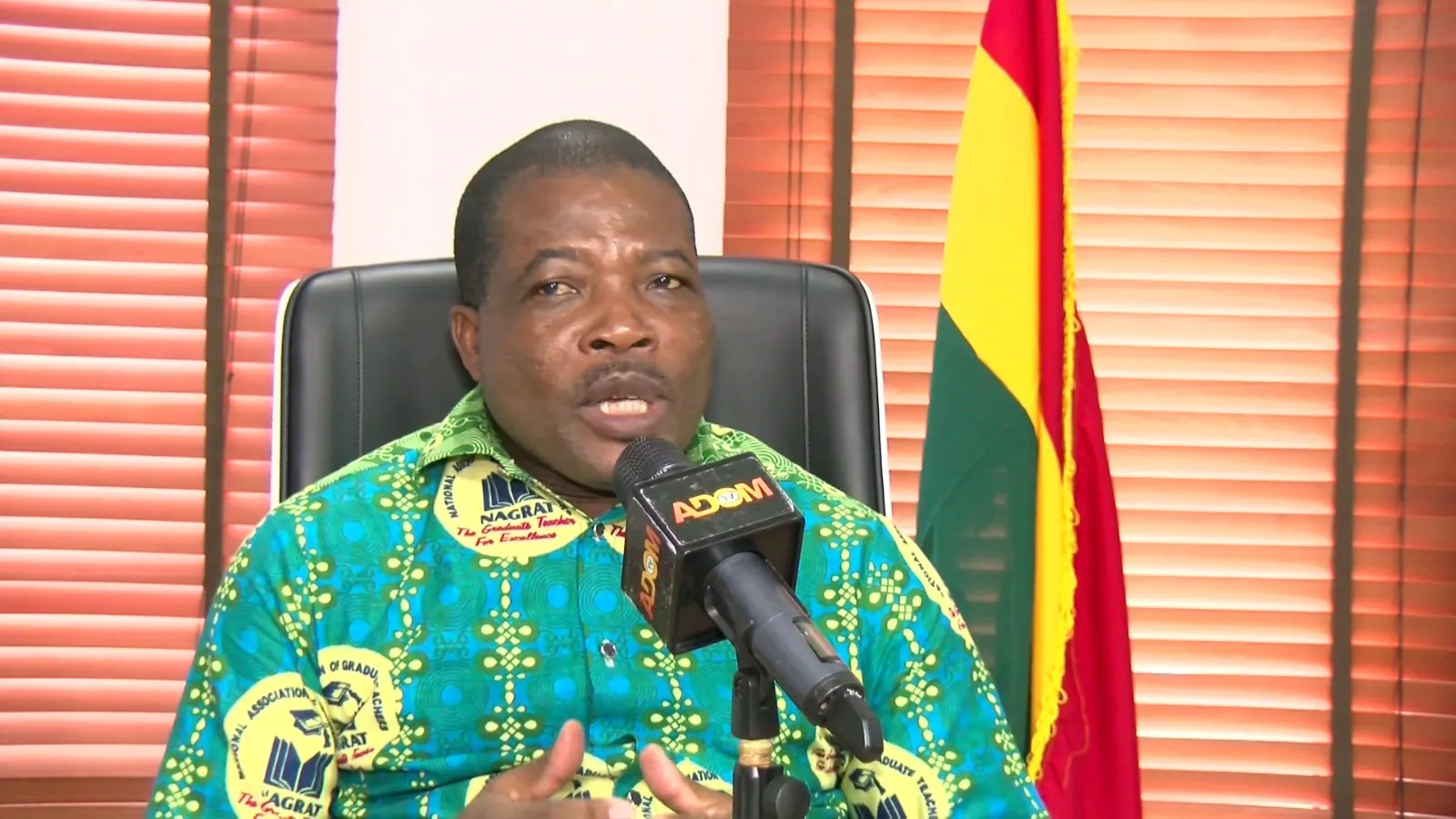
The nationwide strike declared by Ghana’s teacher unions has entered its first day, with the National Association of Graduate Teachers (NAGRAT) accusing the government of showing “bad faith” in addressing long-standing concerns affecting teachers. According to NAGRAT President Jacob Anaba, the unions had made sustained efforts to engage the government and resolve the issues through dialogue, but the delays had left teachers frustrated.
The three major teacher unions, the Ghana National Association of Teachers (GNAT), NAGRAT, and the Pre-Tertiary Teachers Association of Ghana (PRETAG), declared industrial action effective Friday, September 25, 2026. This follows the failure to resolve their outstanding concerns by a deadline set for Thursday, September 24. The unions are demanding the full placement of teachers who successfully passed their promotion aptitude tests in December 2025 and February 2026, along with payment of the associated arrears.
At the centre of the dispute is the delay in negotiating a new Collective Agreement, following the expiration of the existing agreement in June 2026. The unions had earlier reached an understanding with the government that promoted teachers would be automatically placed on their appropriate salary scales by the end of September 2026. However, with the September 24 deadline passing without the issues being fully resolved, the unions say they have been left with no option but to withdraw their services.
According to Mr. Anaba, the continued delays by the relevant government institutions, including the Fair Wages and Salaries Commission and the Controller and Accountant-General’s Department, demonstrate a lack of urgency in addressing teachers’ concerns. He said the situation had created growing anger and agitation among teachers, arguing that teachers could no longer continue working while their outstanding conditions of service remained unresolved.
The unions have also raised concerns over the failure of authorities to implement previous decisions and directives relating to the Deprived Area Allowance, a 20 percent allowance for teachers working in hard-to-reach communities. The development is expected to affect teaching and learning in public basic and second-cycle institutions across the country as the unions press the government to return to the negotiating table and resolve the outstanding matters.
The strike action is a response to what the unions describe as prolonged delays and failure to honour commitments made to teachers. The unions have maintained that their action is aimed at pressing the government to address their concerns and improve their working conditions. The situation is likely to have significant implications for the education sector, with parents and students likely to be affected by the strike.
The strike is expected to continue until the government addresses the unions' demands. The government has not yet made an official statement on the strike, but it is understood that efforts are being made to engage the unions and resolve the outstanding issues. The strike is a significant development in the education sector, highlighting the challenges faced by teachers and the need for improved working conditions and remuneration.
Key points
- The teacher unions are demanding the full placement of teachers who successfully passed their promotion aptitude tests and payment of associated arrears.
- The unions are also calling for the implementation of the 20 percent Deprived Area Allowance for teachers working in hard-to-reach communities.
- The strike is expected to affect teaching and learning in public basic and second-cycle institutions across Ghana.