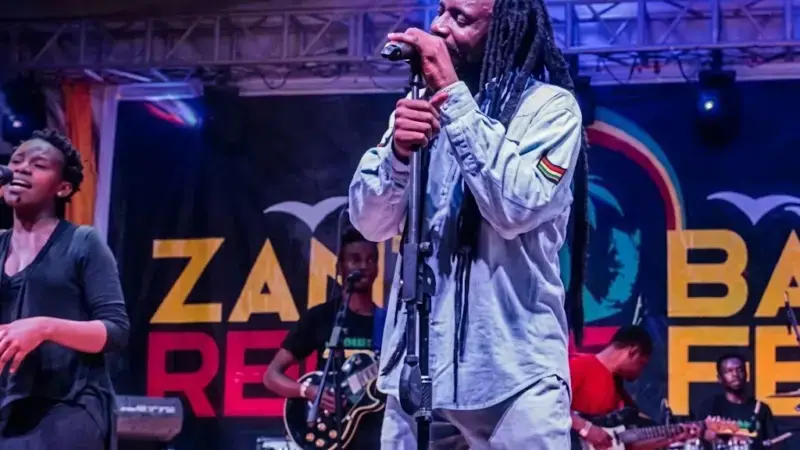
Tanzanian reggae artist Jhikoman has released a song titled "Justice," a cry for humanity and a call for accountability in the face of violence and injustice. The song was written for those who lost loved ones during the October 2025 general elections, which declared Samia Suluhu Hassan president. The elections were marred by violence, with over 500 people killed, and international observers criticized the vote for its lack of transparency.
Jhikoman, born Jhikolabwino Siza Manyika, was deeply moved by reports of people losing their lives and families losing loved ones during the elections. He was also disturbed by the silencing of citizens by authorities when they sought to speak out and mourn their losses. This pain became his motivation to write "Justice," a song that blends acoustic reggae with African music, sung in English, Swahili, and his mother tongue, Kinyasa.
The 2025 election violence shocked many, as Tanzania had cultivated an image of calm, consensus, and order for nearly six decades. The African Union and the Southern African Development Community (SADC) stated that the election fell short of democratic standards. Jhikoman's song is a call for equal rights and justice, reflecting his favorite lyric: "We don't need no war, all we want is peace; there will be no peace without equal rights and justice."
Jhikoman's musical journey began at home, where he watched his older brother play guitar. He developed a passion for reggae, drawn to its messages of peace, love, unity, equality, and justice. He idolized Bob Marley and Alpha Blondy, covering their songs before his brother advised him to write his own music. In 1994, Jhikoman stepped into a recording studio for the first time, marking the beginning of his music career.
Jhikoman's stage name is a combination of his first name, Jhikolabwino, and his surname, Manyika. He has performed since 1994, using his music as a platform to speak out against injustice. His song "Justice" is a testament to his commitment to using his music to advocate for human rights and accountability.
The song "Justice" is part of Global Voices' November 2026 Spotlight series, "Justice as infrastructure," which highlights the ways justice functions as critical infrastructure for any society. Global Voices is partnering with The Hague Institute for Innovation of Law (HiiL) to support this coverage, emphasizing the importance of justice and accountability in maintaining peace and stability.
Jhikoman's music serves as a voice for the voiceless, a reminder that the pain of those who have lost loved ones should never be silenced. His song "Justice" is a call to action, urging authorities to prioritize equal rights and accountability. As a reggae musician from Bagamoyo, Jhikoman continues to use his music as a tool for social change, inspiring others to speak out against injustice and advocate for human rights.
Key points
- Jhikoman's song "Justice" calls for equal rights and accountability in the face of violence and injustice in Tanzania.
- The 2025 election violence in Tanzania resulted in over 500 deaths and was criticized for its lack of transparency.
- Jhikoman's music serves as a voice for the voiceless, advocating for human rights and social change in Tanzania.
Reporting sources
- Who speaks for the voiceless in Tanzania? · Global Voices Africa