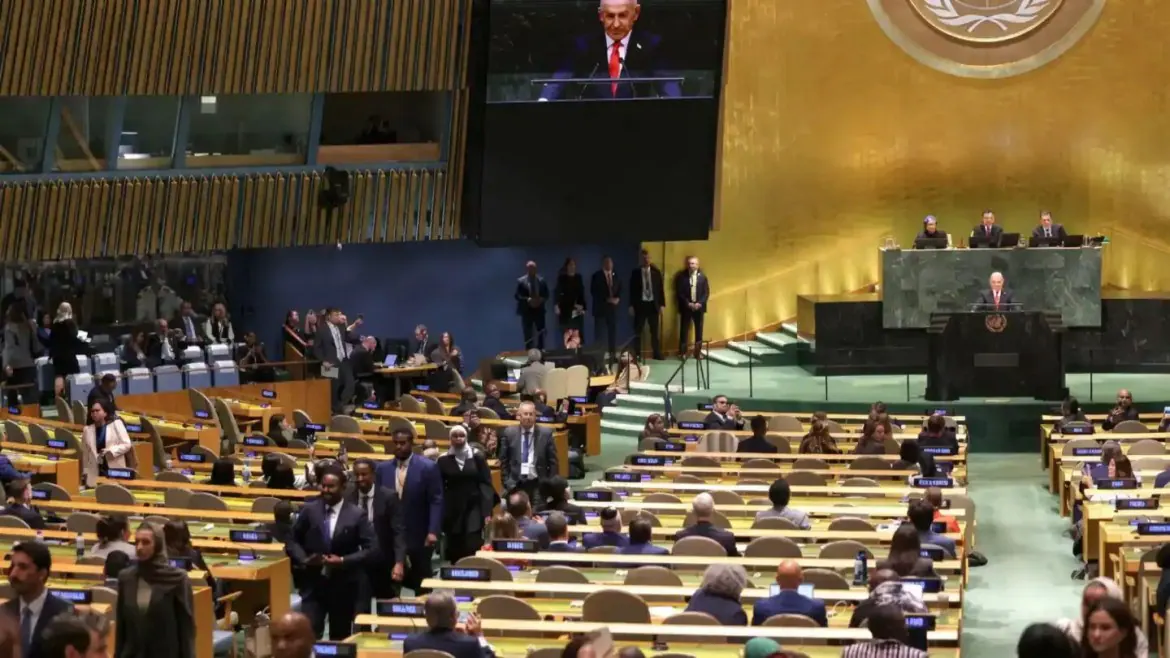
The Tanzanian delegation to the United Nations' General Assembly in New York chose not to boycott Israeli Prime Minister Benjamin Netanyahu's speech, diverging from the stance of several other countries. On September 25, 2026, Netanyahu addressed the assembly, prompting a mass walkout by representatives from at least 77 countries. This demonstration of disapproval was widespread, with various nations from different regions opting to leave the hall or remain absent during his speech.
A significant number of African countries, specifically 20, decided to boycott Netanyahu's address. These countries included South Africa, Senegal, Djibouti, Angola, Congo, Democratic Republic of Congo, Liberia, Eritrea, and Chad, among others. Their decision to walk out or not attend was in contrast to Tanzania's approach. The boycott was not limited to African nations; it was a global response with participants from the Arab States, Asia, Latin America and the Caribbean, Europe, and Oceania.
The walkout was notably observed across several regions. In the Arab States, 18 delegates from countries such as Syria, Palestine, Jordan, and Egypt chose to leave. From Asia and Turkey, 14 countries including Turkey, Iran, and Pakistan also boycotted the speech. Latin America and the Caribbean saw 17 countries participate in the boycott, with nations like Venezuela, Brazil, and Chile represented. Europe and Oceania also had countries that walked out or stayed away.
During Netanyahu's speech, he directly addressed the delegates who were leaving, referring to them as "moral cowards." He also stated that Israel's defense was, in part, a defense of the countries whose delegates had walked out. These comments drew a mixed reaction, with some people booing and others applauding. The event garnered significant international attention, with the video of the protest going viral on various online platforms.
Netanyahu's speech included several key points, such as denying accusations of genocide in Gaza. He also mentioned the decision to strike Iran, describing it as "one of the easiest decisions I've ever made." Furthermore, he expressed his commitment to completing the task at hand, though specifics were not provided. The content of his speech was widely reported and discussed globally.
The decision by the Tanzanian delegation to remain in the hall and listen to Netanyahu's speech sets it apart from many other countries. While details of Tanzania's reasoning are not provided, the action is notable given the widespread criticism of Netanyahu's policies and actions. The incident highlights the complex dynamics at play within international diplomacy, especially at forums like the UN General Assembly.
The boycott and Netanyahu's subsequent speech underscore the deep divisions within the international community on issues related to Israel and Palestine. The reactions from various countries reflect their individual stances on these issues. Tanzania's approach, in contrast to many, adds to the diversity of opinions and strategies employed by nations in such diplomatic settings.
Key points
- Tanzanian delegation stays during Israeli Premier Netanyahu's UN speech despite widespread boycott.
- 20 African countries boycotted Netanyahu's speech, including South Africa, Senegal, and Kenya.
- Netanyahu's speech included denial of genocide accusations in Gaza and commitment to defend Israel.