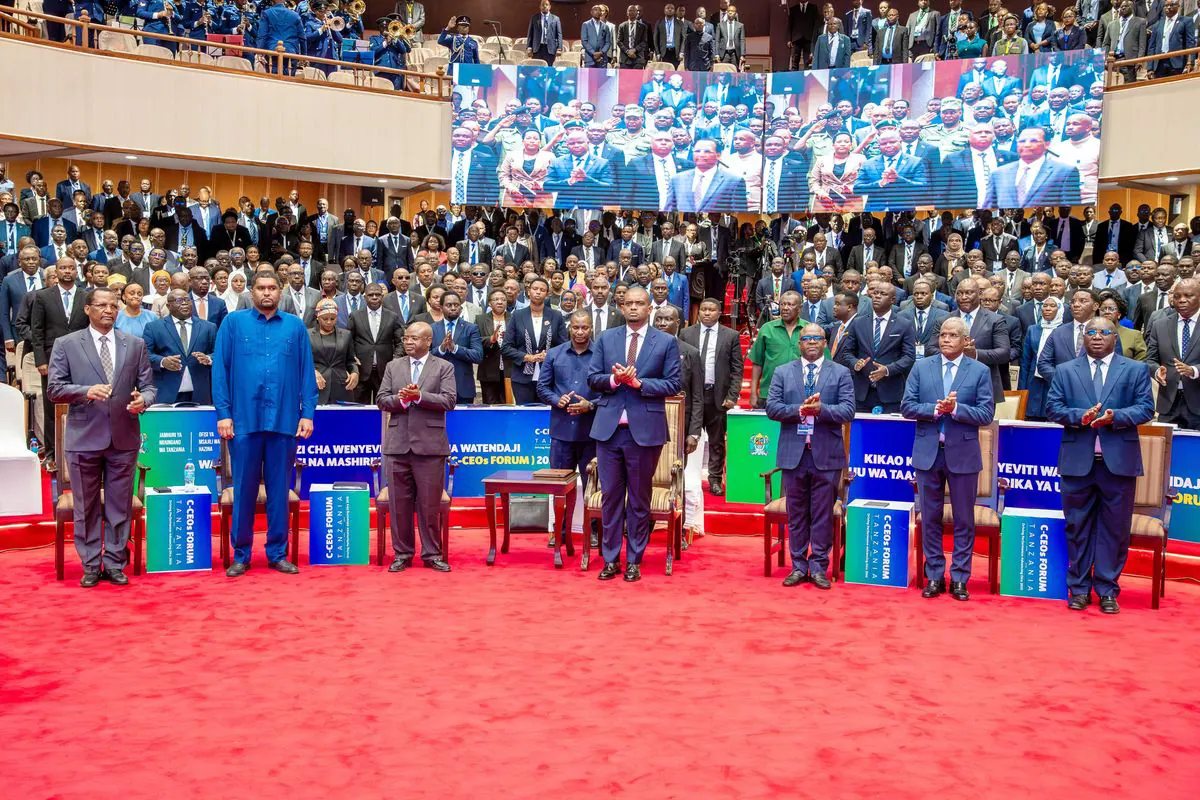
The Tanzanian government has launched a two-pronged approach to address youth unemployment, combining paid apprenticeships at public institutions with efforts to open more employment opportunities for Tanzanians in foreign labour markets. This initiative aims to address the shortage of jobs and the lack of work experience among young people entering the labour market. Vice President Deogratius Ndejembi has challenged public institutions to use part of their returns to finance paid apprenticeships for 10,000 young Tanzanians annually.
According to the government, about one million young people enter the labour market each year, while universities produce around 800,000 graduates annually. However, only about 200,000 young people secure employment each year. Ndejembi noted that the challenge is not only the number of young people seeking jobs but also the lack of practical experience required by employers. Public institutions can help bridge the gap between education and employment by providing young people with practical experience.
The Office of the Treasury Registrar (OTR) oversees 252 public institutions and 56 companies in which the government holds minority interests, with combined investments valued at Sh92.3 trillion. In the 2025/26 financial year, the OTR collected Sh1.327 trillion in dividends and other statutory contributions. Ndejembi directed relevant ministries to prepare a plan within two weeks for recruiting the first 10,000 young people into the proposed apprenticeship programme.
The government is also looking beyond Tanzania's borders to expand employment opportunities. Minister responsible for Labour, Employment and Relations, Deus Sangu, said over 15,000 Tanzanians had secured jobs abroad over the past two years, including 8,804 between January and September this year. The government is seeking to expand this approach to include professional occupations such as teaching, medicine, and engineering.
Sangu said the government expected to announce opportunities for more than 600 engineers and technicians, while negotiations with a major Gulf company could create another 4,500 jobs. The latest push will be discussed at the Second Doha Dialogue on Labour Mobility and Employment, which Tanzania will host on October 5 and 6. The meeting will bring together African countries and Gulf Cooperation Council states.
Development analyst Samson Sombi said international employment could help ease pressure on the domestic labour market while increasing household incomes through remittances. However, he noted that the benefits would depend on the quality of jobs secured, including wages and protection of workers' rights. The government is also seeking to strengthen safeguards for Tanzanians working abroad.
The domestic and international measures reflect a broader effort to address youth employment from both ends: creating pathways into work within Tanzania while expanding access to regulated opportunities in overseas labour markets. Ndejembi emphasized that Tanzania cannot achieve its Vision 2050 targets if it does not invest in human capital. The government aims to build a workforce capable of driving Tanzania's development ambitions.
Key points
- The Tanzanian government has launched a two-pronged approach to address youth unemployment, combining paid apprenticeships at public institutions with efforts to open more employment opportunities for Tanzanians in foreign labour markets.
- The government aims to create pathways into work within Tanzania while expanding access to regulated opportunities in overseas labour markets.
- Over 15,000 Tanzanians have secured jobs abroad over the past two years, including 8,804 between January and September this year.