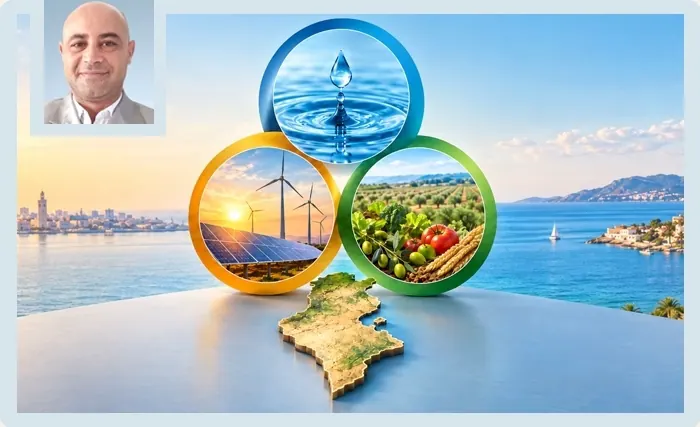
Tunisia is facing a series of shortages in essential goods, including water, energy, food products, and medicine. These shortages have been occurring in various sectors and for different reasons, but they all point to a common question: how can the country ensure that its economy has a sustainable supply of essential resources when its resources, productive infrastructure, and supply chains are under increasing strain? The country's development model is being questioned, and its ability to anticipate interdependencies and preserve its resources is being challenged.
The shortages in Tunisia are not limited to one sector; they are widespread and affect various aspects of daily life. The country's water supply has been particularly affected, with the Tunisian Observatory of Water reporting 608 disruptions to the water supply in July. The electricity sector has also been impacted, with the Tunisian Electricity and Gas Company (STEG) implementing scheduled power outages to preserve the balance of the electrical network. These tensions have taken on a more structural dimension, according to the World Bank's Tunisia Economic Monitor, which estimates that the country's renewable freshwater resources have dwindled to around 380 cubic meters per inhabitant per year.
The World Bank report also warns that water scarcity could reduce Tunisia's GDP by 6.4% by 2050 if no action is taken. This projection is not a foregone conclusion, but it highlights the need for the country to adopt a more integrated approach to managing its resources. The report emphasizes that the issue of resources goes beyond the management of sectoral crises and requires a more comprehensive approach that takes into account the interdependencies between water, energy, food, and the entire productive system.
One of the limitations of traditional development approaches is that they tend to treat resources separately, even though they are closely interconnected. The water-energy-food nexus concept, developed by the Food and Agriculture Organization (FAO) and other international institutions, seeks to understand these interdependencies and reduce the unintended consequences of sectoral policies. This approach recognizes that the three dimensions of water, energy, and food form a system whose components condition each other.
The water-energy-food nexus has significant implications for Tunisia, which relies heavily on imports to meet its strategic needs. The country's agricultural sector, for example, depends directly on water availability, but it also depends on energy for irrigation, transportation, and processing. A crisis in the energy sector can therefore have a ripple effect on food production and distribution costs. Similarly, choices about irrigation, crop selection, and agro-food processing affect water and energy needs.
The Tunisian government faces a paradox: it needs to increase production and create jobs while managing resources that are becoming increasingly scarce. The country's development model must be adapted to take into account the interdependencies between resources and to prioritize sustainability. This requires a fundamental shift in perspective, evaluating each sectoral decision not only in terms of its immediate effects but also in terms of its impact on the entire development system.
The Tunisian government must adopt a more integrated approach to managing its resources, taking into account the interdependencies between water, energy, food, and the entire productive system. This requires a coordinated effort across different sectors and levels of government, as well as a commitment to sustainability and long-term thinking. The country's development model must be resilient and adaptable to changing circumstances, and it must prioritize the needs of its citizens.
Key points
- The Tunisian government must adopt a more integrated approach to managing its resources, taking into account the interdependencies between water, energy, food, and the entire productive system.