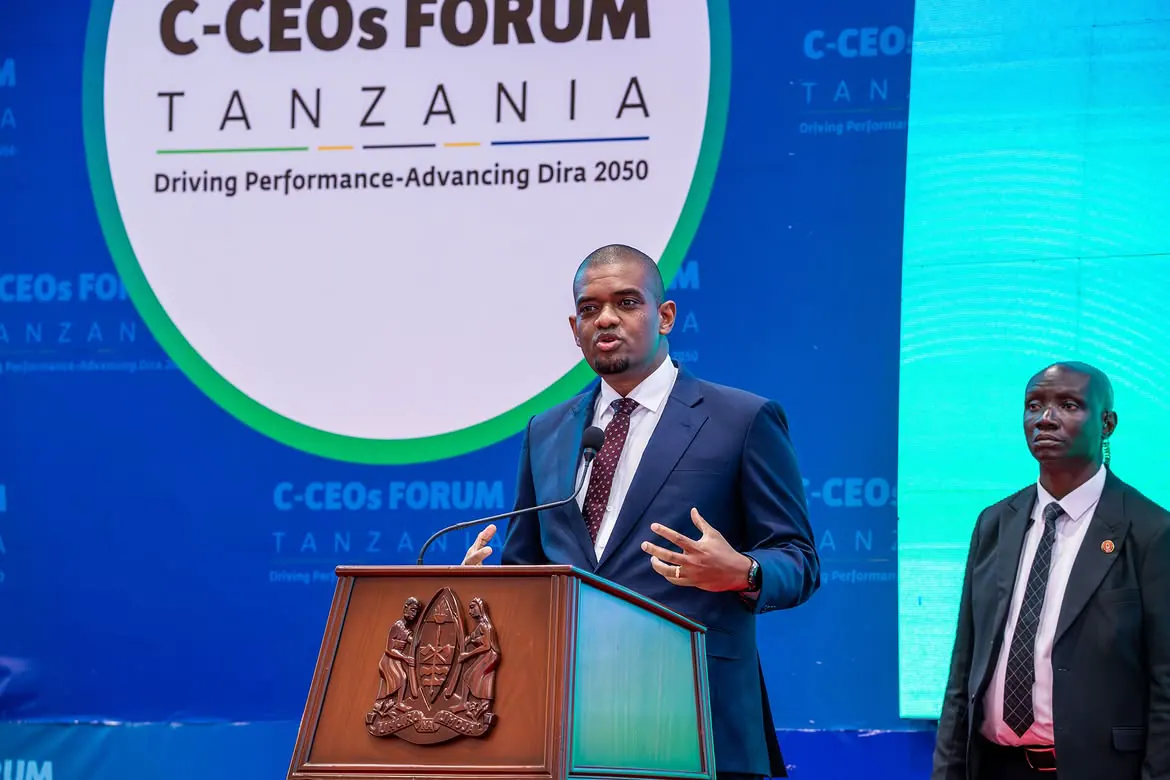
In a bid to accelerate the implementation of Tanzania's Vision 2050, Vice-President Deogratius Ndejembi has directed key ministries and institutions to produce a plan for placing 10,000 graduates in state-owned enterprises every year. The directive was issued during the Chairpersons and Chief Executive Officers of Public Institutions (C-CEOs) Forum 2026 in Arusha. The plan aims to provide structured internships in public institutions, enabling young people to gain professional experience and compete in the domestic, regional, and global labor markets.
According to Vice-President Ndejembi, the country's 308 public institutions paid about 1.3 trillion Tanzanian shillings in dividends during the 2025/26 financial year. He suggested that part of these resources could be invested in developing young people. The Vice-President expressed concern that awards presented at the forum did not recognize institutions for their contribution to creating employment opportunities for young people. He emphasized that Vision 2050 requires greater investment in human capital.
The Vice-President cited Tanzania Commission for Universities (TCU) statistics, which indicate that about 62,570 students graduate from universities annually, excluding those completing vocational training through VETA. He noted that many graduates struggle to enter the labor market because employers demand work experience, while opportunities to gain that experience remain limited. The Tanzania Employment Services Agency (TAESA) had trained 3,200 young people for the labor market by 2021, a positive but insufficient achievement, according to the Vice-President.
Vice-President Ndejembi proposed that public institutions absorb 10,000 interns annually, while incentives encourage the private sector to take in another 20,000, creating 30,000 internship opportunities every year. He linked the proposal to the 30 percent public procurement allocation for special groups, arguing that internships would equip young people with practical skills to benefit from government contracts. The Public Procurement Regulatory Authority (PPRA) has advertised tenders worth nearly 40 trillion Tanzanian shillings this year.
Minister of State in the President's Office – Planning and Investment, Prof Kitila Mkumbo, emphasized that public entities have a key responsibility to create a favorable environment for private-sector investment. The private sector is expected to contribute 70 percent of the required investment, while the public sector accounts for 30 percent. Prof Mkumbo noted that public institutions and state-owned enterprises are responsible for creating and unlocking opportunities for businesses to invest, expand production, and create jobs.
The C-CEOs Forum brought together board chairpersons and chief executives of public institutions and organizations under the theme, "High-Performing Public Enterprises for a Competitive, Inclusive and Resilient Economy in Implementing Vision 2050." The forum aimed to promote collaboration and coordination among public institutions to drive investment and job creation. Vice-President Ndejembi also urged chief executives of public institutions to make timely decisions, warning against administrative delays that could slow national development.
The Vice-President will present President Dr. Samia Suluhu Hassan with a report on the measures put in place to enable the internship program to begin immediately. The program aims to equip young people with practical skills, increase their productivity, and contribute to the country's economic growth. By investing in young people, the government hopes to unlock opportunities for businesses to invest, expand production, and create jobs, ultimately driving Tanzania's economic development.
Key points
- Vice-President Deogratius Ndejembi tasks state-owned enterprises to absorb 10,000 graduates annually.
- The internship program aims to equip young people with practical skills to benefit from government contracts.
- Public institutions paid about 1.3 trillion Tanzanian shillings in dividends during the 2025/26 financial year.