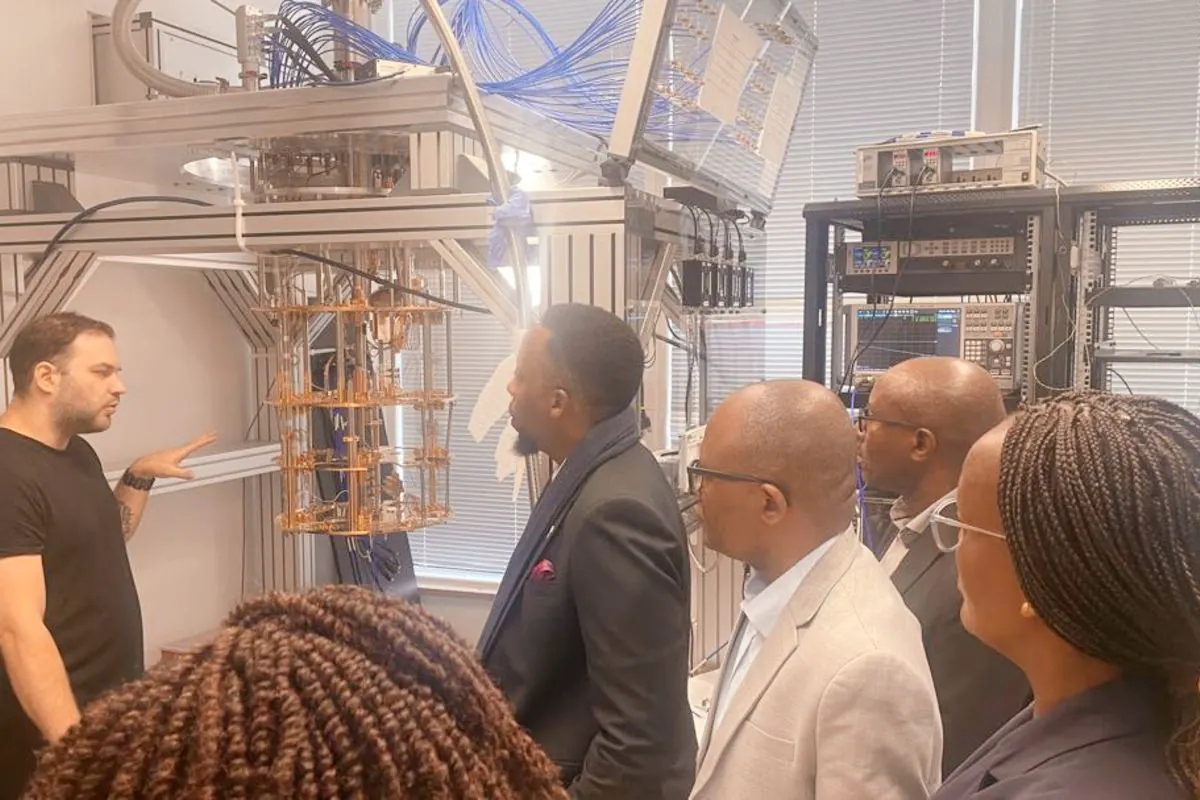
Tanzania's ambition to become a regional technology hub depends on expanding digital infrastructure and building a startup ecosystem that turns ideas into competitive businesses. A study visit by a Tanzanian delegation to Helsinki, Finland, has offered insights into how universities, investors, public institutions, and entrepreneurs can work together to develop a promising digital economy. The visit was organised by the Ministry of Information and Communication Technology and the ICT Commission under the Digital for Tanzania (D4T) Twinning Project.
The Digital for Tanzania Twinning Project brings together Finland, Estonia, and Germany to support Tanzania's digital transformation through institutional capacity-building, policy development, and technical cooperation. The project covers areas such as cybersecurity, personal data protection, interoperability, data governance, and emerging technologies, including artificial intelligence. The delegation's engagement with Finland's startup ecosystem provided a wider perspective on how digital transformation can extend beyond government services to entrepreneurship, research, and economic activity.
According to Dr. Ally Simba, Head of ICT development at the ICT Commission, Tanzania has achieved 94 percent high-speed internet coverage, while 5G coverage stands at 35 percent. The National ICT Broadband Backbone (NICTBB) extends 15,167 kilometres, connecting 122 of the 139 district headquarters on the Mainland. Dr. Simba noted that these investments provide a foundation for digital services and AI adoption, and the visit plays a significant role in Tanzania's journey to develop its digital economy.
However, Dr. Simba also noted that Tanzania has gaps in specialised skills, data readiness, computing infrastructure, research and development, investment, and institutional coordination. To address these gaps, Tanzania is moving towards a dedicated national AI policy direction, with the National AI Strategic Framework 2026–2031 awaiting approval. The Digital Economy Strategic Framework 2024–2034 provides the broader national direction. Dr. Simba highlighted the need to translate these ambitions into evidence-based implementation.
Finland's experience offers lessons for Tanzania, particularly in building an ecosystem around ideas. Startups in Finland do not grow through policy alone, and the country's relatively small domestic market encourages many Finnish startups to consider international markets from an early stage. Cooperation among universities, investors, businesses, and support organisations is crucial. The delegation visited Maria 01, a startup campus in Helsinki, where entrepreneurs, investors, and service providers work within a shared environment.
The visit also included a presentation at Aalto University's Startup Sauna, a leading student-led entrepreneurship hub. The delegation heard how students can access entrepreneurship support while still studying, raising questions for Tanzania about how universities can make entrepreneurship support available earlier. The ICT Commission is mandated to foster, coordinate, and drive national ICT development and socio-economic growth, as well as promote the growth of the local ICT industry.
Through strategic government-led study programmes, experts believe Tanzania has significant potential to become a technology hub in East and Central Africa. The visit to Finland is an important step in learning from others' experience and adapting it to Tanzania's context to strengthen a sector central to the national vision of building a strong digital economy. Key initiatives, such as the proposed National AI Readiness and Compute Demand Assessment Programme, aim to examine organisational readiness, adoption, workforce requirements, data, and computing needs.
Key points
- Tanzania aims to become a regional technology hub by expanding digital infrastructure and building a startup ecosystem.
- The country can learn from Finland's experience in building a startup ecosystem that turns ideas into competitive businesses.
- Tanzania has achieved 94 percent high-speed internet coverage, but still faces gaps in specialised skills, data readiness, and computing infrastructure.