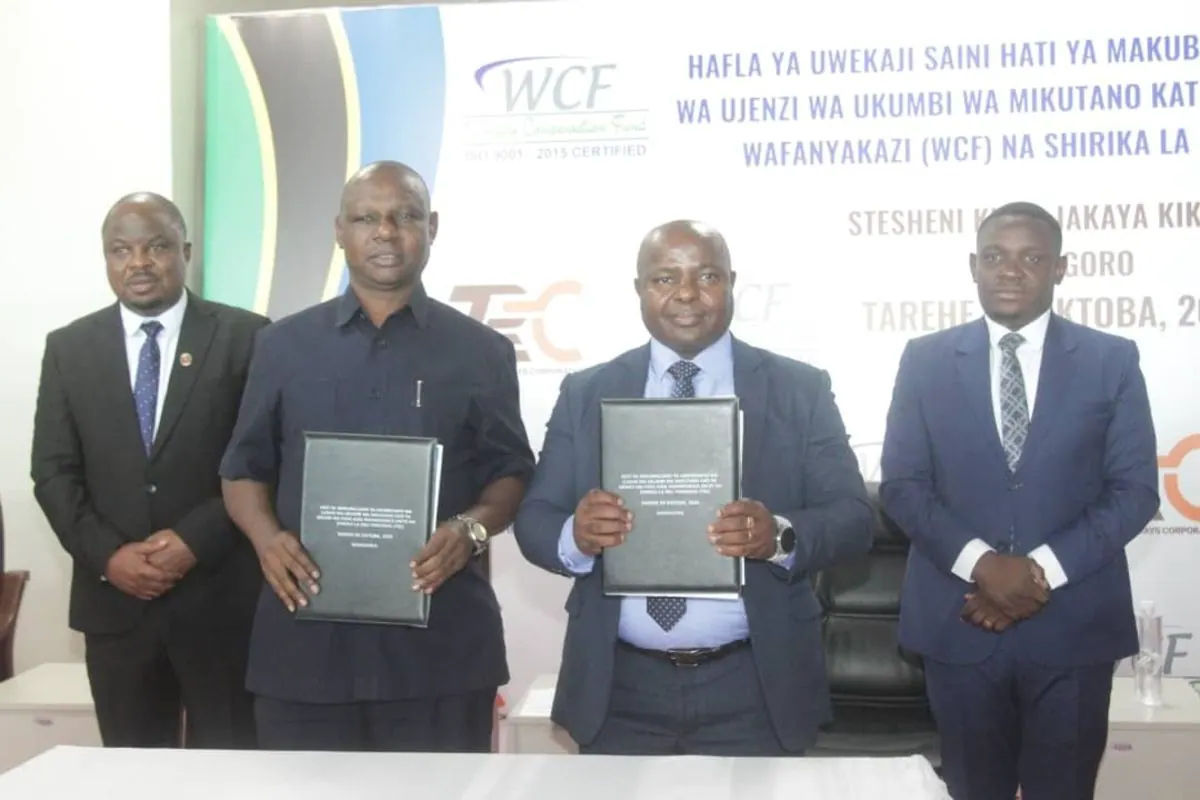
The Workers Compensation Fund (WCF) and Tanzania Railways Corporation (TRC) have signed a memorandum of understanding (MoU) to invest in a Sh65 billion project to build a 91-room four-star hotel and conference centre in Morogoro. The project, to be developed at the Jakaya Kikwete Central Station in Kihonda, aims to tap into opportunities arising from the growing number of passengers using the Standard Gauge Railway (SGR). The investment is expected to increase the value of TRC assets and generate non-fare revenue.
Deputy Minister for Transport David Kihenzile said the growth in SGR passenger numbers had increased demand for accommodation, conference facilities, food, business and tourism services along the railway network. He cited that about 5.5 million passengers had travelled on the SGR between June 2024 and March 2026, generating more than Sh169 billion in revenue for TRC. The continued investment in the SGR has produced direct economic benefits, with Morogoro among the areas benefiting from increased passenger traffic.
The proposed hotel and conference centre in Kihonda aims to tap into emerging economic opportunities while increasing the value of TRC assets and diversifying its revenue sources beyond railway fares. The MoU provides a framework for WCF and TRC to undertake feasibility studies, technical assessments and other preparations for the investment. Minister of State in the Prime Minister's Office - Labour, Employment and Relations Deus Sangu urged the two institutions to ensure that the next stages are undertaken in accordance with the law, while observing transparency, professionalism and value for money.
Minister Deus Sangu said the investment should go beyond constructing buildings and instead create jobs, business opportunities and wider economic activity. He urged WCF and TRC to establish an implementation schedule, define the responsibilities of each party, set performance indicators and establish monitoring and evaluation mechanisms. Sangu also urged the institutions to ensure local professionals, businesses, entrepreneurs and service providers benefit from the value chain created by the investment.
The investment is in line with the National Development Vision 2050, which emphasises productive use of public resources, investment, quality infrastructure and an economy that generates jobs and income. The project is expected to increase Morogoro's capacity to host national and international conferences, stimulate demand for locally produced goods and services and support tourism and business activities. WCF Board Chairperson Renatha Rugarabamu said the fund's core responsibility was to compensate workers who suffered injuries or illnesses arising from their employment.
Rugarabamu said the responsibility required WCF to make productive investments that would strengthen the fund's sustainability and enhance its ability to fulfil its mandate over the long term. TRC Board Chairperson Jeffer Machano said the corporation would continue working with WCF to ensure the investment is implemented and achieves its intended objectives. He cited that the SGR currently carries an average of 2,800 passengers a day between Morogoro and Dar es Salaam, with 258,246 passengers using the service during the 2025/26 financial year.
The partnership between TRC and WCF is part of efforts to make productive use of available resources and increase the value of public assets. The project is also expected to create direct and indirect employment, expand business opportunities for local enterprises and support economic activity in Morogoro. Implementation should be guided by transparency, accountability, value for money, quality and proper use of resources to ensure the signed agreement translates into a project that benefits the public and the country.
Key points
- The project aims to tap into opportunities arising from the growing number of passengers using the Standard Gauge Railway (SGR).
- The investment is expected to increase the value of TRC assets and generate non-fare revenue.
- The project is expected to create direct and indirect employment, expand business opportunities for local enterprises and support economic activity in Morogoro.