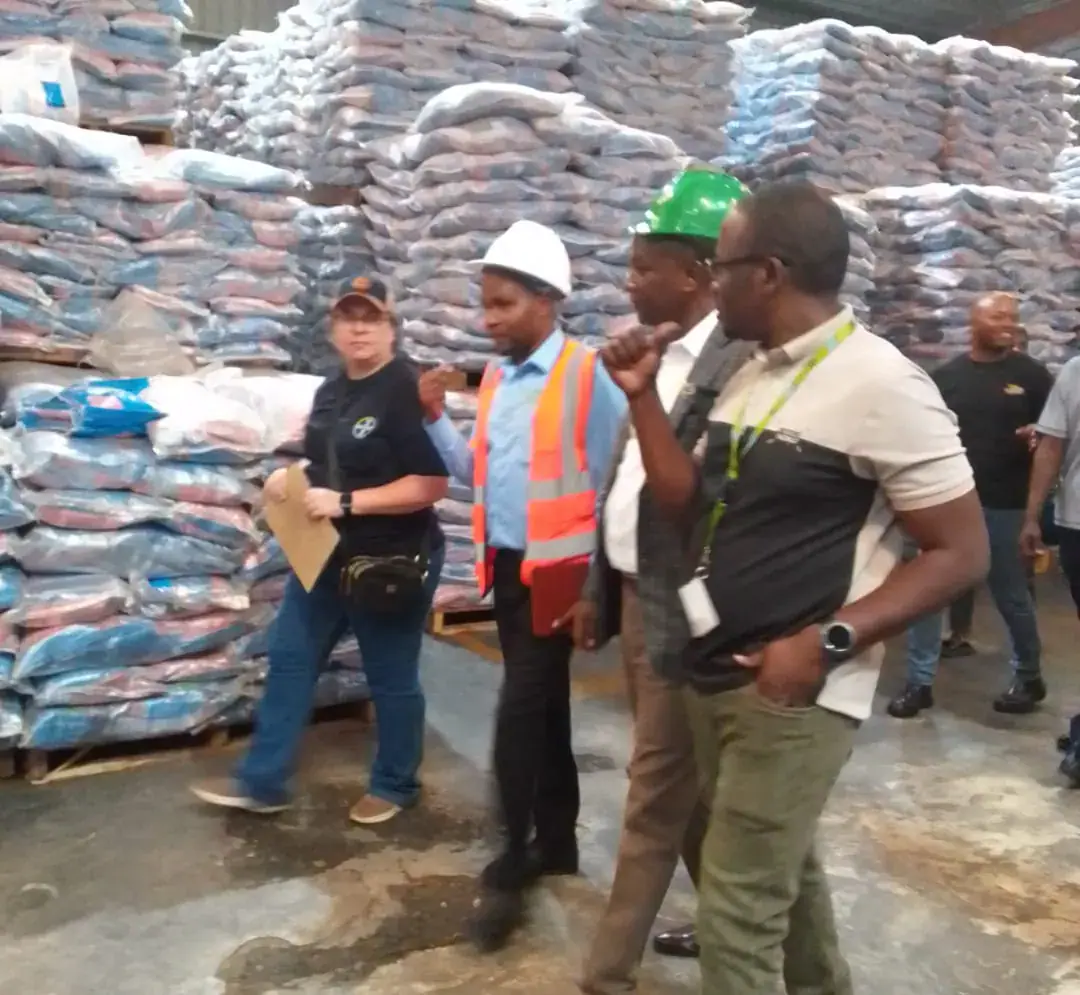
The Official Seed Certification Institute (TOSCI) in Tanzania has intensified its efforts to guarantee that seeds supplied to farmers meet the required quality standards. This is achieved through rigorous laboratory testing, certification, and regular inspections of storage facilities. TOSCI's Acting Northern Zone Manager, Erick Nangududa, highlighted these measures during a visit by the National Agricultural Extension and Services Agency (NAESA) Chief Executive Officer, Dr. Wilhelm Mafuru, to BAYER Life Science (T) Ltd seed warehouse in Arusha.
TOSCI conducts thorough inspections and laboratory tests on both locally produced and imported seeds before approving them for sale. Locally produced seeds are transported to warehouses after harvesting, while imported seeds are delivered to designated storage facilities. Companies then apply for inspection through the TOSCI online system. Once applications are submitted, TOSCI receives requests for sampling, visits the warehouses, collects seed samples, and takes them to laboratories for testing.
Laboratory tests focus on seed purity and germination capacity to establish whether products meet the required standards. Seeds that fail the purity test are rejected and returned to companies for cleaning before they can submit fresh applications for inspection. For instance, maize seeds require a germination rate of at least 90 percent. Any seed that falls below this threshold fails the germination test and cannot be certified.
Companies whose seeds pass all required tests are issued with certificates, allowing them to package and distribute products to the market. Seeds that fail certification are not permitted to be sold to farmers. Companies dissatisfied with inspection results have the right to appeal, in which case TOSCI inspectors collect fresh samples for further laboratory testing.
Proper storage conditions are essential for maintaining seed quality. TOSCI inspectors assess warehouse facilities whenever they visit to collect samples. Key requirements include adequate ventilation, proper spacing between seed bags and warehouse walls, and the use of pallets to prevent direct contact between bags and warehouse floors.
Poor storage practices can cause variations in seed quality within the same batch, resulting in some bags recording good germination rates while others fail. This can create confusion when farmers buy seeds from the same lot but experience different results. One farmer may report good germination while another complains that the seeds have failed. The problem could actually be poor storage conditions.
To ensure proper storage, seed bags should be kept at least one meter away from warehouse walls to allow adequate air circulation and facilitate movement during inspections. Warehouses should also maintain adequate passages between stacks of seed bags to ensure proper ventilation and easy access. By enforcing these standards, TOSCI aims to protect farmers from low-quality seeds and promote better agricultural practices.
Key points
- TOSCI conducts laboratory tests on seeds to ensure they meet required standards.
- Seeds that fail certification are not permitted to be sold to farmers.
- Proper storage conditions are crucial for maintaining seed quality.