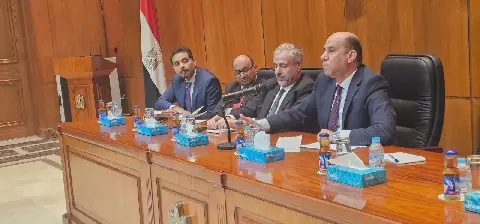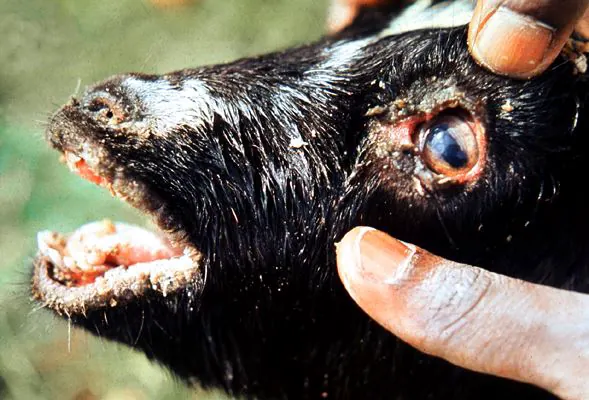
Prime Minister Dr. Mwigulu Nchemba has urged for increased global investment to eradicate peste des petits ruminants (PPR), a highly contagious disease affecting sheep and goats, by 2040. He made the remarks during an international conference organised by the Food and Agriculture Organisation (FAO) on implementing the One Health approach in food and agriculture systems. Dr. Nchemba emphasized the need for national ownership and domestic financing to form the foundation of eradication efforts.
The conference brought together leaders who called for increased production of PPR vaccines to enable countries to control and eventually eradicate the disease more effectively. They also stressed the need for greater investment in disease control, application of scientific approaches, research, and the establishment of modern laboratories equipped with adequate personnel and technology. The Prime Minister's appeal is supported by various stakeholders, including the FAO, World Organisation for Animal Health (WOAH), African Union, and international financial institutions.
FAO Deputy Director-General Godfrey Magwenzi noted that countries had gained important lessons from the successful eradication of rinderpest, which was officially declared eradicated in 2011. He stated that for PPR, the knowledge, tools, and international cooperation needed to eradicate the disease are already in place. However, the challenge lies in ensuring long-term investment that delivers the necessary services and interventions to the last mile.
European Union Ambassador to Rome and Permanent Representative to the UN Rome-based agencies, Dr. Martin Selmayr, emphasized the need for a new approach to eradicate PPR, rather than relying solely on repeated vaccination campaigns. He suggested using Global Gateway as a catalyst for investment and called on partner countries to invest resources in national eradication programmes. Development banks and international financial institutions are also urged to participate in the effort.
Dr. Samuel Thevasagayam, Director of the Livestock Team at the Gates Foundation, highlighted the importance of using lessons from the rinderpest eradication campaign to mobilise more resources for the eradication of PPR. He noted that the rinderpest experience teaches us that when reaching the final stage, it is crucial to mobilise resources to finish the job rather than repeat campaigns without a strategy for reaching the end.
Tanzania's Minister for Agriculture, Daniel Chongolo, stated that discussions at the conference focused on changing the perception of health from being a stand-alone sector to being part of the wider food and livestock production chain. The approach aims to strengthen the production chain, including controlling livestock diseases in Africa such as PPR and Foot and Mouth Disease (FMD).
The international community is working together to eradicate PPR by 2040, with a focus on sustainable systems, regional cooperation, and measurable results. Key stakeholders, including the FAO, WOAH, and the European Union, are committed to supporting countries in their efforts to control and eradicate the disease. The goal is to ensure that health is protected throughout the production process, from farming and livestock keeping to the products reaching consumers.
Key points
- Tanzania's Prime Minister Dr. Mwigulu Nchemba calls for stronger global investment to eradicate PPR by 2040.
- The international community emphasizes the need for a new approach to eradicate PPR, including increased production of PPR vaccines and greater investment in disease control.
- Stakeholders, including the FAO and the Gates Foundation, stress the importance of using lessons from the rinderpest eradication campaign to mobilise resources for PPR eradication.