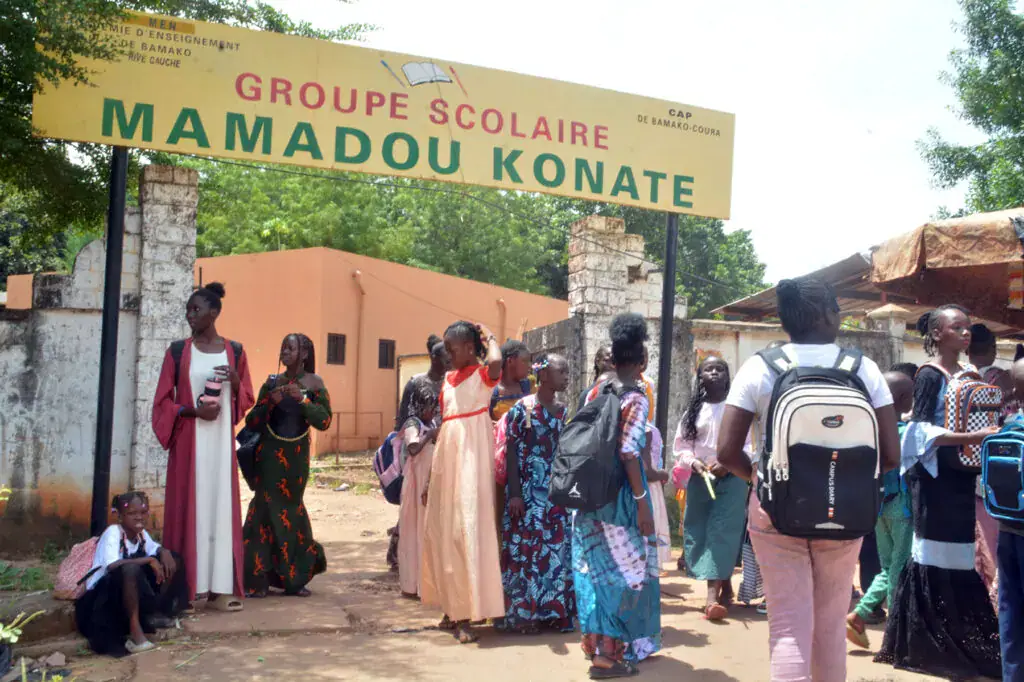
Mali's education system is grappling with profound difficulties, including a shortage of teaching personnel, inadequate training programs, and limited job prospects. These challenges have sparked concerns about the system's ability to prepare young people for the workforce. The crisis extends beyond access to education, encompassing the quality of learning, teacher working conditions, and the system's capacity to facilitate professional integration.
The closure of schools in certain areas has further complicated access to education, undermining students' academic trajectories. Sidi Danioko, Vice-President of Mali's Patronat, highlighted the mismatch between training and employment opportunities. He noted that between 200,000 and 300,000 young people enter the job market annually, while only 20,000 to 30,000 are recruited into the public sector.
The informal sector dominates the economy, accounting for approximately 80% of activity and employment. Aly Baba Coulibaly, a graduate of the Institut de formation des maîtres, emphasized that remote areas face infrastructure and personnel shortages. He also drew attention to the challenging working conditions of some teachers in private establishments.
Many stakeholders advocate for a comprehensive overhaul of the education model. Professor Dianka Sanoh proposes reorganizing curricula to align with state and economic needs, particularly in agro-food, education, and health. This approach focuses on planning human resource requirements and allocating resources more effectively.
Professor Sanoh stressed that planning is crucial to addressing the challenges facing Mali's education system. He argued that a well-planned education system would enable the country to absorb the growing number of graduates. These concerns were raised during the third day of the 26th edition of the Bamako Forum.
Professor Waténi Diallo called for the establishment of quality assurance cells and internal audit units in educational institutions, along with regular peer evaluations or assessments by accredited organizations. He noted that despite government financial efforts, resources are not always allocated to priority needs.
Diallo recommended revising high school curricula, grouping them into three main areas: Exact Sciences, Biological and Earth Sciences, and Letters and Humanities. This reform aims to improve the quality of education and better prepare students for the workforce.
Key points
- A comprehensive reform of Mali's education system is necessary to address deep-seated challenges.
- The education system faces significant challenges, including teacher shortages and limited job opportunities.
- Stakeholders advocate for a reorganized education model that aligns with state and economic needs.
Reporting sources
- École malienne : L’urgence d’une réforme · Le Journal du Mali