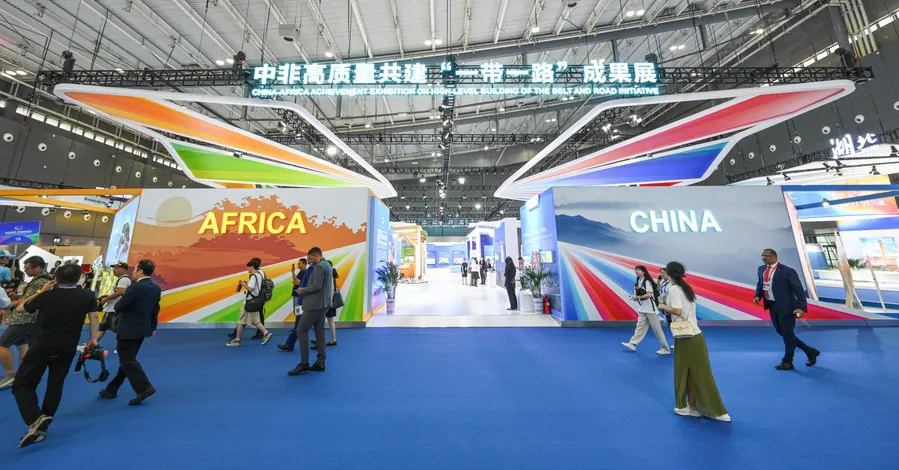
The history of people-to-people relations between Tanzania and China is being showcased in Dar es Salaam through the “Africa and Jiangmen Overseas Chinese Special Exhibition”. The exhibition, which runs from August 26 to September 25 at the East Africa Commercial and Logistics Centre (EACL), highlights the experiences of overseas Chinese in Africa alongside the historical and contemporary links between Tanzania and Jiangmen in China’s Guangdong Province. This year marks the 70th anniversary of diplomatic relations between China and African countries, and has been designated as the “China-Africa People-to-People Exchange Year” by Chinese and African leaders.
The Tanzania-Jiangmen connection has deep roots, dating back to the early 20th century when Chinese labourers were recruited for the construction of the Central Railway during German colonial rule. Many of these workers came from Kaiping, a county-level city under Jiangmen. Their arrival was part of a wider movement of Chinese people into Africa, where communities developed around employment, trade, and other economic activities. The legacy of this period remains visible in Dar es Salaam, where many early Chinese people buried in the city’s cemetery were reportedly from Kaiping.
The Chinese cemetery in Dar es Salaam became an important point of connection between Tanzania and the families of those migrants in China. In 2014, the cemetery was found in a severely deteriorated condition, prompting a Tanzanian woman, Ms Fatuma, to bring the situation to public attention. Members of the Chinese community in Tanzania subsequently mobilised funds and materials for the cleaning and restoration of the cemetery. This effort attracted wider attention, including from the Jiangmen municipal government and the Overseas Chinese Affairs Office.
The restoration of the cemetery illustrates the defining feature of people-to-people exchange: relationships can continue through generations even when the individuals who created them are no longer alive. The Kaiping Overseas Chinese Affairs Office successfully located relatives of several overseas Chinese, including Lao Chaoyu, buried in Tanzania. This story demonstrates how historical connections can evolve as economic circumstances change.
The relationship between Tanzania and China has also developed through commerce, with Jiangmen’s Heshan city establishing a motorcycle industrial chain that has connected with African markets. In 2025, Guangdong Shiwang Motorcycle Co Ltd invested 147 million yuan in a production base in Yayao Town, Heshan, establishing a network of over 150 dealers in Tanzania. The company’s KINGLION brand ranks first in market share, representing a newer form of people-to-people interaction involving manufacturers, distributors, traders, workers, and consumers.
Education and culture are also important parts of the China-Africa relationship. Following China’s reform and opening-up, Chinese communities in Africa became increasingly diversified, with people involved in trade, manufacturing, infrastructure, and services. Chinese-language education expanded, with Confucius Institutes established in several African countries and Chinese introduced into some primary and secondary school curricula. Cultural activities, such as Chinese martial arts and traditional medicine, have gained visibility in different African communities.
The exhibition provides a reminder that international relations are not shaped only in diplomatic meetings, but also through the everyday experiences of people who travel, work, trade, communicate, preserve heritage, and maintain connections across borders. For Tanzania, the exhibition offers a local perspective on a much broader relationship, highlighting the social dimension that exists alongside formal government relations.
Key points
- The exhibition showcases the experiences of overseas Chinese in Africa alongside the historical and contemporary links between Tanzania and Jiangmen in China’s Guangdong Province.
- The relationship between Tanzania and China has developed through commerce, education, and culture, in addition to historical connections.
- The people-to-people exchange between Tanzania and China has continued through generations, with relationships evolving as economic circumstances change.