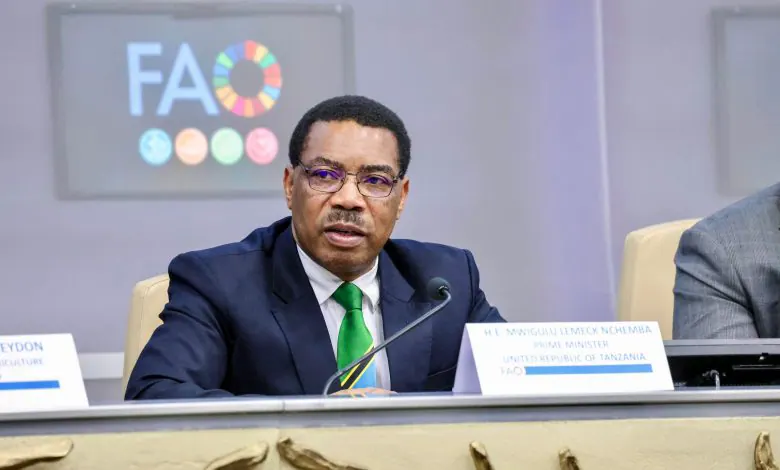
Tanzania's Prime Minister, Dk. Mwigulu Nchemba, has highlighted the crucial role of women farmers in the country's agricultural sector and its connection to the One Health concept. Speaking at a high-level meeting on the International Year of the Woman Farmer 2026 in Rome, Italy, he emphasized that empowering women farmers is a vital investment in both agriculture and One Health. The meeting, held at the Sheikh Zayed Center, was organized by the Food and Agriculture Organization (FAO) of the United Nations.
Dk. Mwigulu noted that women are not only beneficiaries but also key producers, innovators, entrepreneurs, and decision-makers in the agricultural sector. He cited the country's President, Dk. Samia Suluhu Hassan, as a champion of women's empowerment, being the first female President in Tanzania's history. Despite their significant contributions, women farmers in Tanzania face challenges such as limited access to land, finance, technology, and markets.
To address these challenges, the Tanzanian government has launched initiatives such as the Building a Better Tomorrow (BBT) program, which aims to create 1.6 million jobs and support 200,000 agricultural businesses owned by youth and women by 2030. As of June 2026, the program has disbursed TSH 1.59 billion (approximately USD 601,000) to 47 beneficiaries, with 36% being women. Additionally, the program has deployed 2,282 young extension officers to provide advisory services to small-scale farmers.
The Tanzanian government is also investing in water management and climate change mitigation projects. Dk. Mwigulu reported that 395 solar-powered boreholes have been drilled in 234 villages across 45 districts, using climate-resilient technologies. Furthermore, the government is supporting women and youth to transition from traditional farming practices to higher-value activities, such as value addition and processing.
The Prime Minister emphasized that investing in women farmers is not only an investment in agriculture but also in One Health, which recognizes the interconnectedness of human, animal, and environmental health. He called for strengthened policies and investments to support women's access to land, finance, technology, and markets. Dk. Mwigulu also urged stakeholders to recognize women's roles as producers, innovators, and decision-makers in agriculture.
Other participants at the meeting, including Dr. Appolinaire Djikeng, Director General of the International Livestock Research Institute (ILRI), highlighted the critical role of women in implementing the One Health concept. Dr. Djikeng noted that women, particularly women pastoralists, make daily decisions about animal health, water security, household nutrition, and resource management.
The meeting concluded with a call for collaboration and commitment to empowering women farmers and promoting gender equality in agriculture and One Health. Tanzania has expressed its readiness to work with the FAO and other stakeholders to ensure the International Year of the Woman Farmer 2026 has a lasting impact beyond 2026.
Key points
- Empowering women farmers is crucial for implementing the One Health concept in Tanzania.
- The Tanzanian government has launched initiatives to support women and youth in agriculture, including the Building a Better Tomorrow (BBT) program.
- Women farmers in Tanzania face challenges such as limited access to land, finance, technology, and markets, which need to be addressed through strengthened policies and investments.