Corruption remains a significant challenge in Ghana, draining public resources, weakening institutions, and slowing national development. Despite this, many politicians who remain silent on corruption allegations become vocal when a political figure faces investigation, prosecution, or imprisonment. This raises questions about their priorities and commitment to accountability. Corruption has cost Ghana dearly, with funds intended for essential public services and infrastructure often lost through mismanagement and alleged financial irregularities.
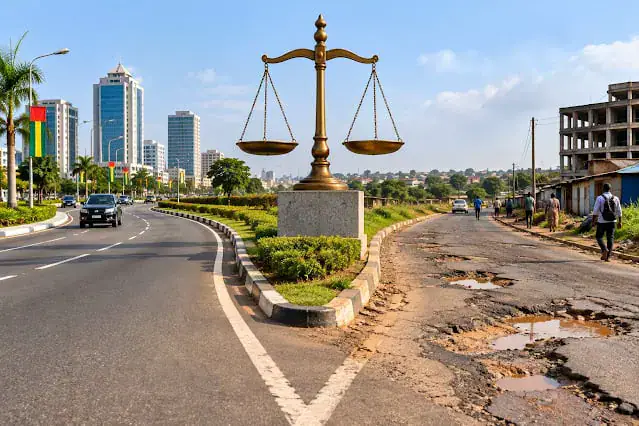
The consequences of corruption are evident across Ghana, with communities struggling with poor infrastructure, high youth unemployment, and underfunded public institutions. Every cedi lost to corruption is a cedi taken away from national development. Successful nations worldwide have understood that corruption cannot be fought with speeches alone, instead relying on strong institutions, independent investigations, and criminal prosecutions where evidence supports it.
In contrast to countries like Britain, Canada, and the United States, where politicians and public officials are investigated and sometimes imprisoned for corruption-related offences, Ghana's conversation often shifts away from allegations themselves. Instead of focusing on whether public resources were misused or laws were broken, debates frequently center on whether the accused person is being unfairly targeted, creating the impression that political loyalty sometimes matters more than accountability.
The recent discussions surrounding Bernard Antwi-Boasiako, also known as Wontumi, have highlighted this challenge. Rather than allowing investigations and legal processes to take their course, some sections of the political landscape have framed the matter as political persecution. Such reactions may undermine public confidence in the justice system before the facts have been fully established.
In any democracy governed by the rule of law, accusations alone do not make a person guilty, and every individual deserves due process, a fair hearing, and the presumption of innocence. At the same time, investigations should not be discouraged simply because the person involved is politically influential. If politicians demand accountability from their opponents, they must also accept accountability when their own allies come under scrutiny.
The fight against corruption should never be selective, depending on political affiliation, ethnic background, social status, or party loyalty. Corruption harms all Ghanaians, regardless of their political beliefs, and a hospital project left unfinished or public funds allegedly diverted for private gain affects the ordinary citizen far more than the political elite. Ghana stands at a critical moment in its democratic development, choosing between strengthening institutions and promoting accountability or continuing the cycle of tolerance for corruption.
The government must remain committed to fighting corruption wherever credible evidence exists, with fair, transparent, and politically interference-free investigations. If wrongdoing is proven, the law should take its course, irrespective of the individual's position or influence. This is not persecution but the foundation of justice and responsible governance. Ghana's future prosperity depends on protecting the integrity of its institutions and the rule of law, not on protecting corrupt individuals.
Key points
- Politicians in Ghana condemn jail terms more than corruption itself, raising questions about their priorities and commitment to accountability.
- Corruption has cost Ghana dearly, with funds intended for essential public services and infrastructure often lost through mismanagement and alleged financial irregularities.
- The fight against corruption in Ghana should never be selective, depending on political affiliation, ethnic background, social status, or party loyalty.
Reporting sources
- Why Do Ghanaian Politicians Condemn Jail Terms Mor... · ModernGhana