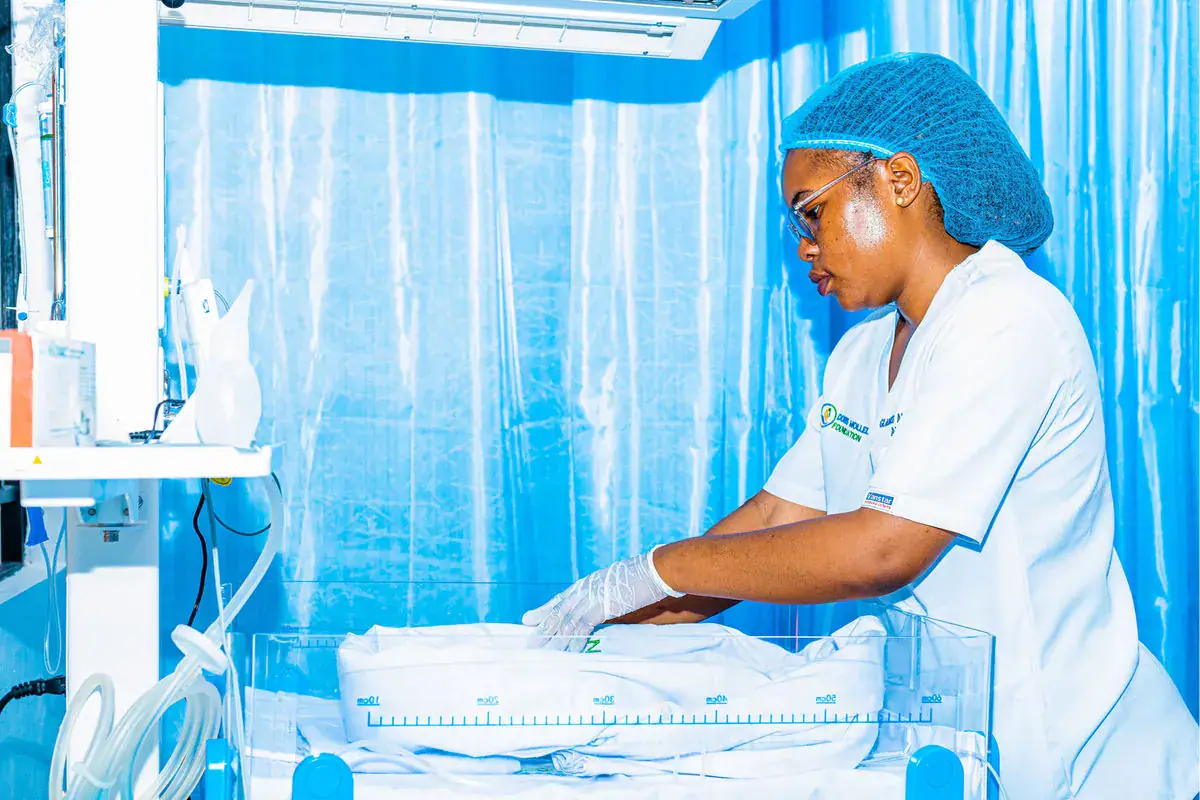
Tanzania marked World Prematurity Day with a notable achievement in newborn care. The Kwimba Mother and Newborn Care Unit, established on February 26, 2026, has recorded a significant reduction in newborn mortality rates. According to Nursing Officer II and In-charge of the Neonatal Ward at Kwimba District Hospital, Ernest John Kibona, the facility has treated 542 babies with various health complications during its first nine months of operation. This is nearly three times the 183 newborns attended to during the corresponding period before its establishment.
The Kwimba Mother and Newborn Care Unit has made a substantial impact on newborn survival rates. Of the 542 babies admitted since the unit opened, 250, equivalent to 46%, were born prematurely. The unit has recorded 66 deaths, representing a mortality rate of approximately 12%, compared to 63 deaths among 183 admissions in the preceding nine months, when the mortality rate stood at about 34%. This represents a reduction of approximately 64% in the proportion of admitted newborns who die.
The unit has not only improved survival rates but also reduced the need for families to seek specialized treatment outside the district. Before the unit's establishment, newborns requiring specialized treatment were frequently referred to Sekou Toure Regional Referral Hospital and Bugando Medical Centre, a journey that often placed additional financial and logistical pressure on families. Kibona said referrals to hospitals in Mwanza had since declined by more than 67%, while the unit had extended its services to patients from five neighboring districts.
The development is particularly significant for rural communities, where distance, transport costs, and delays in accessing appropriate medical attention can increase the risks facing premature babies and newborns with complications. Doris Mollel Foundation Executive Director, Doris Mollel, explained that the journey to accessing specialized newborn care could involve several referrals before a baby received the required treatment. The Kwimba Mother and Newborn Care Unit, supported by the Doris Mollel Foundation, has helped address some of these challenges by bringing specialized neonatal services closer to communities.
Despite the progress recorded at Kwimba, challenges persist. Kibona said shortages of specialized healthcare personnel and essential medical equipment continued to constrain the unit's capacity to provide comprehensive care. He identified the need for a newborn care specialist, additional doctors, and more nurses to respond to the increasing number of babies requiring treatment. The unit also lacks an oxygen production plant and requires additional equipment, including radiant warmers and phototherapy machines.
The experience in Kwimba highlights the importance of sustained investment in newborn healthcare, particularly for babies born prematurely or with low birthweight. The 2022 Tanzania Demographic and Health Survey and Malaria Indicator Survey put the country's neonatal mortality rate at 24 deaths per 1,000 live births, a modest improvement from 25 deaths recorded in the 2015/16 survey. The figures underline the need for continued investment in specialized healthcare facilities, accompanied by adequate staffing, equipment, and reliable medical supplies.
As part of World Prematurity Day commemorations, the Doris Mollel Foundation is launching three publications focusing on premature babies, parental involvement, and newborn care. The publications include a guide for parents and caregivers, a handbook on providing psychosocial care and support to mothers of premature infants, and a report on neonatal care units. Deputy Minister of Health, Dr. Florence George Samizi, is expected to attend the event as Guest of Honour.
Key points
- The Kwimba Mother and Newborn Care Unit has achieved a 64% reduction in mortality rates for admitted newborns.
- The unit has reduced the need for families to seek specialized treatment outside the district, with referrals to hospitals in Mwanza declining by more than 67%.
- Despite progress, the unit faces challenges, including shortages of specialized healthcare personnel and essential medical equipment.
Reporting sources
- As Tanzania marks World Prematurity Day, Doris Mollel Foundation highlights gains in newborn survival · https://www.thecitizen.co.tz/