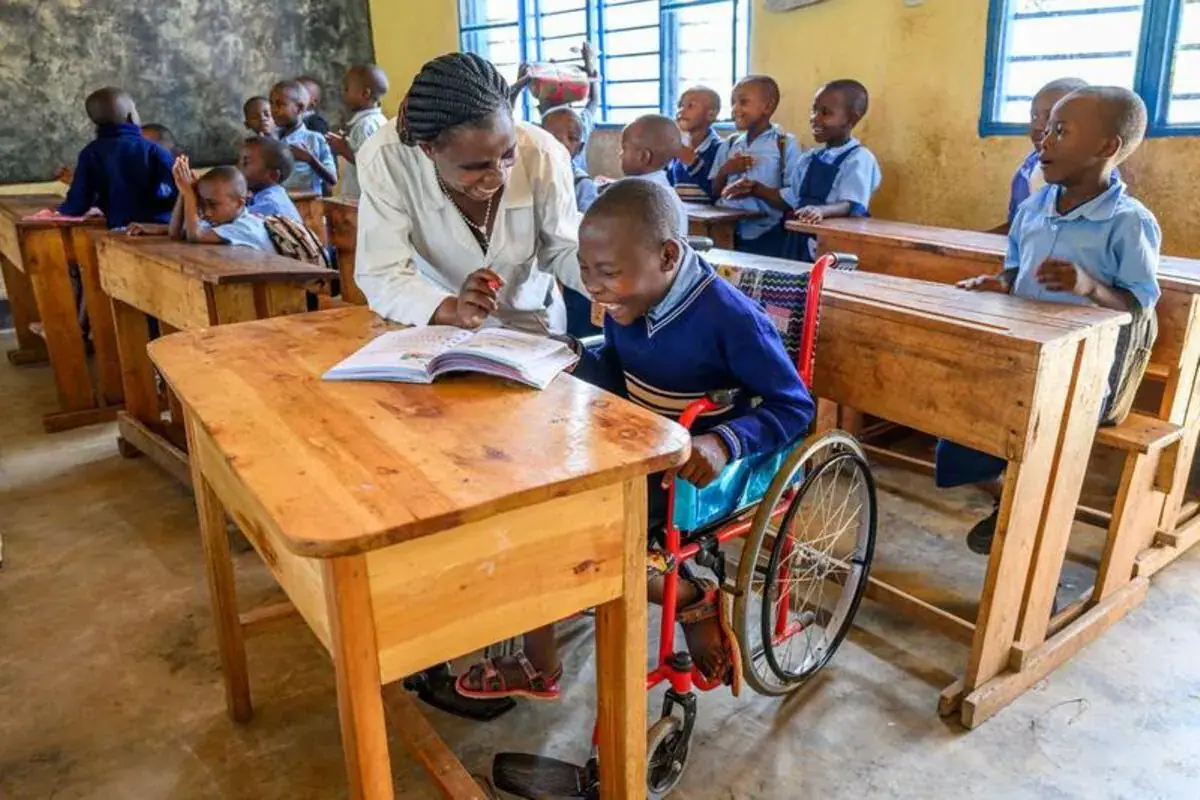
Tanzania's ambition to provide inclusive education is facing significant challenges, despite strong policy commitments. The country's Persons with Disabilities Act of 2010 and the National Strategy for Inclusive Education (2021/22–2025/26) reflect a formal dedication to inclusive learning. However, the reality on the ground is far from ideal. Many children with disabilities face difficulties in accessing quality education, with financial constraints and resource shortages being major obstacles.
The Educational Support, Resource and Assessment Centres (ESRACs) are critical to the success of inclusive education in Tanzania. These specialized hubs are designed to screen, assess, and guide children with special educational needs towards appropriate learning pathways. However, the institutional infrastructure required to assess and support learners with disabilities remains critically inadequate. According to Ministry of Education statistics, there are 7,323 pre-primary pupils with disabilities nationwide, but only 36 of Tanzania's 184 municipal councils possess an operational ESRAC.
The shortage of ESRACs is compounded by the lack of resources and infrastructure in many districts. In some areas, local councils have designated ordinary classrooms as assessment units, but these rooms often lack soundproofing, diagnostic tools, and qualified personnel. This has resulted in many children with disabilities not receiving the support they need to learn effectively. A recent survey by SAUTI ZETU found that across five surveyed regions, researchers discovered just one fully equipped and functional assessment centre.
Parental awareness and community stigma are also significant challenges to inclusive education in Tanzania. Many parents and communities lack accurate information about assessment services and the importance of early screening. Without early screening, developmental difficulties are frequently misinterpreted as laziness or unwillingness to learn. A parent from Dar es Salaam, Ms Agnes Mihambo, shared her experience of being unaware of ESRAC services before being informed about them.
The lack of public awareness about inclusive education and the importance of early screening is a major concern. Education analysts note that when families lack accurate information, children often reach school age without receiving professional evaluation, allowing manageable learning impediments to entrench. This highlights the need for increased awareness and education about inclusive education and the services available to support children with disabilities.
Despite these challenges, some institutions are working to provide inclusive education. Josephian Schools in the Kinondoni District of Dar es Salaam is a case study of how institutions can adapt to provide inclusive education. Established in 1998 as a standard private school, it began admitting pupils with special educational needs and gradually adapted its teaching practices. The school secured formal registration for its special education services in 2022 and now caters to 78 learners with diverse educational needs.
To survive the financial demands of special education, Josephian Schools established an internal self-sustaining initiative titled “Tuwape Nafasi” (“Give Them a Chance”) to help cover operational costs. The school's experience highlights the need for innovative solutions to support inclusive education in Tanzania. The government and other stakeholders must work together to address the challenges facing inclusive education and ensure that all children have access to quality education.
Key points
- Only 36 of Tanzania's 184 municipal councils possess an operational ESRAC.
- The country has a policy commitment to inclusive education, but faces significant challenges in implementing it.
- Financial constraints and lack of resources are major obstacles to providing inclusive education in Tanzania.