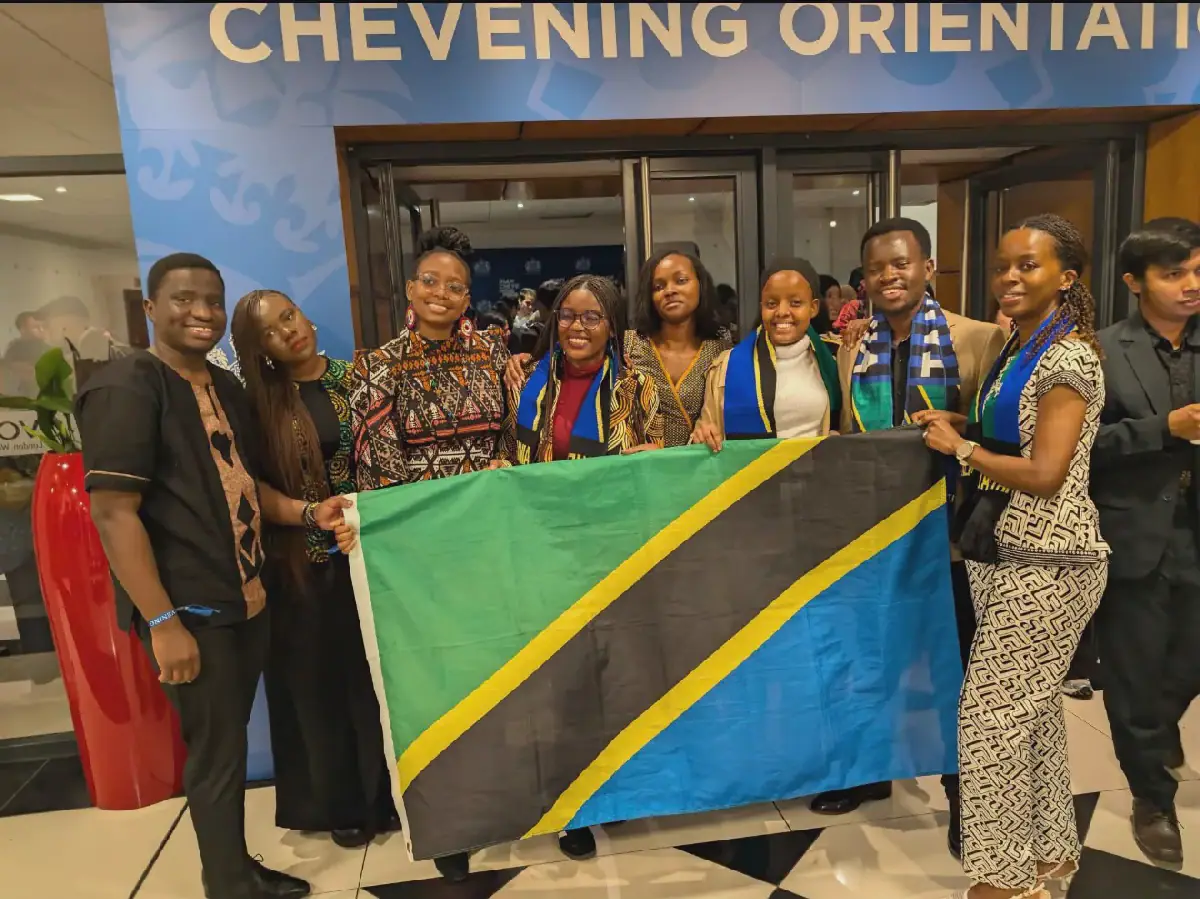
Tanzania’s High Commissioner to the United Kingdom, Mbelwa Kairuki, has called on the next generation of global leaders to focus their academic pursuits on addressing the real-world challenges facing their home countries. He made this statement during the Chevening University Orientation in London on October 24, 2026, where 700 Chevening scholars from 180 countries gathered. In his address, Ambassador Kairuki reflected on his own journey as a Chevening scholar 17 years ago and emphasized that the scholarship is not just an individual honour, but a commitment to drive sustainable development and economic opportunity back home.
Ambassador Kairuki highlighted the economic realities in Africa, noting that 10 to 12 million young Africans enter the labor market annually, yet only around 3 million formal jobs are created. He challenged the scholars to address the persistent gap between human potential and opportunity across developing regions. The envoy encouraged scholars to bring tangible local problems into their UK seminars, leveraging access to top academics, leading researchers, and Nobel laureates to design workable solutions. This approach, he believes, will enable them to make a meaningful impact back home.
The High Commissioner emphasized that technology and policy innovations must fit local conditions. He cited examples of successful innovations, such as Spanner, an AI-powered diagnostic app developed by Tanzanian Commonwealth Young Leader Julius Mbungo to assist local mechanics repairing modern vehicles. Another example is Nuru, an AI smartphone application operating offline in Swahili to help farmers identify crop diseases in cassava fields. These examples demonstrate the potential for innovative solutions to address local challenges.
Drawing from his career, which has included roles as speechwriter to the President of Tanzania, Director General for Asia in the Foreign Ministry, and Ambassador to China, Kairuki illustrated how student relationships can unexpectedly shape national outcomes years later. He shared how a university friendship with a fellow student later working in the UN Secretary-General’s office helped resolve a critical diplomatic matter regarding Tanzanian peacekeeping forces.
Ambassador Kairuki also shared an instance where connecting a former Chevening peer working at a Middle Eastern multinational with Tanzania’s ambassador in Oman resulted in major investments that created over 500 local jobs. He stressed that such connections can have a lasting impact on one’s ability to serve their country. The diplomat encouraged scholars to nurture these relationships and explore opportunities for collaboration.
Closing his address, Ambassador Kairuki called on scholars to mentor prospective applicants back home and demystify the path to higher education. Through online guidance sessions and academic institutional partnerships, scholars can empower others to follow in their footsteps. He reminded the room that someone back home is likely facing a difficulty that they understand and encouraged them to use their time in the UK to learn something that could help them overcome it.
The Chevening scholarship program brings together talented individuals from around the world to study in the UK. With 700 scholars from 180 countries attending the orientation, the event provided a platform for Ambassador Kairuki to inspire and challenge the next generation of global leaders. As they embark on their academic journey, the scholars will have the opportunity to engage with top academics, researchers, and policymakers, and develop innovative solutions to address the challenges facing their home countries.
Key points
- Tanzanian High Commissioner to the UK, Mbelwa Kairuki, urges Chevening scholars to align their academic pursuits with real-world challenges facing their home nations.
- The envoy highlights the need for technology and policy innovations that fit local conditions to address economic realities in Africa.
- Ambassador Kairuki encourages scholars to mentor prospective applicants back home and demystify the path to higher education.