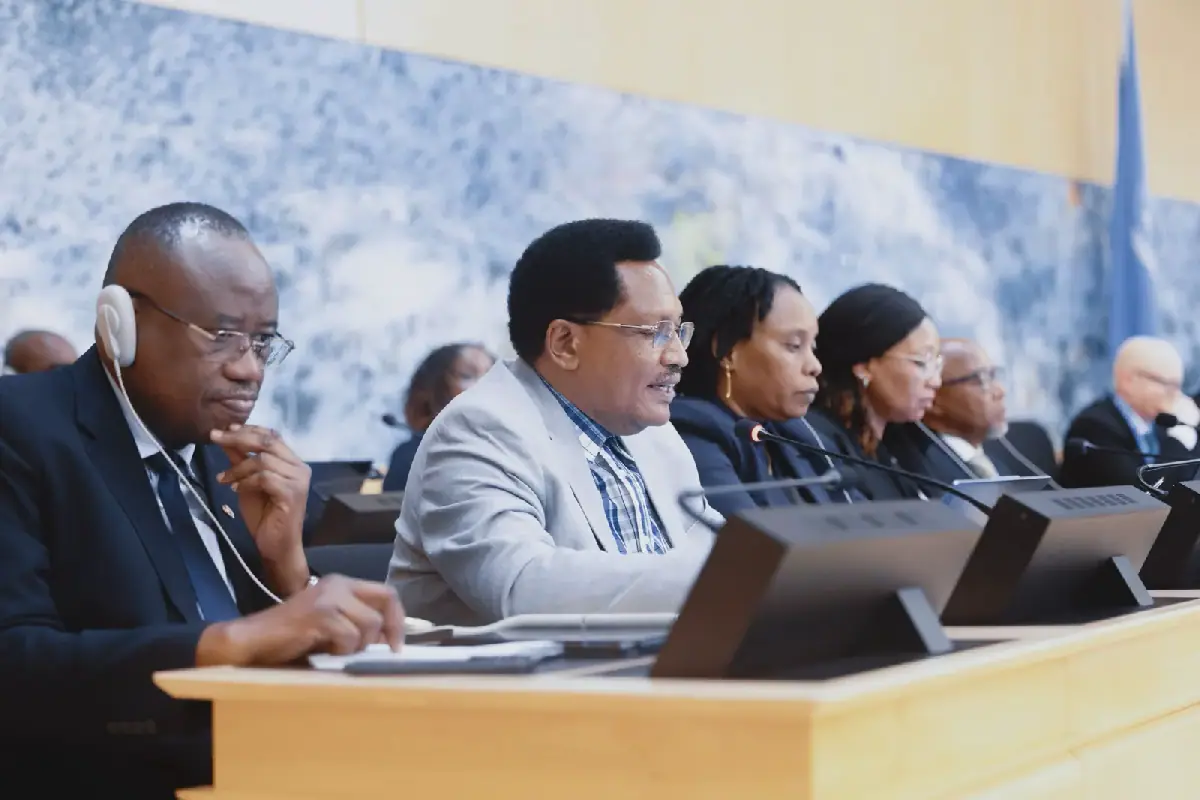
At the 53rd session of the United Nations Universal Periodic Review in Geneva, Professor Hamisi Masanja Malebo, Executive Secretary of the UNESCO National Commission of Tanzania, articulated the official position of the Tanzanian government regarding land rights and ethnic categorization. Tanzania is home to over 120 distinct ethnic groups, representing all four of Africa's major ethnolinguistic families. The country has a diverse population, with various groups having migrated from different parts of the continent at different times.
According to Prof Malebo, the Khoisans are the earliest inhabitants of Tanzania, represented by hunter-gatherer communities such as the Hadzabe and Sandawe people, known for their distinctive click-consonant languages. The Cushitics were the first group to migrate to Tanzania from the north thousands of years ago, introducing early food production and livestock keeping. Their descendants include groups like the Iraqw people of the north-central highlands.
The Bantus were the second group to arrive in Tanzania, migrating from West and Central Africa around 2,000 years ago. They brought ironworking, advanced agriculture, and new forms of social organization. Prof Malebo noted that the Bantus form the overwhelming majority of the country's population, making up about 95 percent, including major groups like the Sukuma, Chagga, Nyamwezi, and Makonde.
The Nilotics, pastoralist groups who migrated south from the Nile River region in later waves up through the 18th century, were the third group to set foot in Tanzania. Notable groups include the Maasai, Datooga, and Barabaig. The Maasai utilized their highly organized warrior society, the Morans, to secure grazing lands, leading to conflicts and displacement of earlier inhabitants, including the Khoisan, Cushitic, and Bantu agriculturalists and older pastoralist groups like the Datooga.
Historically, the Maasai conquered and expanded southward from the Nile Valley through the 17th and 18th centuries, reaching their peak territorial reach in the mid-19th century. Their territory spanned the Great Rift Valley from central Kenya down through large portions of northern and eastern Tanzania, including the Serengeti plains, the Ngorongoro highlands, Arusha, and areas stretching toward the coast and southern plains.
The United Republic of Tanzania does not officially recognize nor define indigenous peoples and ancestral land in its Constitution and domestic statutory laws. The government views all citizens as equal nationals, and there is no specific category of indigenous peoples, as all Tanzanians of African descent are indigenous to the country. Prof Malebo emphasized that the Tanzanian land policy and legislation do not recognize a distinct legal category of ancestral land.
Prof Malebo concluded that the government will continue to address the challenges facing its people while protecting their dignity, livelihood, and traditions. The 6th phase Government, led by President Dr Samia Suluhu Hassan, has continued to enhance efforts to foster socio-economic development while safeguarding human rights. The government urges the Human Rights Council to adhere to the principles of universality, impartiality, objectivity, and non-selectivity in its dealings with Tanzania.
Key points
- The Tanzanian government does not recognize indigenous peoples and ancestral land in its Constitution and domestic laws.
- The country is home to over 120 distinct ethnic groups, representing all four of Africa's major ethnolinguistic families.
- The Maasai expansion led to conflicts and displacement of earlier inhabitants from their land.
Reporting sources
- Tanzania reiterates on land and ethnic rights at UN · Daily News