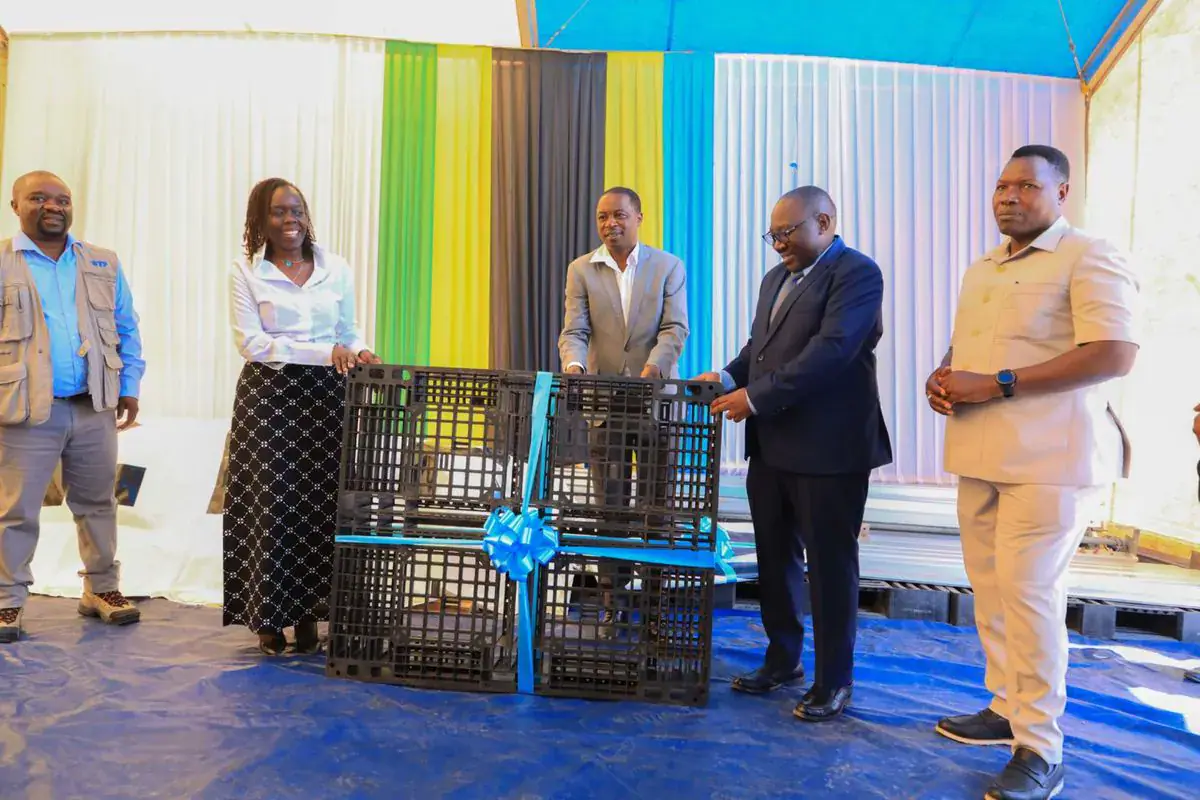
The Tanzanian government has received a significant donation from the World Food Programme (WFP) to enhance its disaster response capabilities. The donation, valued at $175,000 (approximately Sh500 million), includes six mobile humanitarian storage units and 1,000 pallets. These units are designed to provide temporary storage closer to disaster-hit communities, reducing delays in delivering essential supplies. The donation aims to support the government's contingency planning and early action ahead of El Niño conditions.
The mobile storage units are tent-like structures made from prefabricated components, allowing for easy transportation, assembly, and dismantling. Each unit measures 24 meters by 10 meters and can hold up to 400 tonnes of supplies. The six units provide a combined storage capacity of 2,400 tonnes and can be assembled within 24 to 48 hours. This flexibility will enable the government to respond quickly to disasters, particularly in areas far from government warehouses.
The donation comprises facilities valued at $150,000 and pallets worth $25,000. Deputy Permanent Secretary in the Prime Minister's Office, Dr. James Silabuka, emphasized that the facilities would address logistical challenges in disaster management. He noted that effective response requires reliable storage and distribution facilities, alongside funding and equipment. Dr. Silabuka cited the difficulty of transporting relief supplies from Shinyanga to Kigoma as an example of the challenges the new facilities would help overcome.
The mobile storage units will be strategically deployed across the country. Four units will be sent to Kigoma, Kagera, Tanga, and Ruvuma, while two will remain in Dodoma for rapid deployment elsewhere. WFP Deputy Country Director Christine Mendes stated that the donation supported the government's contingency planning and early action ahead of El Niño conditions, following a request by the Prime Minister's Office Department of Disaster Management on September 30, 2026.
The WFP has also trained nine Disaster Management Department personnel to install, dismantle, relocate, and maintain the structures. Mendes pledged continued technical assistance and refresher training, noting that similar facilities supplied to Tanzania about two decades ago were still in use. The WFP mobilized the units from its operational stocks in Dodoma, and Mendes highlighted that they could withstand harsh conditions and last 20 to 30 years.
Director of the Disaster Management Department in the Prime Minister's Office, Brigadier General Hosea Ndagala, said the units would complement six existing humanitarian warehouses in Shinyanga, Kilimanjaro, Dar es Salaam, Mtwara, Mbeya, and Dodoma. He noted that distance remained a challenge, particularly in Kigoma, where supplies had to be transported from Shinyanga. The new facilities are expected to reduce delivery times to remote communities, ultimately alleviating the suffering of affected communities.
The handover ceremony took place in Dodoma on Wednesday, November 25, 2026. Dr. Silabuka represented the ministry's Permanent Secretary, Dr. Jim Yonazi, and emphasized that delays in accessing essential supplies and equipment during disasters can increase the suffering of affected communities. The donation is expected to make a significant impact on Tanzania's disaster response capabilities, enabling the government to respond more effectively to disasters and provide timely assistance to those in need.
Key points
- The donation includes six mobile humanitarian storage units and 1,000 pallets valued at $175,000 (approximately Sh500 million).
- The mobile storage units can be assembled within 24 to 48 hours and provide a combined storage capacity of 2,400 tonnes.
- The units will be deployed in Kigoma, Kagera, Tanga, Ruvuma, and Dodoma to support disaster response efforts.