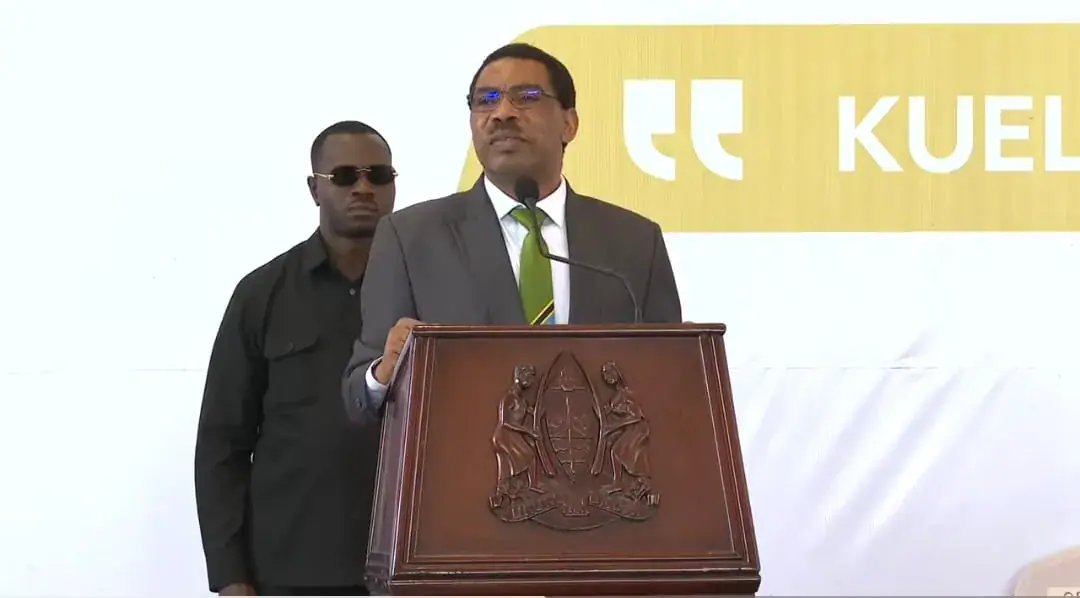
Prime Minister Mwigulu Nchemba addressed the 40th Annual General Meeting of the Association of Local Authorities of Tanzania (ALAT) in Mwanza on November 16, 2026. He urged local government authorities to align education infrastructure planning with ongoing reforms requiring compulsory education up to Form Four. The PM warned that existing school facilities may not accommodate the expected increase in enrolment. He stressed the need for councils to rethink how they plan and distribute school infrastructure to meet future demand.
Dr Nchemba emphasised that preparations should begin early, particularly for the expected increase in students joining secondary education in 2028. Local authorities must move beyond the traditional approach of requesting new secondary schools and instead consider expanding existing primary schools to accommodate additional classes. This approach will ensure that infrastructure is developed according to population distribution and the needs of individual communities.
The Prime Minister called for improved coordination between the central government and local authorities in implementing development projects, particularly those that have stalled or remain incomplete. He said the government had prioritised funding in three categories, starting with projects where contractors had already mobilised equipment and begun implementation. This approach aims to ensure that ongoing projects are completed, avoid unnecessary financial costs, and prevent the accumulation of unfinished infrastructure.
Dr Nchemba further called for greater investment in teachers' houses and accommodation for health workers. The government has made significant progress in classroom and health facility construction but needs to address the welfare and working conditions of public servants. He urged councils to adopt modern building designs that reflect the changing needs and living standards of teachers and other public servants.
On electricity access, Dr Nchemba said the government is working towards extending electricity to every hamlet. Efforts are increasingly focusing on expanding distribution to communities. The government will continue working with relevant ministries and local authorities to harmonise development plans and ensure resources are allocated according to actual needs.
Dr Nchemba emphasised that effective cooperation between central and local governments is essential in translating national development priorities into improved services for citizens. The government is working to ensure that ongoing projects are completed, and resources are allocated efficiently. This cooperation will help address the welfare and working conditions of public servants.
The Prime Minister's call for aligned education infrastructure planning is part of the government's efforts to improve education and healthcare services. By investing in teachers' houses and accommodation for health workers, the government aims to enhance the welfare and working conditions of public servants. The government's focus on extending electricity access to every hamlet will also improve living standards and support economic development.
Key points
- The Tanzanian government is implementing reforms requiring compulsory education up to Form Four.
- Local authorities are urged to align education infrastructure planning with the ongoing reforms.
- The government is working to extend electricity access to every hamlet and improve the welfare and working conditions of public servants.