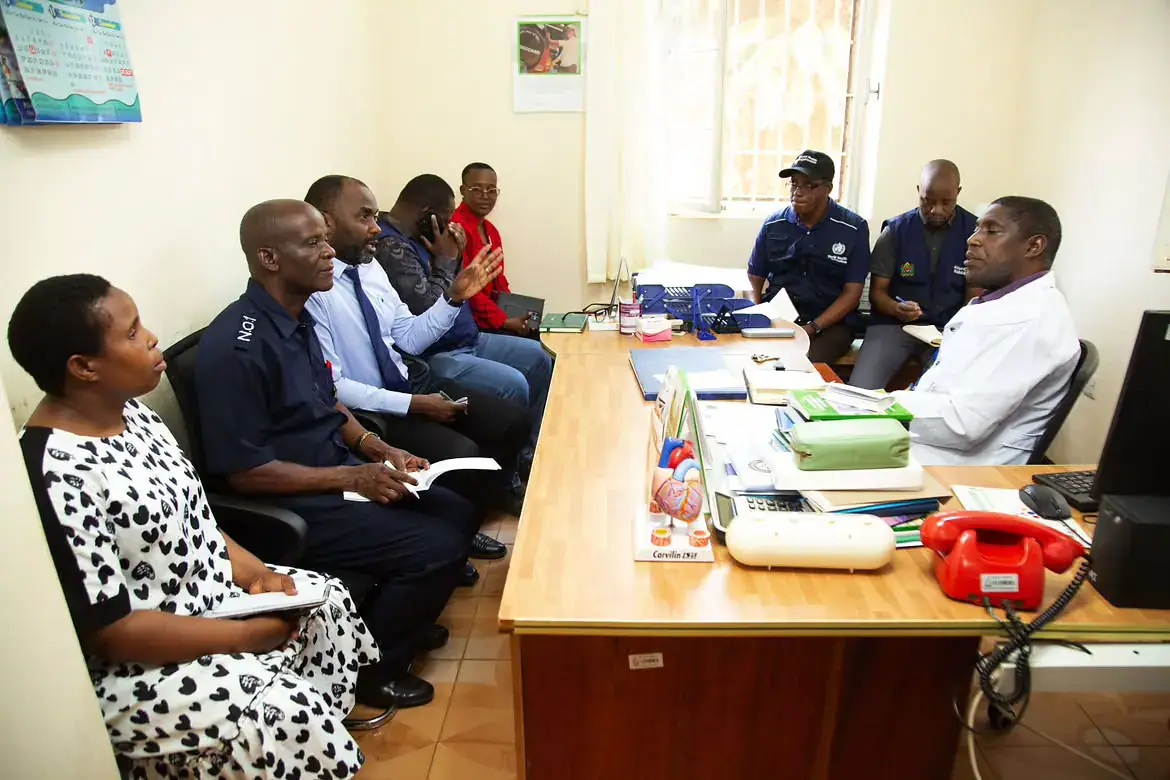
The Ministry of Health in Tanzania, in collaboration with the President's Office - Regional Administration and Local Government (TAMISEMI) and the World Health Organisation (WHO), has conducted an assessment of the Ruvuma Region's preparedness to respond to disease outbreaks, particularly Ebola. This initiative aims to equip healthcare workers in public and private hospitals with the necessary knowledge and capacity to prevent and control infections. The assessment is crucial given the region's proximity to neighboring countries facing the risk of Ebola outbreaks.
According to Theresia Haule, Emergency, Disaster and Epidemic Diseases Coordinator, the exercise is essential to strengthen the region's preparedness. She emphasized the importance of enabling healthcare workers to identify suspected Ebola cases and take appropriate measures promptly. The assessment is part of a broader effort to enhance disease surveillance, prevention, and infection control systems in regions considered at high risk of disease outbreaks, particularly those near international borders.
The Ministry of Health teams plan to visit other high-risk regions to continue the assessment and provide necessary support. The goal is to ensure that healthcare workers are adequately prepared and knowledgeable in identifying people suspected of having Ebola. This will enable preventive measures to be taken promptly to stop the infection from spreading to others. The assessment also aims to identify areas requiring improvement and provide recommendations for strengthening preparedness.
Dr. Adeodatus Haule, Medical Officer-in-Charge at St Joseph Peramiho Hospital, expressed gratitude to the Ministry of Health team for visiting the facility and assessing its preparedness. He noted that the experts inspected various sections of the hospital and provided recommendations on the proper arrangement of equipment and service areas. This will help strengthen preparations for managing suspected Ebola patients.
Dr. Haule emphasized that responding to Ebola requires joint efforts among public, private, and faith-based hospitals. He added that the experts' visit had helped the facility identify areas for improvement and strengthen its preparedness to prevent and control infections. The assessment is a critical step towards ensuring that healthcare facilities are equipped to respond effectively to disease outbreaks.
The assessment and recommendations provided by the Ministry of Health team will help St Joseph Peramiho Hospital and other healthcare facilities in the region to improve their preparedness and response to Ebola outbreaks. This will contribute to the overall goal of preventing and controlling the spread of infectious diseases in Tanzania.
The collaboration between the Ministry of Health, WHO, and TAMISEMI demonstrates a proactive approach to addressing the risk of Ebola outbreaks in Tanzania. By strengthening preparedness and infection control measures, the country can reduce the risk of disease transmission and ensure a rapid response to potential outbreaks.
Key points
- The assessment aims to equip healthcare workers with the necessary skills to identify suspected Ebola cases and take appropriate measures.
- The Ministry of Health teams plan to visit other high-risk regions to continue the assessment and provide necessary support.
- The collaboration between the Ministry of Health, WHO, and TAMISEMI demonstrates a proactive approach to addressing the risk of Ebola outbreaks in Tanzania.