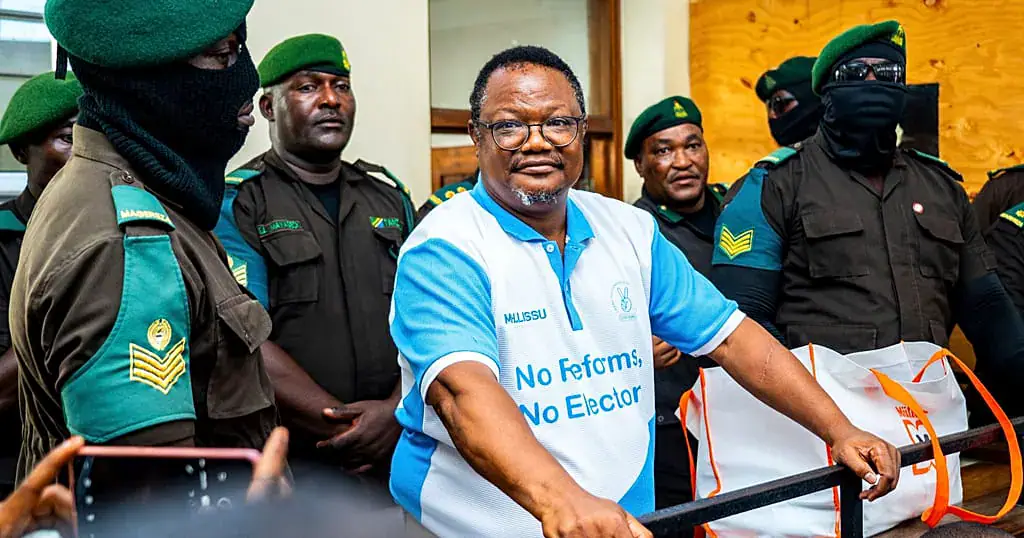
Tanzania's main opposition leader, Tundu Lissu, is set to know his fate on Friday in a treason trial that has drawn international criticism and carries a potential death penalty. Lissu has been in detention for 19 months, arrested ahead of last year's presidential election for allegedly inciting a poll boycott. His trial has sparked huge protests during the election, with security forces responding and killing thousands, according to the opposition and rights groups.
The government puts the death toll at 518, and security was heightened in the commercial capital Dar es Salaam this week ahead of the verdict. Lissu's Chadema party has urged supporters to turn out in large numbers for the court session. In a statement on Wednesday, police warned against groups mobilising to travel to the city, saying they were planning to stage a coup.
The case has drawn criticism from Britain and the European Union, whose lawmakers have described it as politically motivated and called for Lissu's immediate release. They expressed concern that the use of capital punishment against a political opponent risks turning the justice system into an instrument of political repression.
US ambassador to Tanzania William Trachman posted on X that he is closely following the outcome of Tundu Lissu's trial proceedings and the broader implications for the rule of law. The case marks the third high-profile treason trial in mainland Tanzania's history, with the first two involving defendants accused of plotting to overthrow and assassinate the country's founding president, Julius Nyerere.
Lissu faces a possible death sentence but insists he is innocent. Anna Bwana, director of civil society group Twaweza East Africa, told AFP that the mood seems to be that it's a given that he will be found guilty, and the question is more about what the punishment will be. This is the first time the 58-year-old activist has faced such serious charges, despite repeated arrests over his opposition to the government.
In 2017, Lissu survived an assassination attempt in which he was shot 16 times, an attack he believes was politically motivated and which required him to undergo nearly 20 surgeries. In his final submissions, he urged the three-judge panel to show courage, saying "My hope is that you will carry that heavy historical burden without bias, with courage and with the dignity carried by your judicial oaths."
The international community is watching the case closely, with analysts warning that the verdict could spark further unrest. Lissu represented himself in the case, and his supporters are eagerly awaiting the verdict. The outcome of the trial will have significant implications for Tanzania's democracy and the rule of law.
Key points
- The trial has drawn international criticism and carries a potential death penalty.
- The case marks the third high-profile treason trial in mainland Tanzania's history.
- Lissu faces a possible death sentence but insists he is innocent.