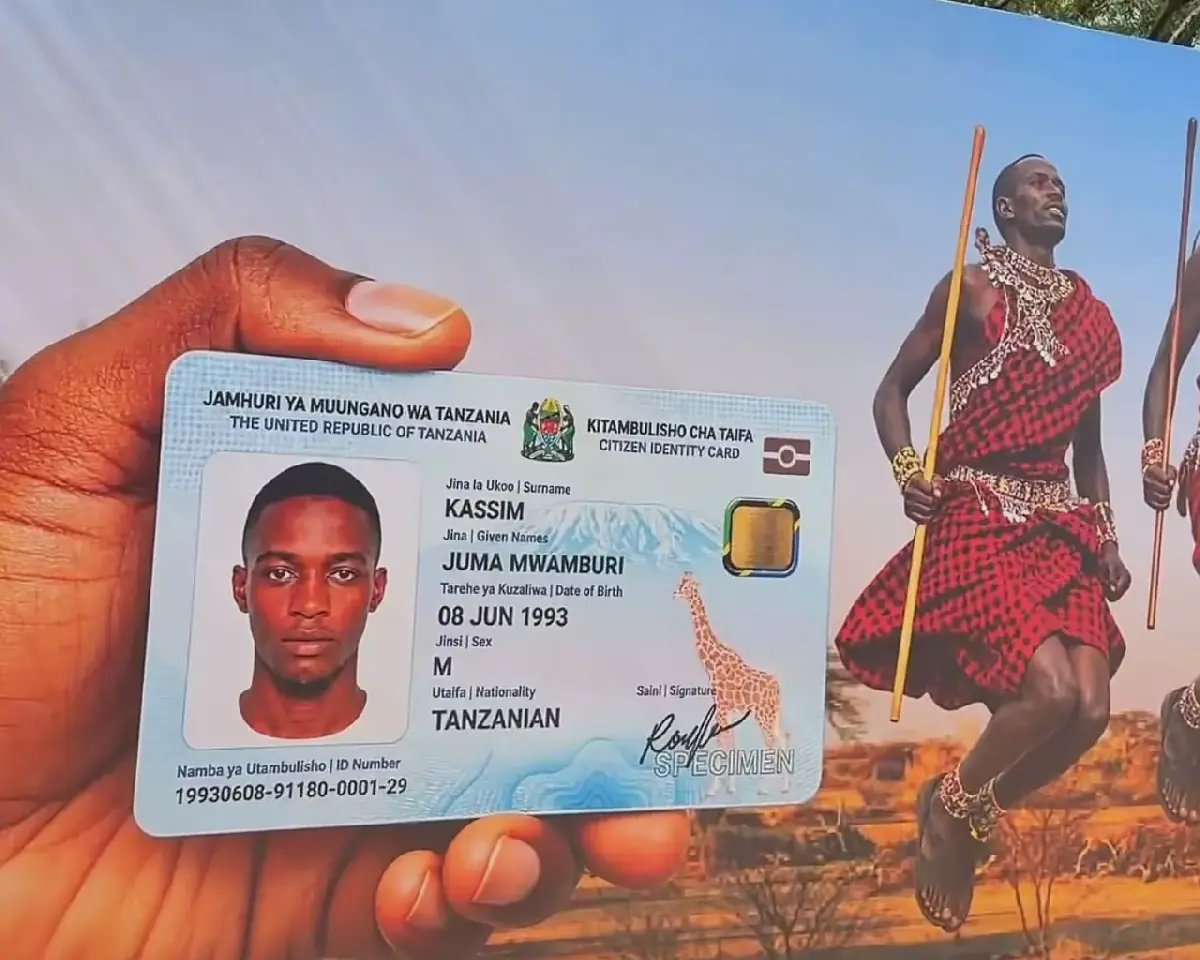
Tanzania's National Identification Authority (NIDA) has unveiled three new national identity card designs for Tanzanian citizens, foreign residents, and refugees. The designs, published on NIDA's official social media account, feature separate cards for each group, carrying distinct identification details such as name, date of birth, photograph, nationality, and identification number. These new designs are part of the country's efforts to update its identification infrastructure and expand the range of services connected to personal identification.
The new identity card for Tanzanian citizens will accommodate more information than previous versions, with eight information sections compared to four in the earlier version. The expanded system will include information linked to birth registration, health insurance, Taxpayer Identification Numbers (TIN), blood groups, driving licenses, and marital status. This is expected to reduce the need for citizens to carry multiple separate documents when accessing services. NIDA Director General James Kaji stated that the upgraded card would make it easier for institutions to verify information without repeatedly requiring individuals to present different documents.
The integration of personal records is also expected to facilitate cross-border movement under arrangements with countries that agree to recognize Tanzanian national identity cards as travel documents. However, these arrangements depend on agreements with participating countries and coordination between relevant authorities. The new card should not be interpreted as automatically replacing passports for international travel. The government has also identified opportunities to use the upgraded identification system for regional travel.
The expansion of NIDA's services reflects the growing role of national identification in accessing everyday services. Home Affairs Minister Patrobas Katambi stated that 157 institutions, comprising 72 public and 85 private entities, had been connected to NIDA's system. This means the authority's identification infrastructure is increasingly relevant beyond the issuance of physical identity cards, supporting verification processes across different institutions.
The introduction of separate designs for resident foreigners and refugees draws attention to the different groups covered by identification and registration processes in Tanzania. The resident foreigner card, labeled Legal Resident ID Card, is distinct from the national identity card issued to Tanzanian citizens. Possession of a resident identity card does not confer Tanzanian citizenship but identifies a foreign national within the applicable registration arrangements.
The government has also introduced changes to the production of identity cards, incorporating laser engraving technology to improve durability and make the documents more difficult to alter or counterfeit. This addresses complaints about earlier cards whose printed photographs and personal details sometimes faded with use. The launch also comes as authorities face the challenge of ensuring that registered individuals actually receive their identity cards.
NIDA has more than 1.2 million uncollected cards, and officials urge people who have completed registration to collect their documents from the relevant offices. The introduction of the upgraded version does not invalidate previously issued national identity cards, and existing holders are not required to replace valid cards simply because a newer design has been introduced. The growing integration of personal records raises questions about how information will be protected as more institutions gain access to the system.
Key points
- The new identity cards will have eight information sections, including birth registration, health insurance, and Taxpayer Identification Numbers.
- The upgraded identification system will facilitate cross-border movement under arrangements with participating countries.
- The government has connected 157 institutions to NIDA's system, expanding the role of national identification in accessing everyday services.