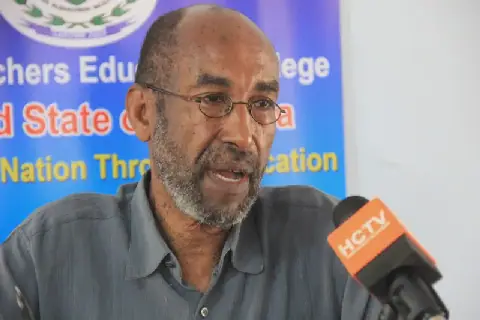
On November 27, 2026, Tanzania's Health Minister Mohamed Mchengerwa urged local scientists and researchers to intensify efforts to find a cure for silicosis, an occupational disease caused by inhaling silica dust. The minister made the remarks during celebrations marking the centenary of the Tanzania Infectious Diseases Institute (TIDI). He emphasized that collaboration between health experts and scientists could lead to a breakthrough and save lives. Mchengerwa noted that Tanzania has many capable specialists who could drive medical advances and leave a lasting scientific legacy.
Mchengerwa cited tuberculosis (TB) as an example of a disease that remained a major challenge before an effective treatment was developed. He encouraged scientists to prioritize patriotism and national interests in their research to help Tanzanians affected by silicosis. The minister added that nothing was impossible in science, and with domestic and international collaboration, a cure for silicosis could be found. He urged researchers to continue conducting studies that bring medical advancements locally and endure for generations.
Dr. Alexander Mbuya noted that artisanal miners receiving treatment at the institute remained at high risk of developing silicosis. Many miners involved in tanzanite extraction in the area suffered from respiratory diseases, including TB, linked to inhaling silica dust. Mbuya explained that the small-scale mining community has been heavily affected by tuberculosis, largely driven by the silica mineral dust inhaled during mining activities.
Silicosis remains incurable, with limited international research underway to identify effective treatments. Consequently, specialists are focusing largely on prevention by protecting miners from inhaling harmful dust. Dr. Mbuya emphasized the need for continued research and collaboration to find a cure for the disease.
TIDI director Dr. Leonard Subi said the institute was treating about 50 patients with silicosis who depended on oxygen therapy, some of whom had lived with the condition for about three years without improvement. The institute published between eight and 10 scientific papers annually and provided staff training to strengthen capacity in combating infectious diseases.
TIDI has contributed significantly to research on infectious diseases, including tuberculosis. The institute participated in international studies that reduced the treatment period for multidrug-resistant TB from 24 months to nine months and subsequently to the current six-month regimen. TIDI also contributed to research that eliminated painful injections from multidrug-resistant TB treatment.
Dr. Subi thanked the government for investing Sh39.4 billion in the institute over five years, saying the funds had helped strengthen healthcare services and institutional development. The institute's research and treatment efforts have eased patients' discomfort and informed updated global TB treatment guidelines.
Key points
- Tanzania's Health Minister Mohamed Mchengerwa has urged local scientists to find a cure for silicosis.
- The disease is prevalent among artisanal miners, particularly those involved in tanzanite extraction.
- The Tanzania Infectious Diseases Institute is treating about 50 patients with silicosis.
Reporting sources
- Tanzania scientists urged to find silicosis cure · https://www.thecitizen.co.tz/