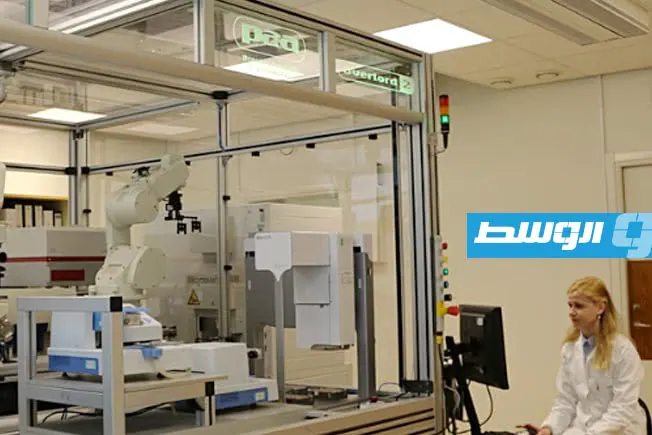
Researchers at Sweden's Chalmers University of Technology have developed an artificial intelligence system that can complete the scientific cycle, from formulating hypotheses to designing experiments and interpreting results, with minimal human intervention. The system combines multiple large language models, vast databases, and physical laboratory robots within a closed system that can execute the entire scientific discovery process. This breakthrough was reported by Euronews.
The AI system, led by researcher Evgeniya Tekukova, analyzed a database of nearly 60,000 relationships related to yeast and generated almost 2,000 testable predictions on how nutrients affect cell growth and stress resistance. These predictions were then converted into detailed instructions for laboratory equipment, allowing the system to conduct experiments, analyze data, and update hypotheses automatically.
According to Tekukova, the AI system can produce new scientific knowledge effectively, rather than just supporting decision-making. The system's ability to analyze vast amounts of data and identify patterns enables it to make predictions and draw conclusions that humans may miss. This capability has the potential to accelerate scientific discovery and reduce the time needed to explore complex questions.
The researchers emphasize that humans will remain essential in determining priorities, understanding broader contexts, and ensuring adherence to ethical standards. The AI system is designed to work in collaboration with human scientists, enhancing their capabilities rather than replacing them. Ros King, co-author of the study, notes that intelligent systems can limit human bias and errors, increasing the reproducibility of results.
The World Health Organization (WHO) has published a report on the use of AI in scientific research, emphasizing the need for responsible and ethical AI development. The report highlights the potential of AI to accelerate health research and improve lives, while also stressing the importance of ensuring that AI systems are designed and used in ways that protect human dignity and rights.
The development of this AI system has significant implications for the scientific community, particularly in fields such as biology and medicine. The ability to analyze vast amounts of data and identify patterns can lead to new discoveries and insights that may not have been possible through human analysis alone. However, the researchers also acknowledge the need for careful consideration of the ethics and governance of AI systems.
The research team's achievement demonstrates the potential of AI to transform the scientific process, making it more efficient, accurate, and productive. As AI technology continues to evolve, it is likely to play an increasingly important role in scientific research, enabling scientists to tackle complex questions and make new discoveries that can benefit society.
Key points
- The AI system can complete the scientific cycle, from hypothesis to experiment design and result interpretation, with minimal human intervention.
- The system has the potential to accelerate scientific discovery and reduce the time needed to explore complex questions.
- Humans will remain essential in determining priorities, understanding broader contexts, and ensuring adherence to ethical standards.