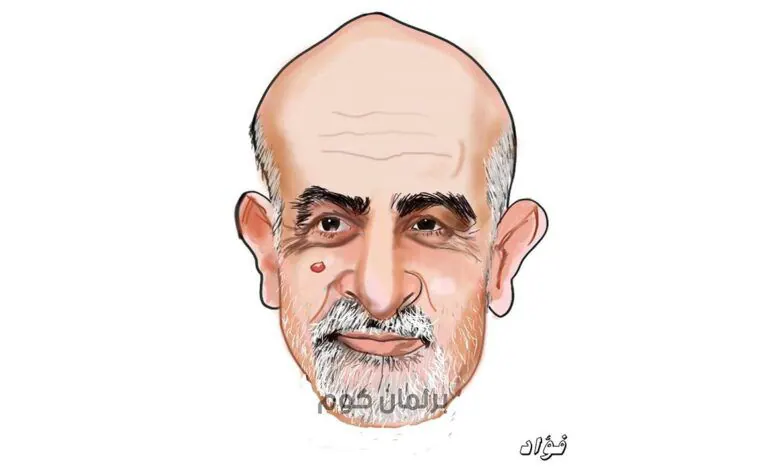
Moroccan politician Foad Aboudemouni has sparked controversy with his recent statement, "Al-Qatiah or Al-Tufan" (Severance or Flood), in which he invoked the legacy of Sheikh Abd al-Salam Yasin, a prominent Moroccan Islamist figure. Aboudemouni's statement has been met with criticism, with many accusing him of attempting to emulate Yasin's role without possessing the same level of influence or grassroots support.
Aboudemouni's statement called for radical changes to Morocco's political and economic systems, including the adoption of a new constitution and a shift towards a parliamentary system. However, his approach has been criticized for being overly simplistic and lacking a clear understanding of the country's complex institutions and power dynamics. Critics argue that Aboudemouni's proposal for a symbolic monarch with limited powers is unrealistic and ignores the complexities of Morocco's monarchical system.
One of the most contentious aspects of Aboudemouni's statement is his criticism of the current monarch, King Mohammed VI, and his apparent attempt to curry favor with the crown prince. Aboudemouni's approach has been seen as an attempt to bypass traditional power structures and appeal directly to the royal family. This has led to accusations of disrespect and a lack of understanding of the country's constitutional framework.
Aboudemouni's economic proposals have also been criticized for being overly simplistic and lacking a clear understanding of Morocco's economic challenges. He has called for an end to large-scale infrastructure projects, such as the construction of highways and the organization of major international events like the 2030 World Cup. However, these projects have been widely recognized as key drivers of economic growth and investment in Morocco.
Critics argue that Aboudemouni's approach is driven more by populism and a desire for attention than a genuine commitment to reform. His statement has been characterized as a superficial and unrealistic attempt to capitalize on Yasin's legacy and appeal to Morocco's Islamist movement. Aboudemouni's critics argue that meaningful reform can only be achieved through a nuanced understanding of Morocco's complex institutions and power dynamics.
The controversy surrounding Aboudemouni's statement highlights the challenges facing Morocco's politicians as they seek to address the country's economic and social challenges. While there is a clear need for reform, Aboudemouni's approach has been widely criticized for being unrealistic and lacking a clear understanding of the country's complexities. As Morocco continues to evolve, it remains to be seen whether Aboudemouni's approach will gain traction or be dismissed as a populist aberration.
In conclusion, Aboudemouni's statement has sparked a significant controversy in Morocco, with many criticizing his approach as unrealistic and lacking a clear understanding of the country's complexities. While there is a clear need for reform, Aboudemouni's proposal has been widely seen as a superficial and populist attempt to capitalize on Yasin's legacy.
Key points
- Moroccan politician Foad Aboudemouni's recent statement has sparked controversy due to its radical proposals for change and its invocation of Sheikh Abd al-Salam Yasin's legacy.