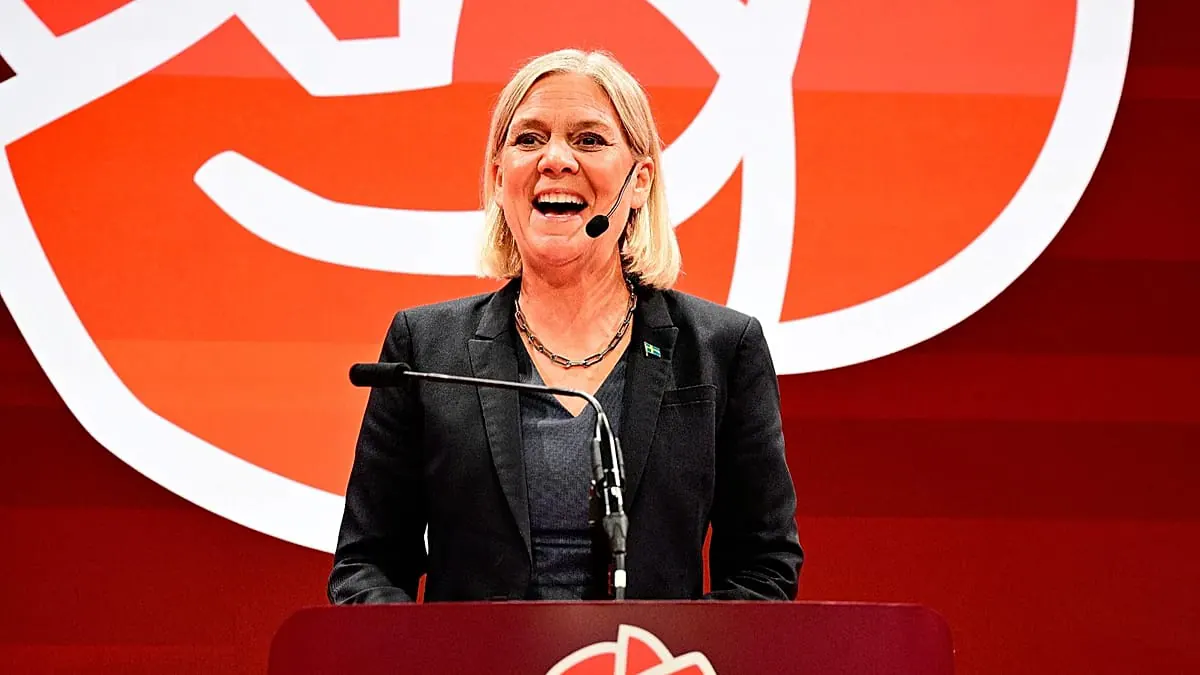
Sweden's Social Democrat leader, Magdalena Andersson, has announced that she is unable to form a government. This follows the recent elections, in which her centre-left bloc won a three-seat majority. Andersson stated that she would return the mandate to the speaker of parliament, Andreas Norlén. This development comes after Andersson was assigned the task of forming a government on 18 September by Norlén.
The centre-left alliance, which includes the Left Party, the Centre Party, and the Green Party, secured a total of 176 seats in Sweden's 349-seat parliament. The Social Democrats emerged as the largest party, winning 99 seats. However, Andersson's efforts to form a government have been unsuccessful. The speaker of parliament, Andreas Norlén, will now consult with party leaders to identify a suitable candidate to attempt forming a government.
The right-wing bloc, led by Ulf Kristersson, won 173 seats in the election. Kristersson, the departing Prime Minister, has resigned following the election loss. He is now expected to be asked to make another attempt at forming a government. Kristersson has called for "constructive openness" among parties to work towards a viable government. He suggests that discussions must be held to resolve deadlocks and establish a stable government.
Kristersson is reportedly looking to gain support from the Centre Party, which previously aligned with the right-wing bloc. However, its leader, Elisabeth Thand Ringqvist, has committed to centrist policies and rejected collaboration with parties on the political fringe. This development may impact Kristersson's efforts to form a government.
The Swedish parliament, also known as the Riksdag, plays a crucial role in the country's government formation process. If the speaker fails four times to secure approval for a prime minister from the Riksdag, a snap election will be called. This has raised concerns about the country's ability to form a stable government.
Andersson's decision to return the mandate to the speaker has sparked discussions about the country's future. The Social Democrats' inability to form a government has created uncertainty about the country's leadership. The speaker's consultations with party leaders are expected to provide clarity on the next steps.
The development has significant implications for Sweden's politics. The country's leaders will need to work together to establish a stable government. The situation remains uncertain, with multiple possibilities for the country's future. Key players will need to engage in constructive dialogue to resolve the impasse.
Key points
- Magdalena Andersson, leader of Sweden's Social Democrats, has announced her inability to form a government.
- The centre-left bloc, led by Andersson, won a three-seat majority in the recent elections.
- The speaker of parliament, Andreas Norlén, will consult with party leaders to identify a suitable candidate to attempt forming a government.