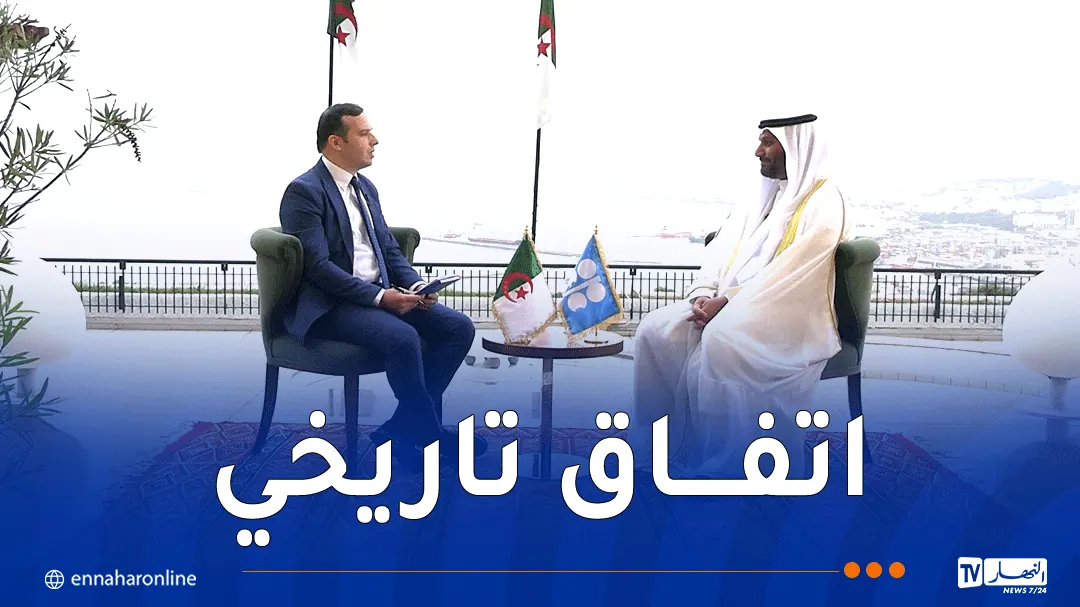
OPEC Secretary General Haitham Al-Ghais has described the 2016 Algeria agreement as a historic and significant milestone in the Organization of the Petroleum Exporting Countries' (OPEC) journey. In an interview with Al-Nahar TV, Al-Ghais emphasized that the agreement laid the foundation for the subsequent "OPEC+" or "Declaration of Cooperation" reached in December 2016. This cooperation brought together OPEC member countries and ten non-OPEC countries.
The Algeria agreement, according to Al-Ghais, marked a significant shift in the energy landscape, being the first instance of collaboration between OPEC and non-OPEC countries. He stressed that this accord was crucial not only for Algeria and OPEC member countries but also for the ten non-OPEC countries that joined the cooperation. The agreement's impact was profound, altering the dynamics of global energy markets.
Al-Ghais highlighted that the 2016 Algeria agreement was a pivotal moment for OPEC, leading to a new era of cooperation and coordination among oil-producing countries. This cooperation aimed to stabilize the global oil market and ensure a fair price for crude oil. The agreement's success was a testament to the organization's ability to adapt and respond to changing market conditions.
The OPEC Secretary General noted that the Algeria agreement would be remembered as a landmark event in the history of OPEC and the global energy sector. He mentioned that he had previously emphasized the significance of this agreement in various forums. The agreement's impact extends beyond the oil market, influencing the broader energy landscape.
Al-Ghais' comments underscore the importance of the Algeria agreement in shaping OPEC's future and its role in global energy markets. The agreement demonstrated OPEC's commitment to cooperation and its willingness to work with non-OPEC countries to achieve common goals. This cooperation has been instrumental in maintaining stability in the global oil market.
The 2016 Algeria agreement has been hailed as a success, with many considering it a model for future cooperation between OPEC and non-OPEC countries. Al-Ghais' remarks reflect the significance of this agreement in OPEC's history and its ongoing efforts to ensure a stable and sustainable energy future. The agreement's legacy continues to shape the organization's policies and strategies.
As OPEC continues to navigate the complexities of the global energy landscape, the 2016 Algeria agreement remains a crucial milestone in its history. Al-Ghais' comments serve as a reminder of the organization's commitment to cooperation and its role in promoting stability and sustainability in the energy sector. The agreement's impact will be felt for years to come, shaping the future of OPEC and the global energy market.
Key points
- The 2016 Algeria agreement marked a significant shift in OPEC's history, laying the foundation for OPEC+ cooperation.