The Confederation of African Football (CAF) has officially recognized Kiswahili as one of its five official languages. This decision was made during CAF's 48th Ordinary General Assembly in Abuja, Nigeria, where representatives of the continental football governing body's 54 member associations approved the recognition. Kiswahili joins English, French, Arabic, and Portuguese as an official language under the CAF Statutes.
The successful campaign was spearheaded by the Tanzania Football Federation (TFF), with support from the Football Kenya Federation (FKF) and the Federation of Uganda Football Associations (FUFA). The initiative had been pursued for approximately three years, with Tanzania working alongside its East African neighbours to advance the proposal. The process also received the backing of the Tanzanian government, with President Samia Suluhu Hassan endorsing the country's involvement.
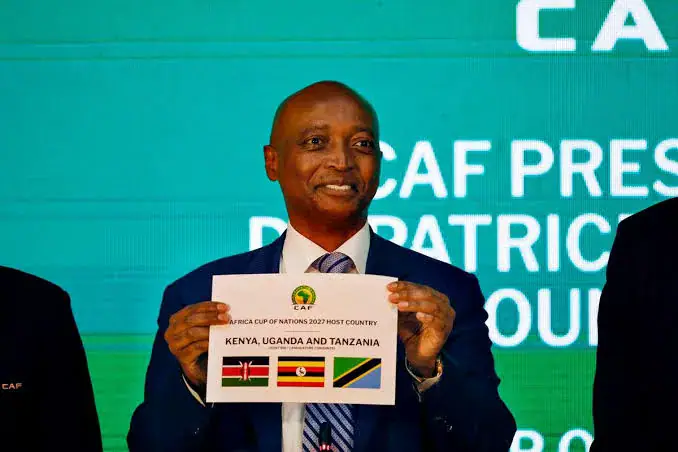
CAF President Patrice Motsepe announced the decision following the vote, congratulating Tanzania, Kenya, and Uganda for their contributions to securing official recognition for the language. The recognition carries particular significance for East Africa, where Kiswahili serves as a widely spoken language of communication across national borders. In Tanzania and Kenya, it holds an established place in everyday communication.
The decision also comes at a significant moment for regional football. Tanzania, Kenya, and Uganda are jointly preparing to host the 2027 Africa Cup of Nations (AFCON), an arrangement expected to bring together teams, officials, journalists, and supporters from across Africa. The recognition of Kiswahili provides an additional opportunity to showcase East African identity and linguistic heritage on one of Africa's biggest sporting platforms.
Beyond its regional significance, the decision gives Kiswahili a formal place in the administration of African football, extending its presence in an institution whose activities reach all corners of the continent. The language is already spoken across several African countries, including Tanzania, Kenya, Uganda, Rwanda, Burundi, and the Democratic Republic of the Congo.
For Tanzania, Kenya, and Uganda, the CAF decision represents the outcome of a regional effort that has given Kiswahili a new institutional platform in African sport. It is also a significant moment for the wider East African community, whose shared linguistic and cultural connections have helped give the language a presence beyond national boundaries.
The recognition of Kiswahili reflects CAF's commitment to embracing Africa's linguistic and cultural diversity while strengthening the representation of African languages in football administration across the continent. This move is expected to promote unity and inclusivity in African football, leveraging the widely spoken language to enhance communication and engagement.
Key points
- CAF recognizes Kiswahili as an official language to promote linguistic and cultural diversity in African football.
- The recognition was a result of a three-year campaign led by the Tanzania Football Federation.
- The decision coincides with Tanzania, Kenya, and Uganda's joint bid to host the 2027 Africa Cup of Nations.