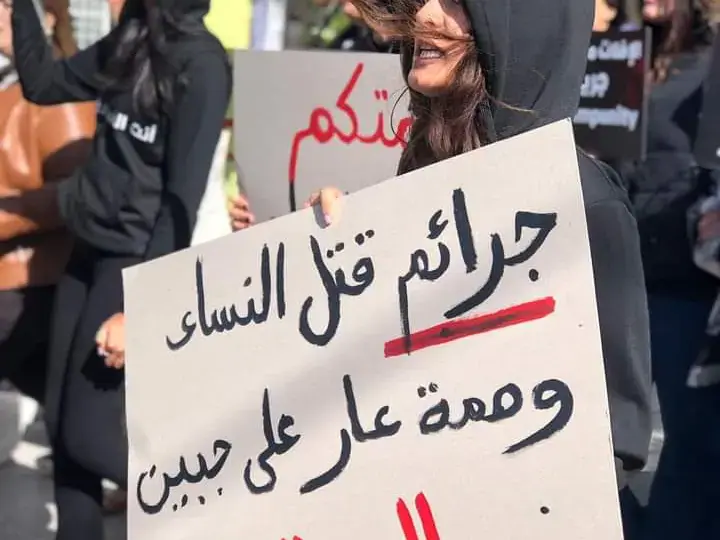
A recent surge in female homicides in Tunisia has brought the issue of domestic violence back into the spotlight. A young woman and mother of three was stabbed to death on the outskirts of Greater Tunis, and her husband was arrested on suspicion of being the perpetrator. This incident has sparked widespread concern and condemnation from human rights groups and the public. The Tunisian Association of Democratic Women expressed deep sadness and outrage over the increasing number of violent crimes against women.
According to the Tunisian Association of Democratic Women, the recent homicide is not an isolated incident, but rather part of a larger pattern of violence against women. The organization emphasized the need for accurate data to develop effective policies and multi-faceted action plans to address this issue. They called for the full implementation of the country's foundational law aimed at eliminating violence against women, along with the allocation of necessary human, financial, and budgetary resources.
Local media outlets have highlighted the alarming upward trend in female homicides, despite the existence of a progressive legal framework aimed at eliminating all forms of discrimination and gender-based violence. Reports from human rights organizations, including "Voices of Women," indicate a significant increase in female homicides, from 6 cases in 2018 to 25 cases in 2023, 29 cases in 2024, and 30 cases in 2025. These statistics reveal that domestic violence accounts for approximately 65% of these crimes.
The Tunisian press has emphasized that condemnation of these crimes extends beyond the perpetrator to include societal attitudes that normalize or tolerate violence against women. Analysts argue that having laws in place is insufficient without swift response to complaints, effective protection measures, and accessible support services, particularly in economically and socially challenging neighborhoods.
The Ministry of Family, Women, and Childhood has announced its intervention to assess the social situation of the victim's family and provide psychological and social support to her three children. The ministry also emphasized the importance of upholding legal protections for children's personal data and privacy.
Human rights groups and advocates stress that addressing domestic violence requires a comprehensive approach that goes beyond legislation. They emphasize the need for increased public awareness, education, and community engagement to challenge societal norms that perpetuate violence against women.
As Tunisia continues to grapple with the complex issue of domestic violence, stakeholders are calling for sustained efforts to prevent these crimes, protect victims, and support survivors. The government, civil society, and the public must work together to create a safer and more equitable society for all.
Key points
- The number of female homicides in Tunisia has increased significantly, from 6 cases in 2018 to 30 cases in 2025.
- Domestic violence accounts for approximately 65% of female homicides in Tunisia.
- Human rights groups are calling for the full implementation of laws aimed at eliminating violence against women, along with increased resources and support services.