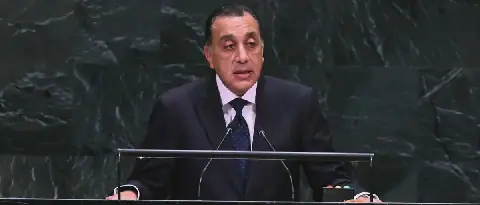
A fresh political dispute has emerged in Imo State following a Supreme Court judgment that restored key provisions of the Electoral Act 2026. The judgment has implications for the 2027 candidature of House of Representatives member Emeka Chinedu, who was recently unveiled by the Young Progressives Party (YPP) as its candidate for the Ahiazu Mbaise/Ezinihitte Federal Constituency. The Supreme Court ruling has sparked controversy over Chinedu's eligibility to contest the 2027 election.
The Supreme Court on Thursday restored Sections 77(5), 77(6), 77(7) and 84(2) of the Electoral Act 2026, setting aside an earlier Court of Appeal judgment that had voided the provisions. The provisions deal principally with political party membership registers and procedures for nominating candidates. Section 77(5) provides that only members whose names appear in a political party's membership register submitted to the Independent National Electoral Commission (INEC) within the prescribed period may vote or be voted for at party primaries, congresses and conventions.
The Ezinihitte Progressives, a group, has argued that the Supreme Court judgment effectively invalidates Chinedu's candidature because of the timing of his movement between political parties. The group's Convener, AIC Akwarandu, alleged that Chinedu threatened to invoke provisions of Nigeria's cybercrime law against him following comments he made about the judgment and its possible implications for the lawmaker. Chinedu's response to the group's interpretation of the Supreme Court judgment was not available at the time of filing this report.
According to Akwarandu, Chinedu moved from the Peoples Democratic Party (PDP), on whose platform he won elections to the House of Representatives in 2019 and 2023, to the All Progressives Congress (APC) before eventually joining the YPP. The group claimed that he explored the possibility of joining the African Democratic Congress (ADC) before settling for the YPP. Akwarandu argued that the restored provisions had closed what he described as a loophole that could allow politicians to participate in one party's nomination process before defecting to another platform during the same election cycle.
The YPP officially unveiled Chinedu as its candidate for Ahiazu Mbaise/Ezinihitte Federal Constituency on September 18, 2026. At the unveiling, the party presented the two-term legislator's entry into the YPP as a new phase in his political career as he seeks another term in the House of Representatives. Chinedu has represented the constituency since 2019. Following the 2023 general election, the Court of Appeal affirmed his election on the PDP platform and dismissed challenges to his victory.
The Ezinihitte Progressives subsequently called on Chinedu to withdraw from the contest. However, the Supreme Court judgment, as publicly reported, dealt with the validity of the Electoral Act provisions and did not specifically determine Chinedu's candidature. The group's position on his eligibility therefore represents their interpretation of the possible effect of the judgment rather than a specific Supreme Court order nullifying his ticket.
Any definitive determination of Chinedu's eligibility would depend on the relevant facts surrounding his YPP membership and nomination process, as well as any decision by INEC or a court exercising jurisdiction over a specific challenge to his candidature. The latest controversy has shifted attention to how the restored provisions of the Electoral Act could apply to candidates who changed political parties ahead of the 2027 elections.
Key points
- The Supreme Court restored key provisions of Nigeria's Electoral Act 2026.
- Emeka Chinedu's 2027 YPP candidature has been disputed due to the timing of his movement between political parties.
- The Ezinihitte Progressives have called on Chinedu to withdraw from the contest.