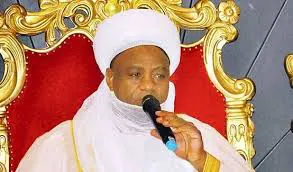
The Sultan of Sokoto and President-General of the Nigeria Supreme Council for Islamic Affairs (NSCIA), Alhaji Muhammad Sa’ad Abubakar III, has urged Muslims to respect the religious rights and freedoms of people of other faiths. Speaking at the NSCIA General Assembly held at the National Mosque in Abuja on Thursday, October 3, 2026, the Sultan emphasized that religious conviction must be based on free will. He stressed that Muslims have a responsibility to contribute positively to the development and stability of Nigeria.
The Sultan’s call comes against the backdrop of security, social, and economic challenges confronting Nigeria. He urged Muslims to respect people of other faiths and avoid actions that could undermine peaceful coexistence. The Sultan noted that religious differences should not prevent Nigerians from working together for the progress of the country. According to him, Muslims have important roles to play in addressing the challenges facing Nigeria and must ensure that their conduct contributes to peace, unity, and national development.
The Sultan also called for greater unity among Muslim leaders, describing the assembly as an opportunity to exchange ideas, strengthen cooperation, and examine the responsibilities of the Islamic community. This gathering took place about seven years after the council’s last general assembly. The Sultan emphasized that Muslims do not intend to force anybody to join Islam, citing the Quranic verse that there is no compulsion in religion.
The Secretary-General of the NSCIA, Professor Ishaq Oloyede, also spoke at the event, urging Muslim parents to ensure their children receive both Islamic and Western education. He expressed concern over the educational challenges confronting many predominantly Muslim states, saying the situation required deliberate action from the present generation. Oloyede emphasized that the most educationally disadvantaged states are Muslim states.
Professor Oloyede also raised concerns about the extent of government involvement in the annual Hajj pilgrimage. He argued that the government’s role should largely focus on facilitating the pilgrimage rather than taking on responsibilities that could be handled through other arrangements. Oloyede further cautioned against the use of public resources to sponsor individuals who were unable to personally afford the pilgrimage.
The Deputy Secretary-General of the NSCIA, Professor Salisu Shehu, urged Muslims to uphold unity, excellence, prudence, and commitment while occupying positions of responsibility. He cited Oloyede’s tenure at the Joint Admissions and Matriculation Board as an example of the level of dedication and performance Muslims should strive to demonstrate in public service. Shehu emphasized that Muslims and other Nigerians could contribute to improving the country by diligently performing their duties.
The NSCIA leaders’ messages came with a common emphasis on responsible citizenship, education, unity, and positive contributions to national development. The Sultan’s central appeal was that Muslims should practise and propagate their faith without compelling others to accept it, while respecting the rights of Nigerians of different religious convictions. His position places freedom of religious choice and peaceful coexistence at the centre of his message to Muslims as the country continues to navigate its social, security, and economic challenges.
Key points
- The Sultan of Sokoto urges Muslims to respect freedom of religion and avoid forcing others to accept Islam.
- Muslim leaders emphasize the importance of education, unity, and positive contributions to national development.
- The NSCIA leaders promote responsible citizenship and peaceful coexistence among Nigerians of different faiths.