Recent incidents of suicides and attempted suicides among school pupils in South Africa have raised concerns about the country's mental health support for young people. The issue is serious, but it is essential to be cautious about concluding that the rate of suicides and attempted suicides in South Africa is increasing. Under-reporting is a significant concern, and prevalence data is likely incomplete. The country needs to respond to these deaths as a manifestation of a much deeper failure, namely, the historical under-attendance to the mental health of children and adolescents.
The South African public pays considerable attention to school security, pupil attendance, and pass rates but has unwittingly neglected mental well-being as a primary objective of schooling. UNICEF case study data for SA reveals that 86% of the mental-health budget is directed towards inpatient services, while only 8% goes to primary healthcare. This means that the country invests disproportionately in treating severe illness after it has developed, rather than identifying and supporting psychological distress early.
The country has fewer than 40 registered child psychiatrists, and institutional neglect is the norm, particularly in poor, no-fee schools. A small number of regional counsellors are usually overburdened and lack the capacity to perform their important functions. Rural schools are particularly deprived of this essential service. Teachers carry a pastoral burden without training, time, or referral pathways, and although Life Orientation is a compulsory school subject, it is often under-prioritised and under-resourced as a vehicle for emotional literacy.
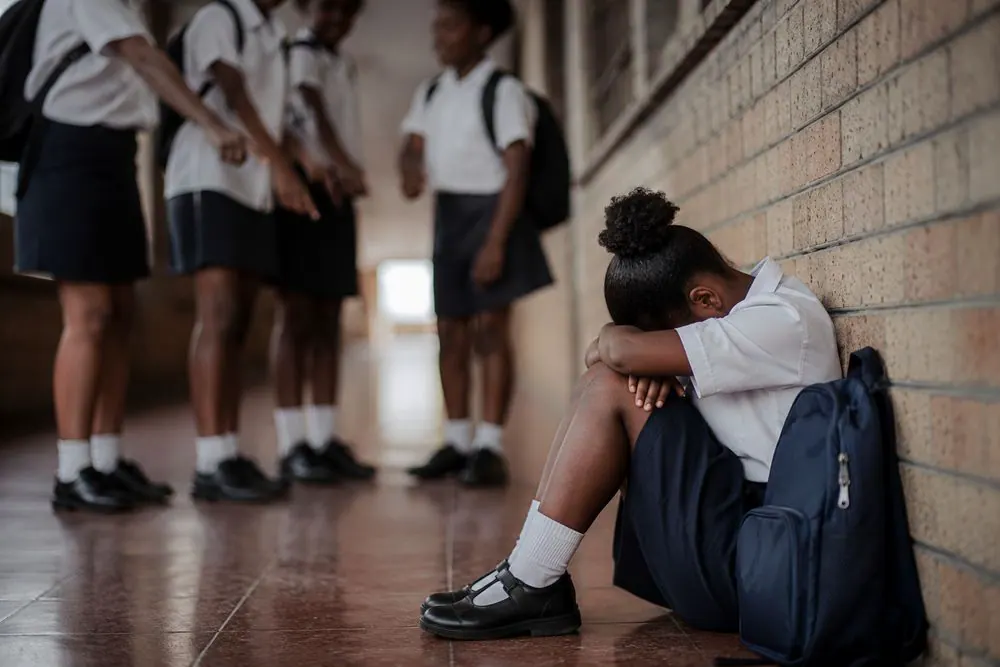
Emotional distress may emerge through childhood as anxiety, persistent sadness, behavioural difficulties, abuse, bullying, bereavement, or family instability stress. Trauma following gender-based violence and violence in general is often untreated. Socio-economic factors significantly impact mental health outcomes of poor children, but depression among children is prevalent across all types of schools in South Africa, irrespective of quintile or poverty ranking.
Children's anxiety and depression-related behaviour is often misinterpreted as a disciplinary issue and is dealt with in a punitive fashion. Instead of asking what has happened to a child, the focus is immediately on what is wrong with the child’s behaviour. Childhood trauma, anxiety, and depression that go unrecognised deepen through adolescence, and by matric, pupils carry years of unresolved distress with no established relationship with any helping professional.
Recent research advocates for multilevel mental health interventions that integrate economic, educational, and psychosocial dimensions. The causes of adolescent pupils’ mental well-being need to be understood from a holistic, ecological perspective, as it resists a narrow focus on school assessments alone as the overriding cause of the deterioration in a child’s mental health. A practising school psychologist describes how pupils constantly feel disconnected from the significant adults in their lives.
To address this issue, parents and caregivers need much stronger mental-health literacy to become more aware of persistent withdrawal, dramatic behavioural changes, hopelessness, and emotional distress. The country needs to reconnect and really listen to its children in ways that nurture and affirm. By recognising that mental health begins long before matric, the collective response is likely to be different, and the nation can move from a “suicide-prevention” conversation to a “mental-health promotion across childhood” conversation.
Key points
- The country needs to shift its focus on suicide prevention from high school to childhood.
- South Africa has fewer than 40 registered child psychiatrists.
- The country needs to invest in multilevel mental health interventions that integrate economic, educational, and psychosocial dimensions.