Eswatini's manufacturing sector has shown significant growth in the second quarter of 2026, largely driven by the food processing industry. According to the Central Bank of Eswatini's Recent Economic Developments report, food processing rose 27 per cent in the second quarter, up from 11.6 per cent in the first quarter. This growth was primarily attributed to a 53.5 per cent increase in sugar production.
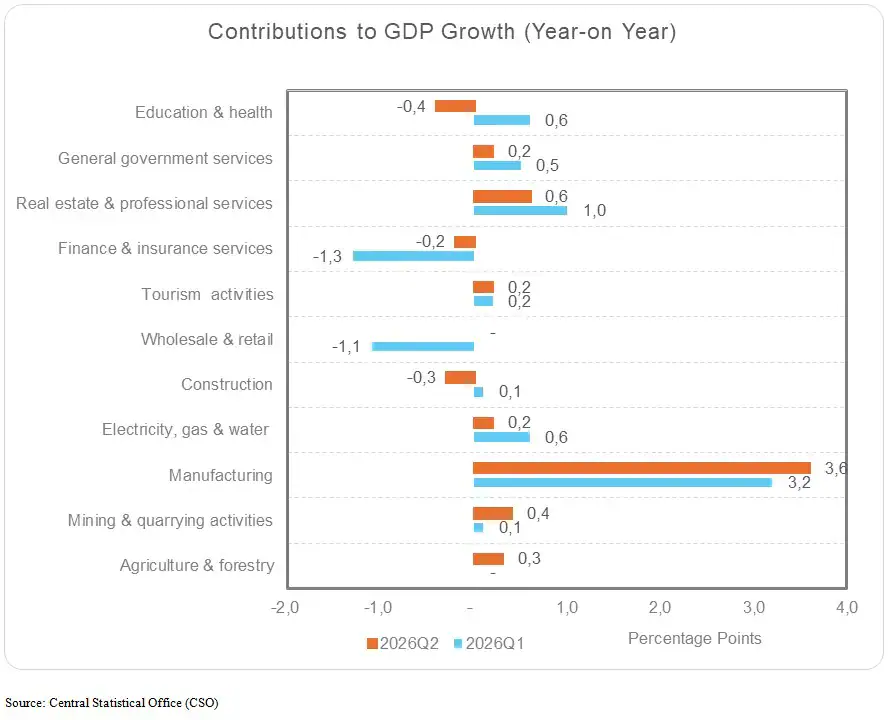
The country's economy expanded by 6.5 per cent year-on-year in the quarter ended June 2026, accelerating from a revised growth of 5.9 per cent in the first quarter. The growth was broad-based, with the primary, secondary and tertiary sectors all recording positive year-on-year growth during the period. However, on a quarter-on-quarter basis, GDP growth slowed to 0.7 per cent in the second quarter, compared with a revised 2.6 per cent in the quarter ended March 2026.
Within the secondary sector, manufacturing remained the major contributor to the positive performance, recording growth of 14 per cent in the second quarter, compared with 12.3 per cent in the previous quarter. The Central Bank attributed the significant improvement in food processing to an increase in the area under harvested sugar cane, alongside improvements in sucrose and sugar yields.
Sugar remains one of Eswatini's major agricultural and manufacturing products, making developments in cane production and processing particularly important to the performance of the wider economy. The improved performance in sugar processing was supported by an increase in agricultural production, translating into higher processing output.
Non-food manufacturing output expanded by 11.1 per cent year-on-year in the second quarter, although this was slower than the 12.4 per cent growth recorded in the first quarter. The performance was supported by double-digit growth in the manufacturing of chemical products, which includes miscellaneous edibles, as well as cement and other non-metallic products.
However, not all manufacturing sectors performed well, with the textile and wearing apparel manufacturing subsector contracting by 3.4 per cent during the second quarter. The Central Bank noted that the weak performance suggested that the subsector continued to face strain amid uncertain market conditions in its key export destinations.
The Eswatini Central Bank's report highlights the importance of the sugar industry to the country's economy and the need for continued growth in the sector. The developments point to a stronger performance in the country's sugar industry during the period, with increased agricultural production translating into higher processing output.
Key points
- Eswatini's food processing sector rose 27% in Q2 2026, driven by a 53.5% increase in sugar production.
- The country's economy expanded by 6.5 per cent year-on-year in the quarter ended June 2026.
- Non-food manufacturing output expanded by 11.1 per cent year-on-year in the second quarter.
Reporting sources
- Sugar surge lifts food processing, manufacturing growth · Times of Swaziland