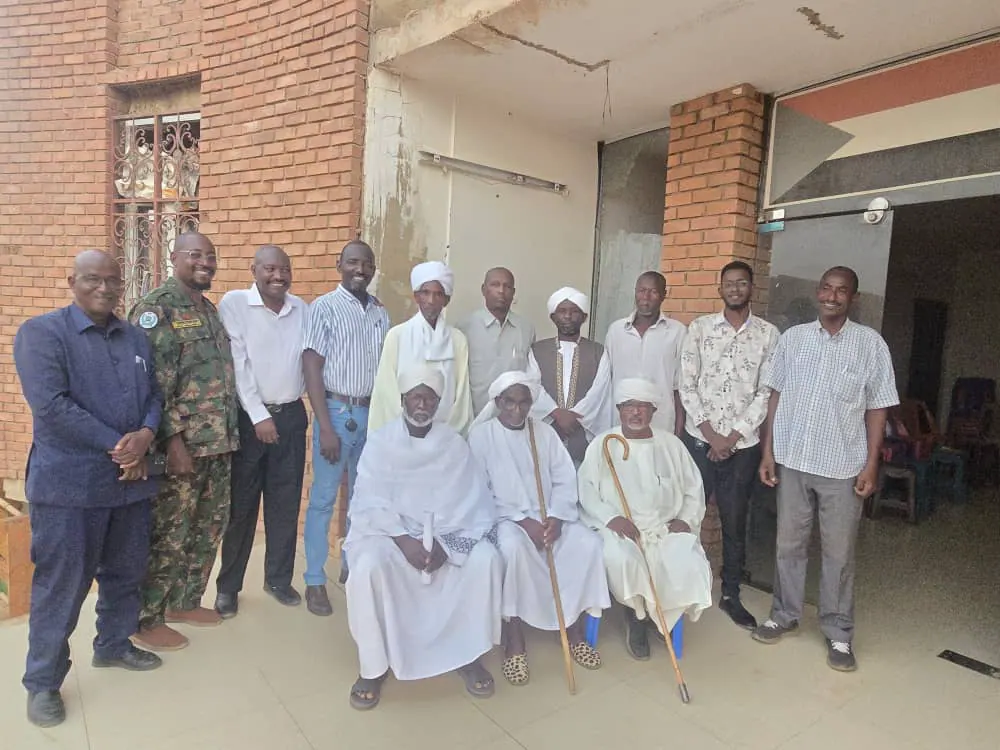
In a move that embodies the values of forgiveness and tolerance, a delegation from the Al-Taayesha tribe recently visited the Jawamea tribe to offer condolences for the death of their relative, Ali Al-Amin Ahmed Al-Amin, a lawyer who was shot by a friend, Adib Al-Taher Mohamed Adib, from the Al-Taayesha tribe. The incident occurred in the Ambeda area of Khartoum three years ago.
The visit was a significant step towards healing and reconciliation between the two tribes, which had been estranged for three years. According to Zain Kanduwa, a spokesperson for the Jawamea tribe, the killer's admission of guilt and his family's acknowledgment of the crime helped pave the way for a reconciliation committee to begin talks. The committee informed the victim's father, Al-Hajj Al-Amin Ahmed Al-Amin, that the Al-Taayesha tribe had accepted responsibility for the crime and was willing to hand the perpetrator over to the authorities.
The victim's father, Al-Hajj Al-Amin Ahmed Al-Amin, subsequently announced that he was forgiving the killer and his family unconditionally. This act of forgiveness was seen as a major breakthrough in the reconciliation process. The reconciliation committee decided to dedicate this act of forgiveness and reconciliation to the people of Sudan, in an effort to promote national unity and social cohesion in the aftermath of the April 15, 2023 conflict.
Ali Al-Taleb, a representative of the Al-Taayesha tribe, praised the Jawamea tribe for their tradition of forgiveness and reconciliation. He noted that the Jawamea tribe's approach was rooted in their faith and their willingness to forgive when possible. Al-Taleb expressed his gratitude to Al-Hajj Al-Amin Ahmed Al-Amin for his act of forgiveness and highlighted the historical and familial ties between the two tribes, which helped facilitate the reconciliation process.
The reconciliation process was facilitated by the Higher Council for Social Peace, which supervised the talks and helped bring the two parties together. The Council's Deputy Chairman, Dr. Ishaq Sheikh Yusuf Abu Shara, received a document outlining the terms of the reconciliation from representatives of the two tribes. The document is set to be signed in a ceremony in Khartoum on October 17, 2026.
Dr. Abu Shara noted that the reconciliation between the two tribes was a significant step towards national healing and social cohesion. He emphasized that such initiatives aimed to promote forgiveness, tolerance, and coexistence in Sudanese society. The ceremony will be attended by prominent figures from both tribes and national symbols.
The reconciliation between the Jawamea and Al-Taayesha tribes is seen as a positive development in Sudan, where conflicts between different groups have been a recurring challenge. The agreement is expected to have a positive impact on social cohesion and national unity.
Key points
- The reconciliation between the Jawamea and Al-Taayesha tribes was facilitated by the Higher Council for Social Peace.
- The victim's father, Al-Hajj Al-Amin Ahmed Al-Amin, forgave the killer and his family unconditionally.
- The reconciliation agreement is set to be signed in a ceremony in Khartoum on October 17, 2026.