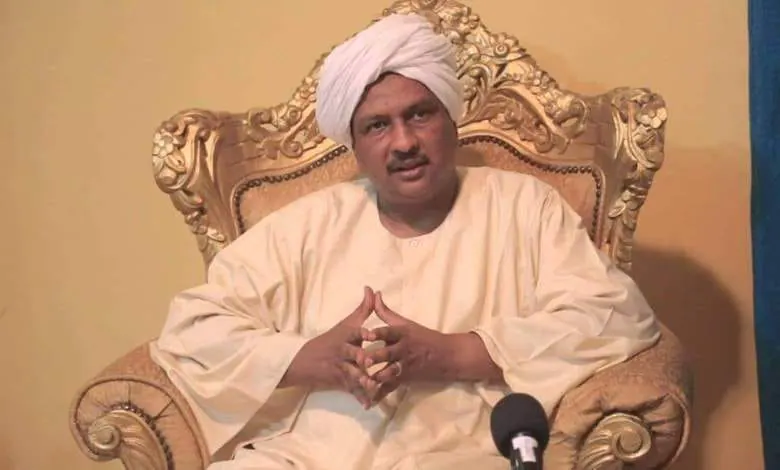
On October 7, 2026, Sharif Hussein Al-Hindi, a prominent figure in the Democratic Unionist Party, emphasized the crucial role of the Sudanese military in the current situation. He also stressed the importance of Sudanese-Sudanese dialogue as a means to address the root causes of the conflict. Al-Hindi's comments come amid ongoing efforts to stabilize the country and promote national reconciliation.
Al-Hindi highlighted the work of the committee tasked with preparing the ground for national dialogue and promoting awareness. This committee aims to unify Sudanese visions and create an environment conducive to constructive dialogue. By strengthening state institutions and revitalizing the role of political parties, Al-Hindi believes Sudan can overcome its current challenges.
The politician described the ongoing conflict as an "aggression and old conspiracy" that has evolved into a form of "renewed colonialism." He noted that the war's impact extends beyond the military sphere, affecting the economy and society as a whole. The conflict has deepened divisions and created uncertainty, with some groups seeking to return to Sudan's original social components.
Al-Hindi pointed out that the current political landscape has been shaped by these developments, leading to a decline in the influence of political parties. This decline is attributed to internal divisions and a lack of unity among party members. To regain their effectiveness, Al-Hindi stressed the need for parties to strengthen their internal structures and unify their positions.
According to Al-Hindi, addressing the crisis requires a comprehensive approach that goes beyond the military aspect. He emphasized the need to focus on the economy, national unity, and strengthening state institutions. Al-Hindi argued that any dialogue should focus on the root causes of the problems, rather than just their symptoms.
Al-Hindi also emphasized that Sudan cannot rely on external solutions to its problems. Instead, he called for a unified Sudanese vision as the foundation for any path towards stability. This vision should be based on national consensus and a commitment to strengthening state institutions.
The politician's comments reflect a broader effort to promote national dialogue and reconciliation in Sudan. His call for a unified vision and strengthened institutions is seen as a crucial step towards addressing the country's ongoing crisis. The situation in Sudan remains complex, with many challenges to be overcome in the pursuit of stability and peace.
Key points
- The politician emphasized the importance of national dialogue and a strong state in addressing Sudan's crisis.
- Al-Hindi described the conflict as an "aggression and old conspiracy" that has had far-reaching impacts on Sudan.
- The politician called for a comprehensive approach to addressing the crisis, focusing on the economy, national unity, and state institutions.