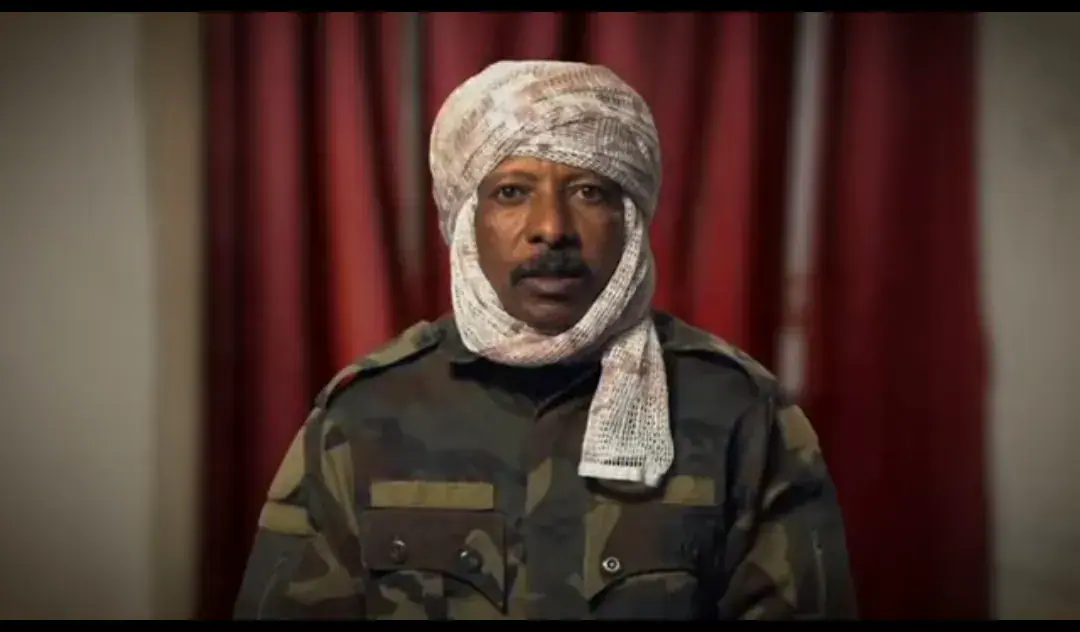
In a significant development, Sudanese militia commander Lieutenant General Sadiq Mohamed Abdelrahman Andur announced his defection from the Rapid Support Forces (RSF) and his allegiance to the Sudanese Armed Forces. Andur, who led Group 15 of the RSF and was also the head of the Collecting Forces for the Liberation of Sudan for Reform and Development, made the announcement on October 30, 2026. He cited his disillusionment with the RSF's leadership and what he described as a project driven by the interests of a specific family.
According to Andur, his initial involvement with the RSF was motivated by a desire to fight for a unified Sudan, free from marginalization, and where all citizens could enjoy equal rights under the law. However, he claimed that he later discovered that the RSF was serving a particular family's interests, with the leadership controlling the group's finances, arms, and movements. Andur expressed his disappointment with the lack of freedom of expression within the RSF, stating that those who opposed the leadership's views were either silenced, imprisoned, or worse.
Andur also criticized the RSF's actions, describing them as destructive and detrimental to Sudan and its people. He acknowledged that the group's actions had caused harm and accused external powers of supporting the RSF with funds, arms, and drones, as well as recruiting thousands of mercenaries from African countries and elsewhere. Andur emphasized that he and his colleagues were not mere tools to be used by the RSF leadership for their own purposes.
The defection is seen as a significant blow to the RSF, which has been involved in the Sudanese conflict. Andur's decision to join the Sudanese Armed Forces was described as a return to the "hometown." He urged his former colleagues to leave the RSF and join the legitimate institutions of the state. Andur confirmed that he was now under the command of the Sudanese Armed Forces.
The RSF has been accused of various human rights abuses and has been involved in the conflict in Sudan. The group's leader, Mohamed Hamdan Daglo (also known as Hemetti), has been a key figure in the conflict. Andur's defection and criticism of the RSF's leadership may further complicate the situation in Sudan.
The Sudanese conflict has resulted in significant humanitarian and economic costs. The international community has been urged to take a more active role in addressing the crisis. Andur's defection may be seen as a significant development in the conflict, potentially impacting the balance of power.
Andur's decision to defect and join the Sudanese Armed Forces may have implications for the RSF and the broader conflict in Sudan. The situation remains complex, with various factions and external actors involved. The international community continues to monitor developments in Sudan.
Key points
- Sudanese militia commander defects from Rapid Support Forces, cites disagreement with leadership.
- Andur accuses RSF of serving a particular family's interests and criticizes lack of freedom of expression.
- The defection may have implications for the conflict in Sudan and the balance of power.