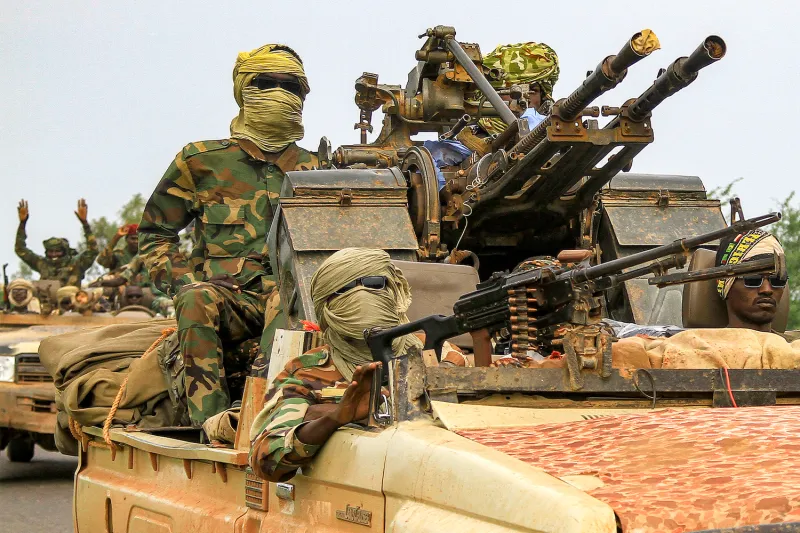
The Sudanese Armed Forces (SAF) announced on Thursday, September 21, 2026, that they had regained control of several villages and strategic military positions in North and West Kordofan. The military operation was conducted in coordination with joint forces, and the developments have raised questions about the nature of the latest advances and their implications for the conflict in Darfur. The SAF's gains have been seen as a significant development in the ongoing conflict.
Retired military officer and analyst Lieutenant Colonel Al-Tayyib Malkabi said that assessing military control requires an understanding of the relationship between the geography of the area and three key factors: control of territory, the opening of supply lines, and the degradation of an opponent's combat capabilities. Malkabi highlighted the area of Sodari as a "pivotal node" in the current theatre of operations, providing a key position from which forces can gain direct access to areas bordering Darfur.
The capture of Sodari represents a key position from which forces can gain direct access to areas bordering Darfur, a move the SAF has identified as an interim strategic objective. Malkabi said that holding Sodari after capturing it would constitute a real test of the Sudanese army's ability to move from a phase of defence and area-clearing operations to one focused on permanently holding and securing territory.
Malkabi explained that the army had adopted an integrated, coordinated operations strategy centered on enhanced intelligence-gathering and the collection and verification of field information concerning the opponent's movements and positions. This was followed by aerial preparation and the use of drones to conduct pre-emptive strikes and extensive reconnaissance operations aimed at restricting the opposing side's movements and limiting its ability to manoeuvre.
The announced capture of more than 11 villages and military positions represents a development of significant strategic importance, particularly with regard to Route 40, a critical supply artery for the movement of fuel, ammunition, and military reinforcements. Control of the corridor represents a direct blow to the RSF's logistical capacity and could affect its ability to sustain combat operations across Kordofan and Darfur.
With the conflict entering a prolonged phase, Malkabi said both sides were facing a new reality that required serious consideration of their ability to sustain operations over the long term. This includes the capacity to manage military resources effectively and maintain territorial control without suffering excessive attrition. The return of civilian life is seen as a key indicator of genuine control.
Malkabi concluded that military success should not be measured solely by battlefield gains or the expulsion of opposing forces. Genuine control requires three successive stages: the offensive phase and the physical seizure of territory, the ability to repel counterattacks and hold the captured ground, and the restoration of security and the return of normal civilian life.
Key points
- The Sudanese Armed Forces have regained control of several villages and strategic positions in North Kordofan.
- The capture of Sodari provides a key position from which forces can gain direct access to areas bordering Darfur.
- The control of Route 40 represents a direct blow to the RSF's logistical capacity.