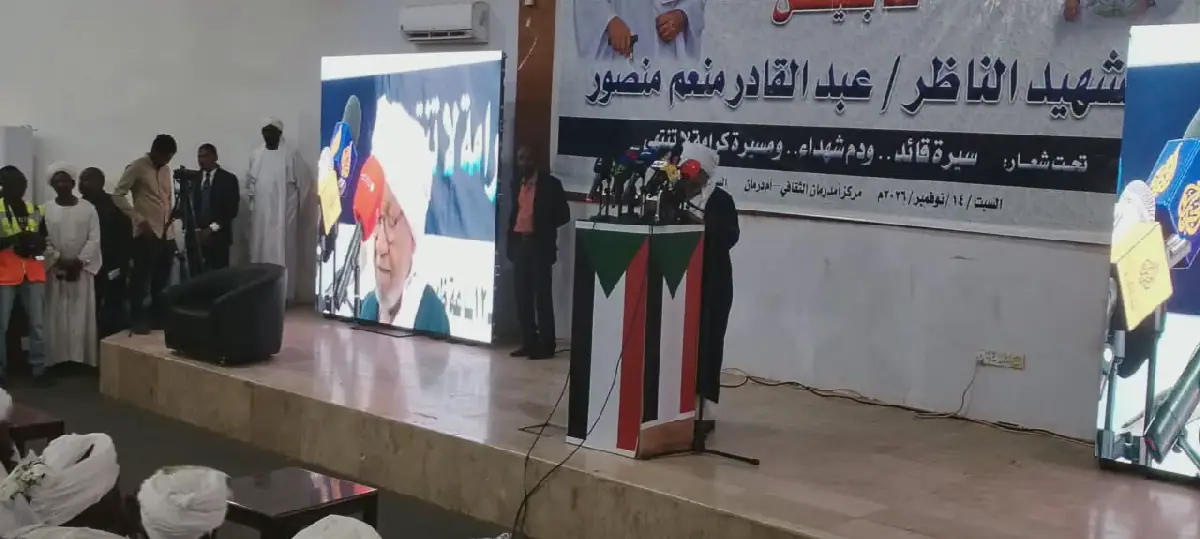
The Sudanese military has paid tribute to Abdelqader Muneem Mansour, a prominent leader who passed away a year ago. Deputy Chief of Staff, General Abdul Khair Abdullah, attended a memorial service in Khartoum, representing the Commander-in-Chief and other senior military officials. General Abdullah described Mansour as a national hero and a symbol of Sudan's independence. He emphasized that Mansour's hometown, Nahud, had become a unifying force for all Sudanese.
General Abdullah highlighted Mansour's unwavering commitment to his land and people, citing his famous quote: "Even if we are all gone, Sudan and the army must remain." Mansour's stance was seen as a testament to his patriotism and loyalty. The general also praised the Dar Hamer tribe, to which Mansour belonged, for their sacrifices during the recent conflict. He acknowledged that the tribe had provided significant support to the military during the war.
The memorial service was also attended by Ahmed Osman Hamza, Governor of Khartoum State. Hamza lauded Mansour's courageous stance during the conflict, saying he had refused to leave his ancestral home and had remained steadfast in the face of adversity. The governor congratulated the attendees on the recent liberation of the city of Al-Khui and other areas in Dar Hamer, but warned that the effects of the war went beyond physical destruction.
General Abdullah expressed his confidence in the future, stating that the next celebration would take place soon in Dar Hamer. He reiterated the military's appreciation for the tribe's sacrifices and loyalty. The deputy chief of staff also addressed Mansour's successor, his son, Muneem Abdelqader Muneem, urging him to continue his father's legacy and emphasizing the importance of unity among the tribe's leaders.
The memorial service was seen as an opportunity for the Sudanese military to honor one of their own and to acknowledge the significant contributions of the Dar Hamer tribe. General Abdullah's presence and words of praise underscored the military's commitment to recognizing and rewarding the sacrifices of its loyal supporters.
Mansour's legacy is widely regarded as a symbol of resistance and patriotism. His stance during the conflict has been cited as an inspiration by many, and his memory continues to be celebrated by his tribe and the broader Sudanese community.
The Sudanese military's tribute to Mansour is part of a broader effort to recognize and honor the contributions of national heroes. The memorial service was a testament to the country's ongoing efforts to come to terms with its past and to build a more united future.
Key points
- The Sudanese military has praised Abdelqader Muneem Mansour as a national hero and symbol of Sudan's independence.
- The Dar Hamer tribe was commended for their sacrifices during the recent conflict.
- Mansour's legacy continues to inspire patriotism and resistance in Sudan.