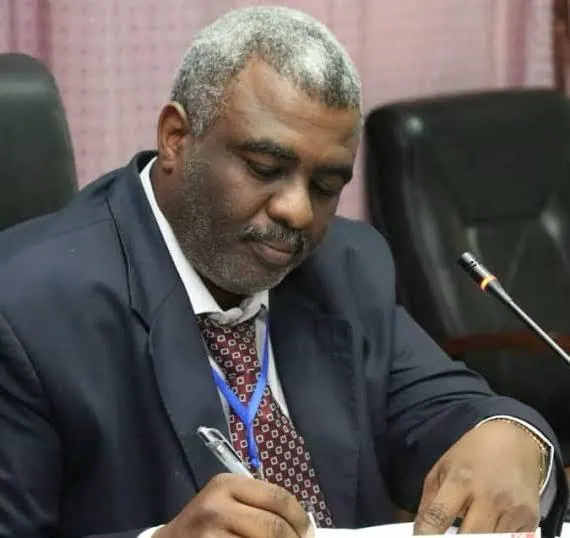
Sudan's dialogue committee, led by spokesperson Othman Mirghani, has made significant progress in its consultations, meeting with over 100 societal groups, parties, alliances, and independent figures. The committee's approach is based on the principle of "no exclusion, no exception." Their role is limited to preparation and communication, without imposing dialogue parties, agendas, or outcomes. This development comes as Sudan faces a complex crisis, with numerous initiatives and visions, but a shortage of cohesive agreements.
The committee's challenge lies in transforming the multitude of visions into a productive political path. Sudan's crisis is not due to a lack of initiatives, but rather the difficulty in converting them into actionable agreements. The risk is that the dialogue may become repetitive, with parties rehashing familiar positions instead of working towards a solution. To overcome this, the committee must transition from gathering opinions to organizing and transforming them into clear issues for discussion.
The next stage, referred to as "pre-table," involves the committee creating a preliminary draft of key national issues requiring discussion. This draft will be presented to parties and societal forces for written feedback. By doing so, participants will enter the dialogue with specific visions and a shared foundation for discussion. Each party will be required to provide a clear vision, diagnosis, and proposed solutions, along with suggested implementation mechanisms.
This approach may seem straightforward, but it marks a significant shift from a political to a systematic level. The committee is not dictating agreements or predetermined outcomes, but rather establishing a framework for discussion and allowing parties to contribute their perspectives. The committee's role will then focus on collecting, categorizing, and analyzing these visions to produce two reference documents.
The first document, "National Commonalities," will outline areas of agreement, gathering subjects, principles, and proposals that demonstrate a clear level of consensus. This document should not remain internal, but rather be publicly announced to inform Sudanese citizens about the areas of agreement reached by their political and societal forces. The second document, "Disagreed Issues," will address areas of contention, providing a foundation for meaningful dialogue.
By producing these documents, the committee can facilitate a more productive dialogue, allowing parties to engage in discussions based on a clear understanding of areas of agreement and disagreement. This approach enables the "no exclusion, no exception" principle to take on practical significance, as participation becomes a meaningful contribution to shaping the dialogue agenda.
Ultimately, the success of Sudan's dialogue will not be measured by the number of participants, but rather by the clarity and coherence of the issues discussed and the solutions proposed. If the committee can effectively identify areas of agreement and disagreement, and shape the dialogue agenda, it will have accomplished a crucial step towards a more constructive and meaningful national conversation.
Key points
- The Sudanese dialogue committee has met with over 100 groups to gather input.
- The committee aims to produce two reference documents: "National Commonalities" and "Disagreed Issues."
- The dialogue's success will be measured by the clarity and coherence of the issues discussed and proposed solutions.