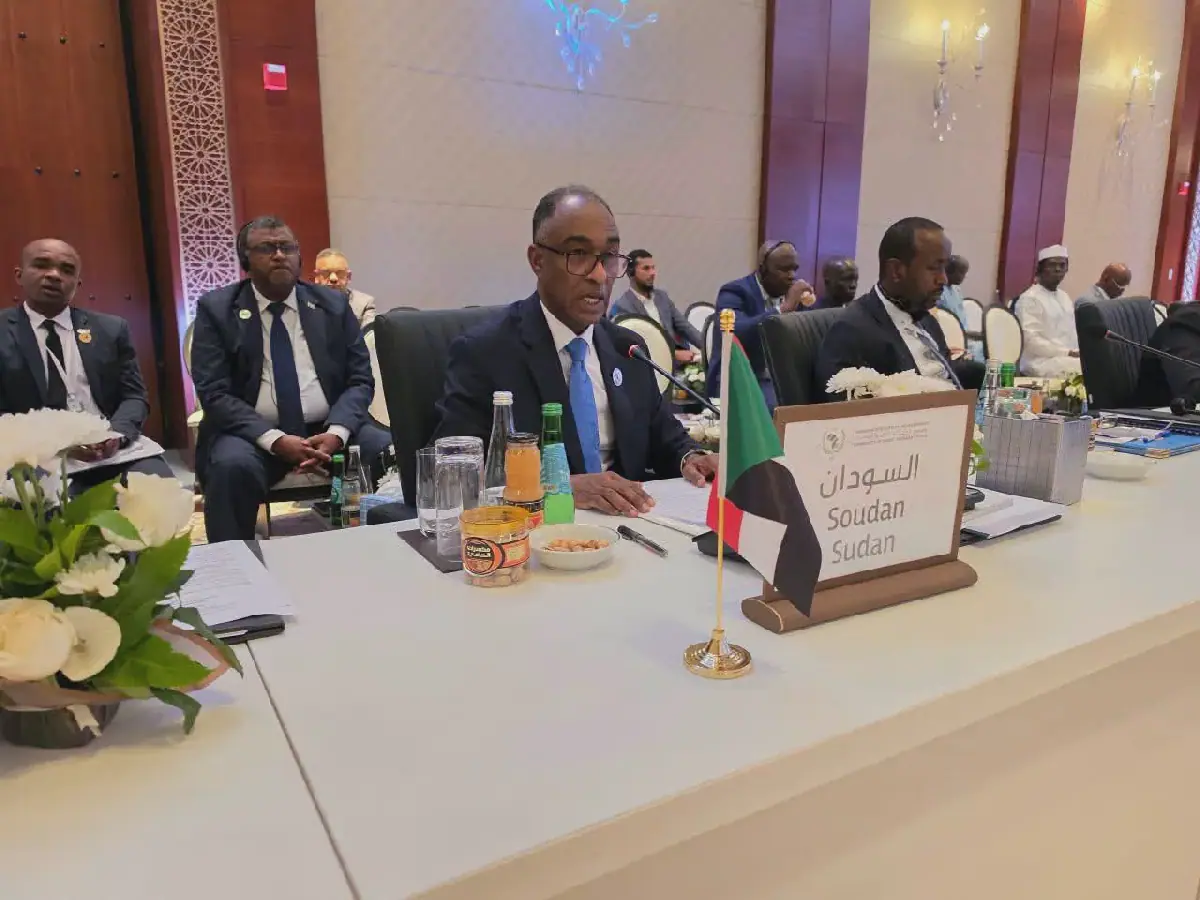
Sudan's Deputy Foreign Minister, Ambassador Maawiya Osman Khalid, has urged countries in the Sahel and Sahara regions to take a firm stance against the Rapid Support Forces (RSF) militia, which has been committing atrocities against civilians in Sudan. Speaking at the 22nd Ordinary Session of the Executive Council of the Sahel and Sahara States (C3S) in Tripoli, Libya, Ambassador Khalid emphasized the need for the international community to condemn the RSF's actions and classify the group as a terrorist organization.
The C3S meeting, which took place on November 7, 2026, brought together foreign ministers, heads of delegations, and representatives of member states, as well as officials from the organization's secretariat. Ambassador Khalid welcomed the resumption of the C3S's activities after a period of suspension, highlighting the challenges facing the organization and its member states. He stressed the importance of enhancing coordination and cooperation among member states to develop the performance of C3S institutions and improve their efficiency.
Ambassador Khalid provided a detailed briefing on the situation in Sudan, describing the RSF's actions as a "existential threat" to the state. He accused regional powers of fueling the conflict and supporting the RSF, which has targeted vital infrastructure and cultural heritage sites. The Sudanese Deputy Foreign Minister also reported instances of ethnic cleansing and systematic starvation by the RSF and its mercenaries, who have been brought in from several countries.
The RSF's actions have resulted in a devastating humanitarian crisis, with thousands of civilians displaced and killed. Ambassador Khalid called on C3S member states to take a clear stance against the RSF's atrocities and to prevent the group from receiving arms, logistical supplies, and mercenaries through their territories. He emphasized that such support only prolongs the conflict and deepens the suffering of the Sudanese people.
The Sudanese government has previously accused the RSF of committing war crimes and crimes against humanity. The group has been accused of targeting civilians, including women and children, and of engaging in forced displacement and pillage. Ambassador Khalid's call for the RSF to be classified as a terrorist organization reflects the Sudanese government's efforts to garner international support for its fight against the group.
The C3S was established in 2003 to promote economic, social, and cultural cooperation among its member states, which include Burkina Faso, Chad, Eritrea, Mali, Mauritania, Niger, and Sudan. The organization has been working to address common challenges facing its member states, including poverty, inequality, and insecurity. The resumption of its activities is seen as a positive step towards addressing these challenges and promoting regional stability.
The outcome of the C3S meeting is expected to have significant implications for the Sahel and Sahara regions, which have been affected by instability and conflict in recent years. Sudan's call for the international community to condemn the RSF's actions and classify the group as a terrorist organization reflects the gravity of the situation and the need for a coordinated response to address the crisis.
Key points
- Sudan's Deputy Foreign Minister urges Sahel and Sahara countries to condemn RSF atrocities and classify the group as a terrorist organization.