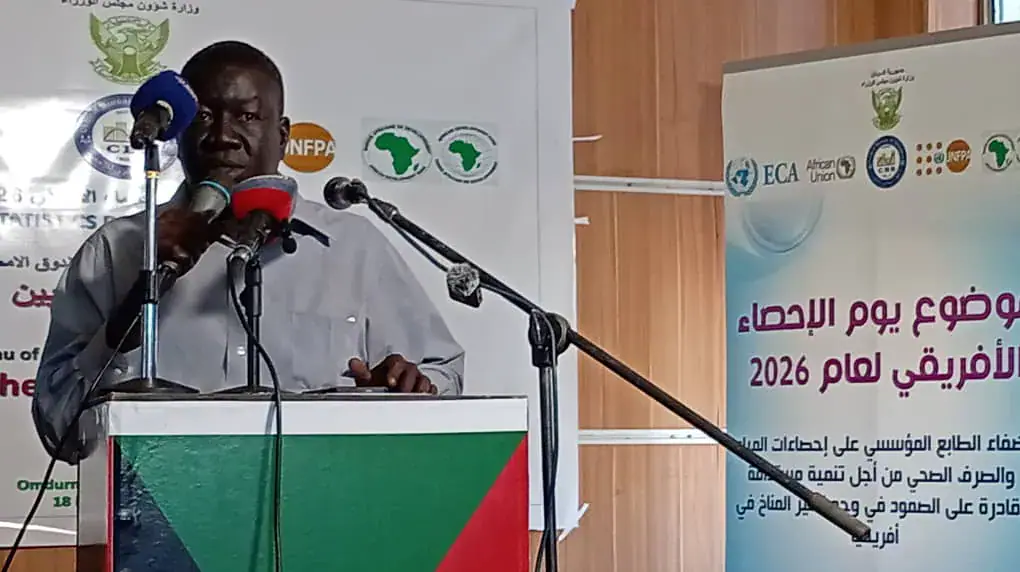
Sudan's water resources face significant challenges, with 60% of the needs in Khartoum state met from underground sources, including groundwater and wadi water. According to Eng. Idris Omar Idris, Director-General of Groundwater and Wadis at the Ministry of Agriculture and Irrigation, there are over 2000 wells in Khartoum state alone. He made these remarks during his participation in a forum organized by the Central Bureau of Statistics to mark African Statistics Day.
Idris emphasized that proper water planning begins with understanding population numbers, agricultural, livestock, and industrial needs, as well as available water sources. Sudan's water resources include the Nile River and its tributaries, groundwater, wadi water, and rainfall. Effective planning requires accurate data on these resources and their uses. Idris highlighted the importance of integrating data on water usage, including domestic, agricultural, and industrial uses, as well as sanitation data.
The country's water resources are diverse, with varying reliance on different sources depending on geographical and climatic regions. Water is crucial for various aspects of life, including food security, agriculture, livestock, industry, economic development, public health, and social stability. The Ministry of Agriculture and Irrigation is responsible for monitoring Nile River flows, planning for its utilization, and managing groundwater resources.
However, Sudan faces challenges in water planning, including population displacement due to war, natural disasters, and drought, as well as urban expansion. These factors put pressure on water sources and sanitation networks. Idris stressed the need for accurate data on population numbers, distribution, and growth rates, as well as on water sources and their uses.
In terms of groundwater, Idris noted that required data includes well locations, depths, and technical specifications, as well as water levels and quality. He also highlighted the importance of collecting data on rainfall harvesting and flood management through dams and reservoirs. The livestock sector requires data on animal numbers, types, and grazing areas, as well as water sources and needs.
Idris identified several challenges in water statistics, including scattered data, outdated information, and limited access to some areas. He called for a national program to integrate water statistics, build a national information system, and support planning and decision-making. This program should involve updating records, digitizing data, and strengthening coordination between relevant institutions.
Finally, Idris emphasized the importance of media involvement in water issues and national security. He encouraged the development of specialized journalism, provision of accurate information to reporters, and coordination between concerned institutions. Idris concluded that water has become linked to national security, development, and stability, requiring reliable data and coordinated efforts to protect water resources for future generations.