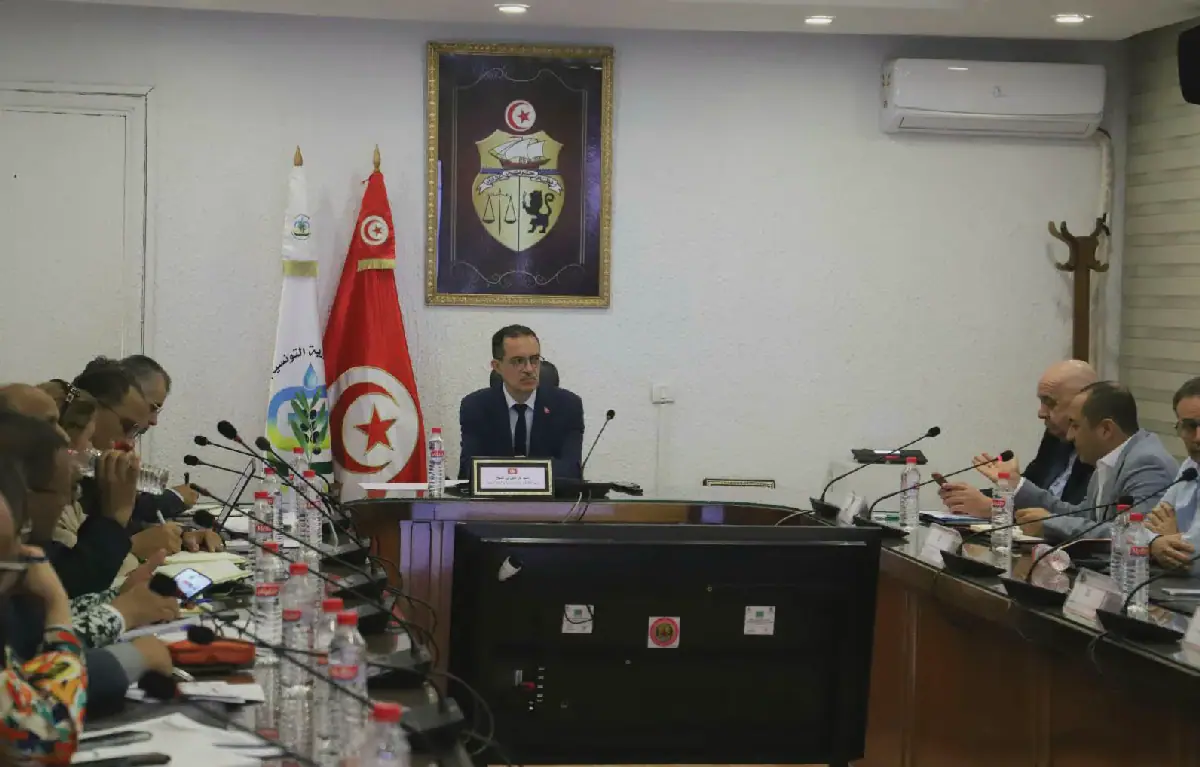
Tunisian Agriculture Minister Ezzeddine Ben Cheikh has called for the development of a digital application aimed at optimizing the country's olive oil production management. The application is expected to serve as a comprehensive database, bringing together all stakeholders in the olive oil sector and centralizing strategic indicators. This move is intended to improve decision-making with reliable and accurate information. The minister made this appeal during a meeting of the National Oil Council, which focused on monitoring the 2026/2027 harvest season.
The proposed digital application will enable the tracking of olive oil production, including the number of oil mills, their geographical distribution, processing capacities, and production volumes. This tool is designed to provide a robust monitoring and evaluation mechanism, supporting timely decision-making based on precise data. The minister emphasized the importance of this application in ensuring the sector's efficiency and competitiveness.
The National Oil Council meeting also highlighted the slow pace of harvesting in most production areas, largely due to high temperatures affecting oil extraction rates. To address this, the council recommended close coordination among stakeholders to maintain the quality and competitiveness of Tunisian olive oil, particularly in the face of abundant global production.
The council formulated several recommendations to support the olive oil sector. These include strengthening and rehabilitating the storage capacities of the Office National de l'Huile to absorb production, providing support to small farmers through facilitated access to financing and protection against international price fluctuations.
Further recommendations included the development of mechanized harvesting to reduce production costs and accelerate harvesting, and the valorization of olive oil by-products, such as margine, for agricultural purposes, in compliance with technical and environmental standards. The council also emphasized the need to enhance training, extension services, and scientific research for all actors in the olive oil chain.
The digital application is expected to play a crucial role in implementing these recommendations by providing accurate and timely data. This, in turn, will enable more effective planning and management of the olive oil sector, ultimately contributing to its growth and sustainability. The application is also seen as a means to improve the overall efficiency of the sector.
The Tunisian olive oil sector is poised to benefit from the implementation of these measures, which are aimed at enhancing its competitiveness and productivity. With the support of the digital application and the recommendations outlined by the National Oil Council, the sector is expected to make significant strides in the coming years.
Key points
- Development of a digital application to optimize olive oil production management in Tunisia.