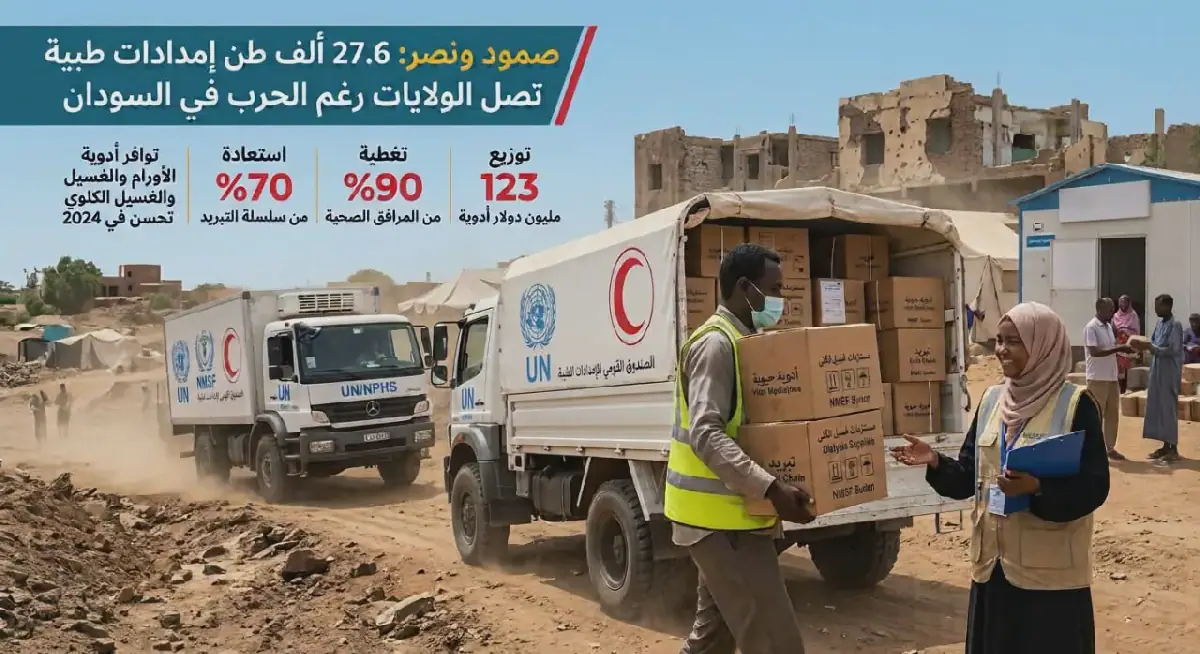
In the midst of Sudan's severe health crisis, a recent scientific study has highlighted the efforts of the National Medical Supplies Fund to maintain a steady flow of medicines and medical supplies to various states. The study, published in the 2026 Eastern Mediterranean Health Journal, showcases the resilience of Sudan's health supply chain during extraordinary circumstances. The war, which began in April 2023, has caused significant damage, with losses exceeding $500 million and over 130 vehicles lost.
The study, titled "Experiences and Lessons on the Resilience and Sustainability of Health Supply Chains During the War in Sudan," reveals that the National Medical Supplies Fund successfully received and distributed over 27,600 tons of medical supplies, valued at $123 million. These supplies have continued to reach 17 states across the country. The fund's efforts have covered 90% of functioning health facilities in accessible areas and restored 70% of the cold chain capacity that was lost in the early months of the war.
According to the study, there has been an improvement in the availability of certain vital medicines and supplies in 2024 compared to 2023. This includes drugs for cancer treatment and kidney dialysis supplies. The improvement is attributed to the fund's strategy of diversifying supply routes, enhancing storage, and optimizing distribution through regional centers. These measures have ensured the continuous delivery of medical supplies to health institutions despite the challenges posed by the war.
The National Medical Supplies Fund's ability to operate effectively amidst the conflict is seen as a model for enhancing the resilience of health supply chains during crises. The study emphasizes that while the experience offers valuable lessons, challenges such as funding, security, and information flow persist. Further support is needed to sustain the delivery of medical supplies.
The war in Sudan has had a devastating impact on the country's health sector, with significant damage to infrastructure and a substantial loss of resources. Despite these challenges, the National Medical Supplies Fund has demonstrated remarkable resilience and adaptability. The fund's efforts have been crucial in maintaining the availability of essential medical supplies across the country.
The study's findings underscore the importance of a robust and flexible health supply chain in times of crisis. By adopting strategies such as diversification of supply routes and regional distribution centers, health systems can better withstand the impacts of conflict and other emergencies. The experience of the National Medical Supplies Fund offers valuable insights for other countries facing similar challenges.
As Sudan continues to navigate the complexities of conflict and recovery, the role of the National Medical Supplies Fund in sustaining the health sector remains critical. The fund's ongoing efforts to deliver medical supplies to all parts of the country are essential for maintaining health services and saving lives. The international community's support for such initiatives is vital for ensuring the continued provision of essential health services.
Key points
- The National Medical Supplies Fund delivered over 27,600 tons of medical aid valued at $123 million to 17 states in Sudan.
- The fund's efforts covered 90% of functioning health facilities in accessible areas and restored 70% of the cold chain capacity lost during the war.
- Despite improvements in the availability of vital medicines, challenges such as funding, security, and information flow persist.