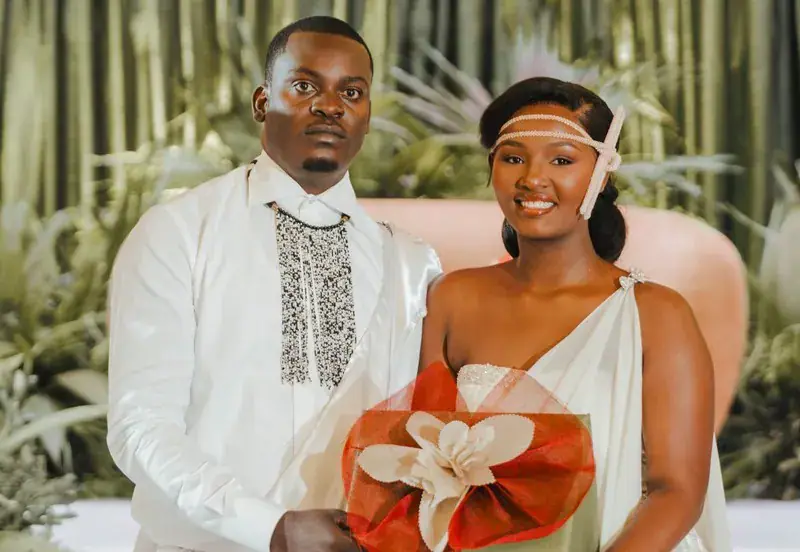
The Kicukiro Primary Court in Rwanda has determined that it lacks the authority to issue a document that would allow Idrissa Ouedraogo to obtain a Canadian visa. Ouedraogo had requested the document to facilitate a DNA test to prove his paternity of a child born to Ishimwe Vestine. The court made this ruling on October 21, 2026, during a hearing on the matter. Ouedraogo's side had argued that the court order was necessary for his visa application, but the court clarified that issuing travel documents is not within its jurisdiction.
The child's mother, Ishimwe Vestine, expressed no objection to the DNA test, stating that it could be conducted in Canada, with the results sent to the Rwanda Forensic Institute in Kigali for analysis. The test aims to compare the child's DNA with Ouedraogo's to determine if they share a biological connection. This development is part of a long-standing dispute between Ouedraogo and Vestine regarding the child's paternity.
Ouedraogo has expressed a strong desire to travel to Canada, despite previous unsuccessful attempts to obtain a visa. In September 2025, he applied for a visa to accompany Vestine and her sister, Kamikazi Dorcas, who were traveling to Canada for performances, but his application was denied. Apart from the DNA test, Ouedraogo also requested access to photographs of the child, citing concerns that the available images did not clearly show the child's resemblance to him.
During the court proceedings, the child's birth certificate was presented, which lists the mother's name and the child's name but does not include the father's name. However, the absence of the father's name on the certificate does not definitively prove or disprove Ouedraogo's paternity. The court has scheduled its verdict on the matter for October 28, 2026, at 9:00 AM, which will determine the next steps in resolving the paternity dispute.
The DNA test is expected to play a crucial role in resolving the dispute. If the test confirms that Ouedraogo is the child's biological father, it could potentially pave the way for him to obtain a Canadian visa. Conversely, if the test yields negative results, it may further complicate Ouedraogo's efforts to establish a relationship with the child. The court's decision on October 28 will provide clarity on the matter.
Ouedraogo and Vestine have been engaged in a protracted dispute over the child's paternity. The court's ruling on the DNA test is seen as a significant development in the case. The Rwanda Forensic Institute will conduct the DNA analysis, which will compare the child's DNA with Ouedraogo's to determine their biological relationship.
The case has garnered significant attention in Rwanda, with many awaiting the court's final decision. The outcome will have implications for Ouedraogo's future interactions with the child and his ability to travel to Canada. The court's verdict on October 28, 2026, will bring clarity to the situation, and the DNA test results will be a critical factor in determining the next steps.
Key points
- The Kicukiro Primary Court in Rwanda has ruled it has no authority to grant a visa to Idrissa Ouedraogo.
- A DNA test has been deemed necessary to determine the paternity of Ishimwe Vestine's child.
- The court's verdict on the matter is scheduled for October 28, 2026.