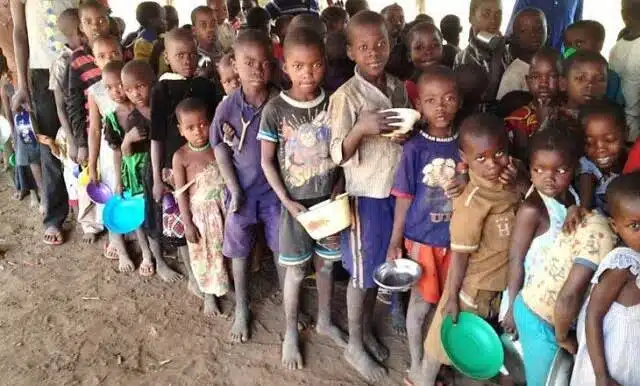
Sudan is grappling with a severe famine crisis, with approximately 20 million people facing acute hunger. Despite this, a formal declaration of a nationwide famine has not been made. The Integrated Food Security Phase Classification (IPC) has confirmed famine conditions in certain regions, but these classifications do not necessarily mean that the entire country is in a state of famine. The IPC relies on strict technical criteria, including data on food consumption, malnutrition, and mortality rates.
The IPC has reported that around 200,000 people are currently in the fifth phase of the classification, which is categorized as a "catastrophe." However, this number only reflects individuals whose situations have been documented in areas where data collection has been possible. The IPC has noted that its latest analysis was unable to cover the entire country due to data gaps, resulting in limited geographical coverage. This limitation is significant, as areas without sufficient data are not included in the final numbers.
The absence of data does not necessarily mean that hunger is not present in those areas. In fact, the lack of data can be an indicator of the severity of the situation, particularly in areas affected by conflict. The war in Sudan has hindered the production of data needed to assess the full extent of the famine. This has created a vicious cycle: the conflict prevents access to populations, which in turn prevents data collection, and the lack of data prevents a comprehensive assessment of the crisis.
The situation in Sudan is further complicated by the fact that the conflict has destroyed agricultural production, markets, transportation, and income, leading to widespread displacement and increased food costs. The World Food Programme (WFP) has warned that a lack of funding is limiting its ability to respond to the crisis, with a significant decline in funding for its operations in Sudan. The WFP requires hundreds of millions of dollars in additional funding to maintain its current operations.
The disparity between the overall number of people facing hunger and those classified in the fifth phase raises questions about the accuracy of the data. The IPC and WFP have reported that millions of people are struggling with hunger, but only a small fraction of these individuals are classified as being in a state of famine. This highlights the need for a more nuanced understanding of the crisis, taking into account the complexities of the situation and the limitations of the data.
To address the famine crisis in Sudan, it is essential to expand monitoring and response efforts, increase funding, and improve data collection. The international community must work together to support the IPC and WFP in their efforts to assess and respond to the crisis. Additionally, the Sudanese government and other stakeholders must prioritize the protection of civilians, the restoration of agricultural production, and the provision of humanitarian assistance to those in need.
Ultimately, the famine crisis in Sudan is a complex issue that requires a comprehensive and multifaceted response. While data and technical classifications are essential, they must be considered in the context of the broader humanitarian crisis. The international community must remain vigilant and committed to addressing the needs of the Sudanese people, who are facing one of the most severe famine crises in recent history.
Key points
- The IPC has reported that around 200,000 people are currently in the fifth phase of the classification, which is categorized as a "catastrophe."
- The World Food Programme (WFP) has warned that a lack of funding is limiting its ability to respond to the crisis, with a significant decline in funding for its operations in Sudan.
- The disparity between the overall number of people facing hunger and those classified in the fifth phase raises questions about the accuracy of the data.