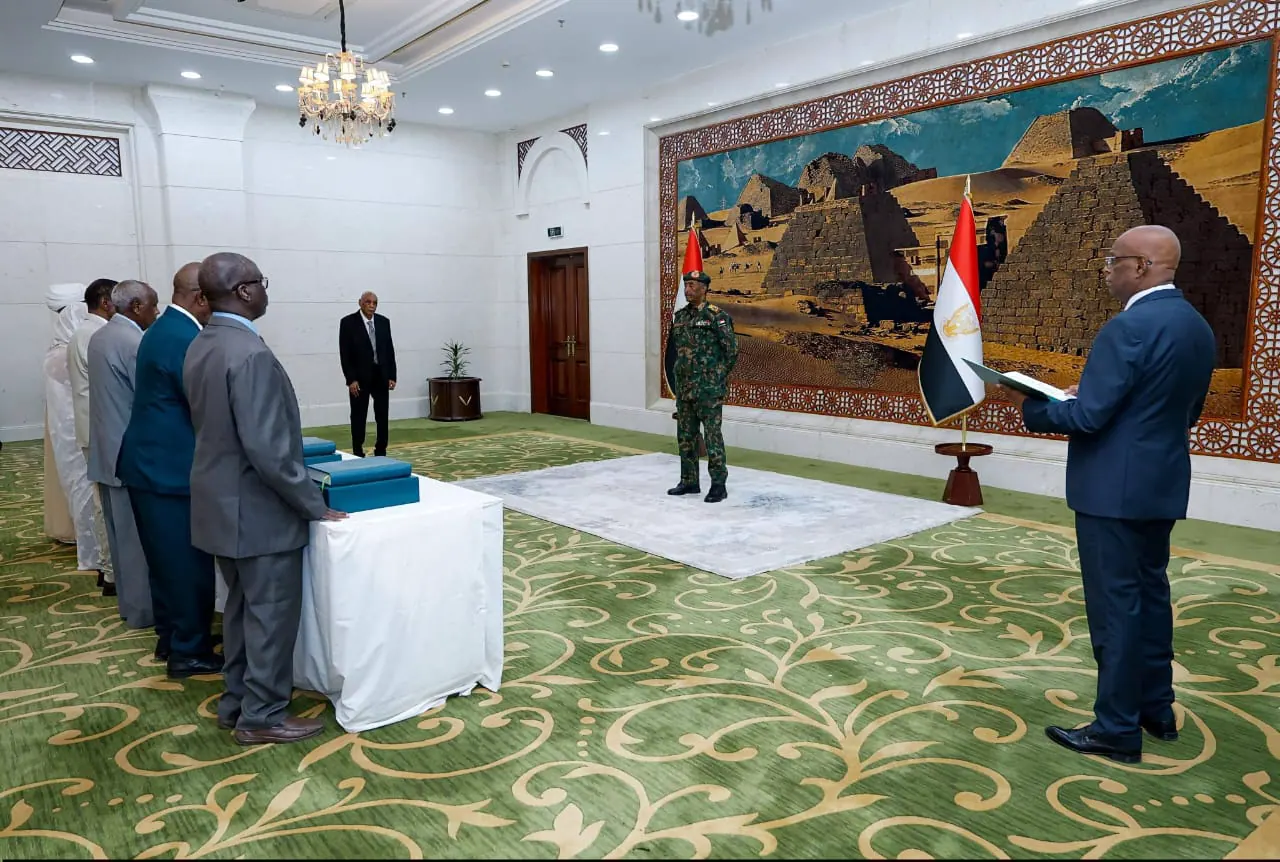
Members of Sudan's Constitutional Court have taken the oath of office at the Republican Palace in Khartoum, marking the beginning of a new phase of constitutional judicial work. The ceremony was attended by the head of the Transitional Sovereign Council, General Abdel Fattah al-Burhan, and the President of the Constitutional Court, Dr. Wahbi Mohamed Mukhtar. This development paves the way for the court to assume its constitutional and legal responsibilities.
The President of the Constitutional Court, Dr. Wahbi Mohamed Mukhtar, announced that the court will start performing its duties immediately. He expressed his appreciation for the trust placed in the court's members by the head of the Transitional Sovereign Council. Dr. Mukhtar emphasized the court's commitment to protecting citizens' rights and freedoms and exercising its powers as stipulated in the 2005 Constitutional Court Act and the 2019 Constitutional Document.
The Constitutional Court is expected to play a crucial role in protecting the rights of the Sudanese people. Dr. Mukhtar called for concerted efforts and hard work to build and develop Sudan. The court's establishment is seen as a significant step towards strengthening the country's judicial system and ensuring the rule of law.
The oath of office ceremony was attended by high-ranking officials, including the head of the Transitional Sovereign Council. The court's members are expected to work diligently to address the country's judicial challenges. Sudan has faced numerous challenges in recent years, including a transitional period marked by power struggles and economic difficulties.
The Constitutional Court's work will focus on ensuring that the country's laws and policies align with the constitution. The court's decisions are expected to have a significant impact on Sudan's governance and development. Dr. Mukhtar emphasized the court's commitment to upholding the constitution and protecting citizens' rights.
The establishment of the Constitutional Court is seen as a key step towards consolidating Sudan's democratic transition. The court's work will help to promote stability and predictability in the country's governance. Sudan's transitional authorities have faced numerous challenges in recent years, including economic difficulties and security concerns.
The Constitutional Court is expected to play a critical role in promoting justice and accountability in Sudan. The court's members have been entrusted with the responsibility of upholding the country's constitution and protecting citizens' rights. The court's work will be closely watched by Sudanese citizens and international observers alike.
Key points
- The Constitutional Court's establishment marks a significant step towards strengthening Sudan's judicial system.
- The court's work will focus on ensuring that the country's laws and policies align with the constitution.
- The court's decisions are expected to have a significant impact on Sudan's governance and development.