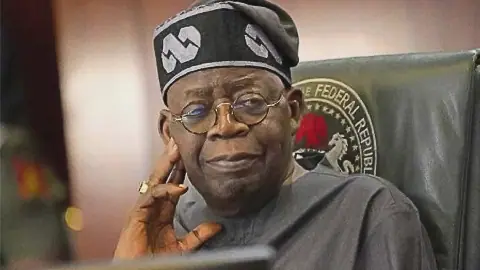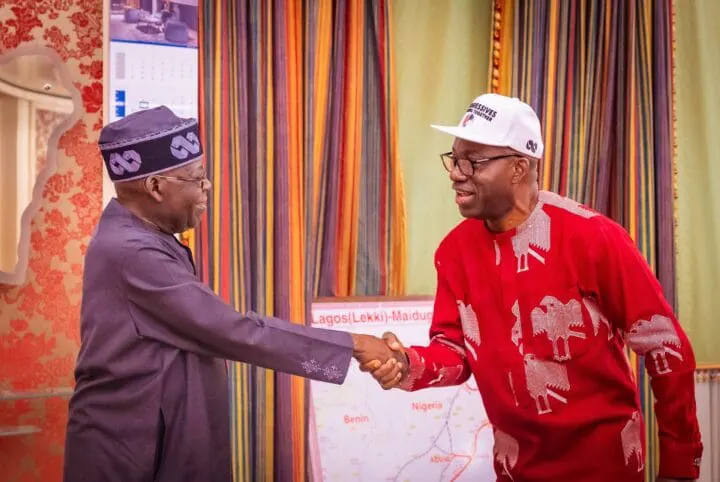
President Bola Tinubu's bid for a second term is taking on a broader political character. The ruling All Progressives Congress (APC) is turning to influential figures outside its ranks to help build a winning coalition ahead of the 2027 presidential election. This move aims to extend the president's reach beyond the APC's traditional political machinery. Tinubu faces challenges in converting his administration's control of federal power into an electoral mandate amid public discontent over economic hardship and security concerns.
The inclusion of prominent opposition figures as coordinators of Tinubu's campaign in their respective territories points to an effort to build a broader support base. Minister of the Federal Capital Territory, Nyesom Wike, a Peoples Democratic Party (PDP) chieftain, Osun State Governor Ademola Adeleke of the Accord Party, and Anambra State Governor Chukwuma Soludo of the All Progressives Grand Alliance (APGA) have been appointed as coordinators. Wike's appointment is particularly significant, given his influence and role as one of Tinubu's most consequential political allies outside the ruling party since the 2023 election.
Wike has expressed support for Tinubu's approach to accommodate people outside the APC who are willing to contribute to his re-election. He argued that the campaign should not be confined to APC members, allowing people who want Tinubu to continue in office to contribute regardless of their party affiliations. However, some APC state chapters have questioned the arrangement, insisting that those genuinely committed to Tinubu should formally join the party.
The appointments of Adeleke and Soludo present striking dimensions to Tinubu's re-election bid. Adeleke, who secured re-election under the Accord Party, will coordinate Tinubu's presidential campaign in Osun State, a move that could help the APC reach beyond its established network. APGA has publicly backed Soludo's inclusion, reflecting its position that Tinubu should be supported for president while the party maintains its separate identity.
The revised presidential campaign council appears designed to draw on political figures whose influence, local structures, and relationships could prove useful in states where the APC cannot rely solely on its own organisation. The strategy unfolds against a fragmented opposition landscape, providing an opportunity for Tinubu's camp to cultivate alliances across party lines. However, such arrangements can be fragile where allies have competing ambitions.
The revised council also reshapes the ruling party's internal command structure, with Senate President Godswill Akpabio and House of Representatives Speaker Tajudeen Abbas elevated to deputy vice-chairmen. Other senior party and government figures have been assigned responsibilities across the campaign structure. The changes follow controversy surrounding the original list, with questions raised over its status and adjustments announced.
The APC's immediate calculation is to assemble a wider electoral support base around Tinubu. Whether that translates into votes will depend on the willingness and ability of the appointees to mobilise their constituencies. The changes suggest that Tinubu's re-election bid will rely on a broader coalition, with prominent politicians from various parties playing key roles.
Key points
- President Tinubu's re-election bid takes a broader political turn with the inclusion of opposition figures.
- The APC's revised campaign council aims to build a wider electoral support base.
- The appointments of prominent politicians from various parties will play a crucial role in Tinubu's re-election bid.