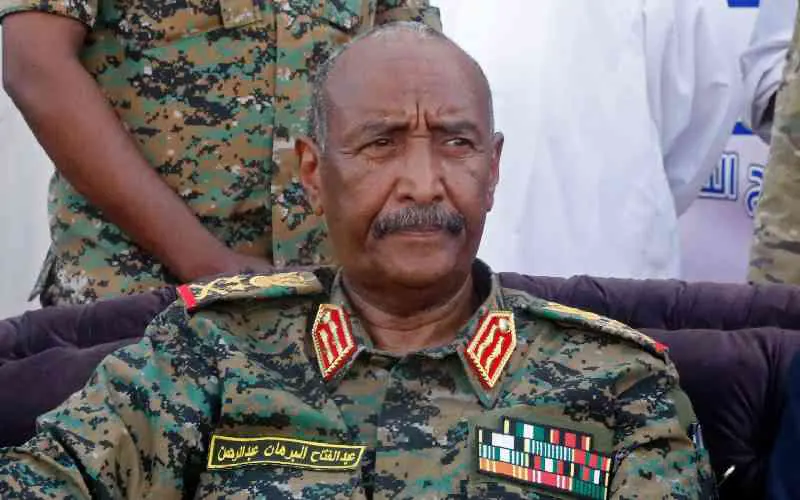
The United States has denied a visa to Sudanese army commander General Abdel Fattah al-Burhan, preventing him from attending and addressing the United Nations General Assembly in New York. According to several news organizations, Washington linked the issuing of a visa to his acceptance of a 90-day ceasefire in the war-torn nation. This development has strained relations between the US and Sudan's army.
The US conditioned the visa on al-Burhan accepting a three-month ceasefire proposal, which his government has rejected. The Sudanese government argues that a truce would only allow the Rapid Support Forces (RSF) to regroup and attack. The US proposal was put forward by Massad Boulos, the US senior adviser for Arab and African affairs. Washington aims for both sides to accept a humanitarian truce and commit to an inclusive political dialogue leading to a civilian government.
Sudan has been engulfed in a devastating war between the Sudanese Armed Forces (SAF) and RSF since 2023, described by the UN as the world's worst humanitarian crisis. No regional, international, or UN initiative has halted the conflict so far. Al-Burhan was scheduled to address the General Assembly, but it remains unclear whether he will attend. Diplomatic sources in Khartoum remain optimistic about his attendance, as he has addressed the assembly before without issues.
Sudan's UN ambassador has urged the world body to intervene, arguing that failure to allow al-Burhan to travel to New York prevents the member state leader from participating in person. A spokesperson for UN chief Antonio Guterres expressed deep concern over the visa not being issued and is engaging with Washington on the issue. One diplomatic source described withholding the entry permit as a "violation of the UN's agreement with the US".
The dispute has strained relations between Washington and Sudan's army to their lowest point since the war began. Relations were already tense due to a US proposal to extend the arms embargo on Darfur to the whole country, a move Al-Burhan's backers dismissed as disproportionately punishing the army. On Monday, Al-Burhan said that ceasefire efforts led by outside parties had failed to end the war and that externally dictated peace would not last.
The US Department of State issued a statement declaring that neither of Sudan's warring parties holds legitimate authority. State Department spokesperson Tommy Pigott said that neither the SAF, RSF nor their respective leaders "represent legitimate, constitutional governance for Sudan". The US is ready to work with anyone who is a serious partner for peace in Sudan and will seek to raise the cost of continued conflict on all belligerents.
The conflict in Sudan has displaced nearly 14 million people, with 9.3 million displaced inside Sudan and 4.4 million fleeing to neighboring countries. According to the UN Office for the Coordination of Humanitarian Affairs (OCHA), 33.7 million people require humanitarian assistance in 2026. Former Sudanese civilian Prime Minister Abdalla Hamdok is in New York this week to attend General Assembly events alongside members of his anti-war coalition.
Key points
- The US denied a visa to Sudan's Al-Burhan, citing a 90-day ceasefire condition.
- The conflict in Sudan has displaced nearly 14 million people.
- The US and Sudan's army have strained relations due to the visa denial and arms embargo proposal.