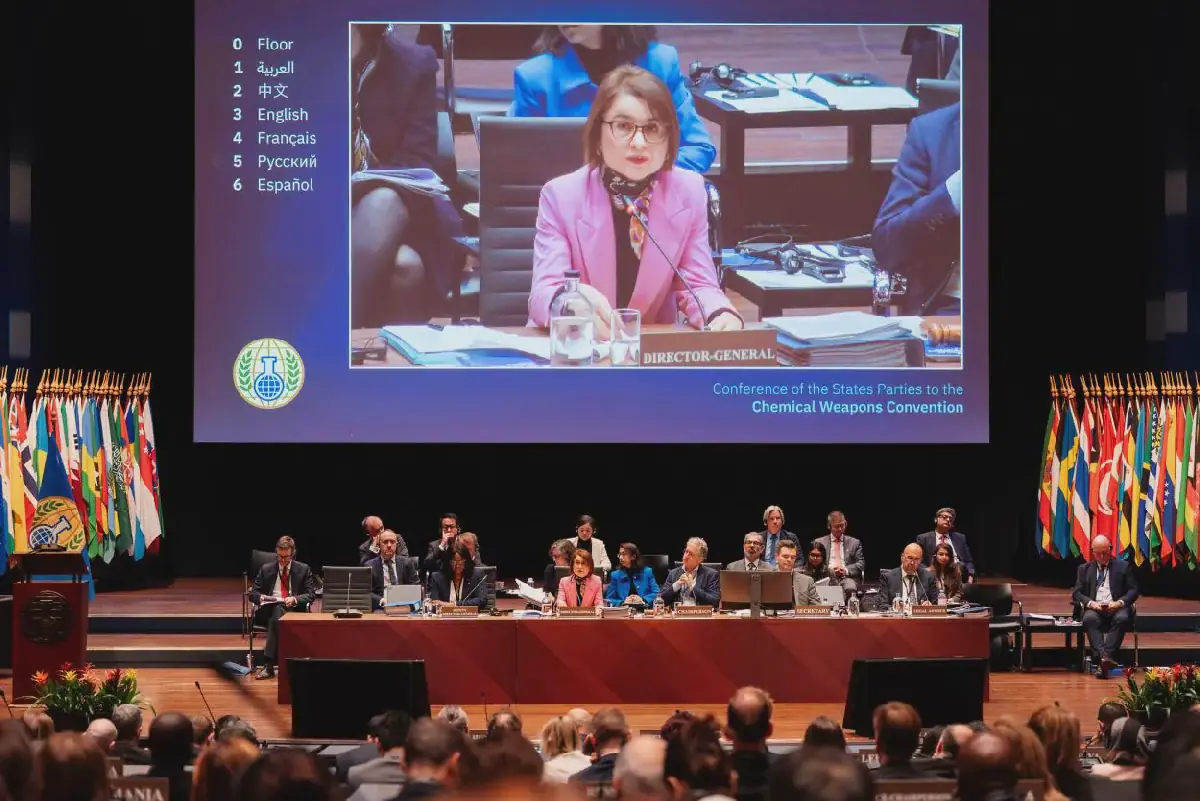
Sudan has lost its seat on the Executive Council of the Organisation for the Prohibition of Chemical Weapons (OPCW) due to mounting international pressure over allegations of chemical weapons use during the country's ongoing war. The decision was made during the OPCW's 31st Conference of the States Parties in The Hague, Netherlands. Morocco, Angola, Cameroon, Tanzania, and Tunisia were elected to represent Africa on the 41-member council from 2027.
OPCW Director-General Sabrina Dallafior addressed the conference, stating that Sudan's case remained before the Executive Council and urging countries with relevant evidence to share it, even confidentially. She expressed disappointment that despite concerns raised in the OPCW and media reports of allegations, no detailed information had been shared with the Secretariat. Dallafior had met Sudanese representatives and offered technical assistance for their national investigation.
Britain renewed its call for Sudan to investigate the allegations, warning that reports suggested increasingly systematic chemical weapons use. The UK statement to the conference on 24 November said that if substantiated, such use would pose a grave threat not only to the people of Sudan but to the wider region. London called on Sudan to complete a thorough, transparent, impartial, and credible national investigation and share its findings with the OPCW in full.
In April 2025, the United States concluded that the Sudanese Armed Forces (SAF) had used chemical weapons in violation of international law and imposed sanctions on Sudan. Washington increased pressure in March 2026, threatening to reconsider Sudan's position on the Executive Council unless the allegations were urgently addressed. This move was part of a series of international efforts to hold Sudan accountable for its actions.
Investigations published by The New York Times and The Washington Post in September 2026 revealed further details about Sudan's alleged production and use of chemical weapons. These reports built on France 24's initial reporting last year, adding to the mounting evidence of chemical weapons use in Sudan. The international community has been pressing Sudan to address these allegations and take steps to prevent further use.
The OPCW's decision to remove Sudan from the Executive Council reflects the international community's concerns about the country's actions. The council's role is to promote the implementation of the Chemical Weapons Convention and prevent the use of chemical weapons. Sudan's loss of its seat on the council may lead to increased scrutiny of its actions and pressure to comply with international law.
The situation in Sudan remains critical, with ongoing conflict and allegations of chemical weapons use. The international community continues to call for a thorough and transparent investigation into these allegations. Sudan's cooperation with the OPCW and its commitment to preventing the use of chemical weapons will be crucial in determining its future relationships with the international community.
Key points
- Sudan loses seat on OPCW Executive Council amid allegations of chemical weapons use
- International community presses Sudan for thorough investigation into chemical weapons allegations
- OPCW urges Sudan to cooperate and share evidence on chemical weapons use
Reporting sources
- Sudan loses OPCW council seat amid chemical weapons allegations · Radio Dabanga